Volunteer Acorn.

image

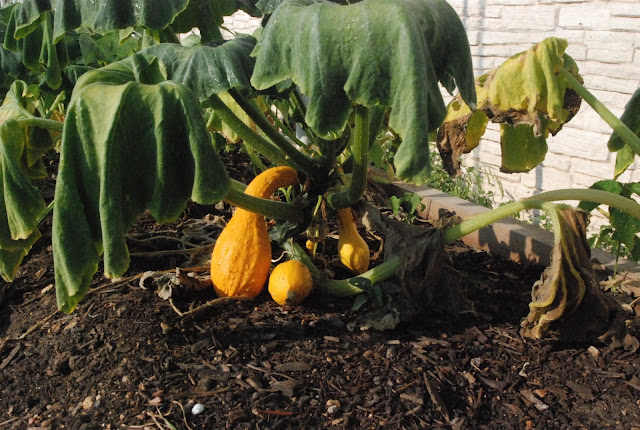
The past two springs here have given my backyard garden a blanket of volunteer squash. This year it wasn’t the mystery bowling ball variety, but instead every volunteer came up acorn. And then, too busy once again to keep vigil for Squash Bugs and Squash Vine Borers, one morning I glanced outside to see the blanket of squash leaves and pops of orange blossoms were gone. Deflated. Too late to save by attempting heroic efforts involving knives and twine or hand-picking and sprays. They were done for. I picked these this morning. Not from a bed of lush squash green, but from dried up and crispy beige. I left them on the dying vines as long as I could, hoping they’d find the energy necessary to ripen. Having never grown Acorn squash before, I have no idea how long they take to mature. I’d always assumed they would take months, like other winter squash, and thus avoided them as an on-purpose-plant. Fingers crossed these squeaked in under the wire!

Operation: Wild Bed

Over the last six months or so, I’ve been slowly chipping away at a small plot of grass at the front of our lawn.

Tangent: If this wasn’t a rental, that wouldn’t someday in the not-so-distant-future have tenants living in it, all of the lawn would be gone. All of it. But. It is what it is. And. The front lawn specifically is mostly ours, and partially the neighbors. By ripping out all of ours, I would be directly (negatively) affecting the property value of our neighbors by diminishing most of their front lawn to about…four feet wide. Basically – that’s just rude. Ultimately, if their property value is reduced, so is ours. Someday, I will not live surrounded by lawn. Today is not that day. /end tangent

I’ll make due with a patch though! This spot will be a wild bed. A bed for the bees, the butterflies, and maybe even the birds made with drought tolerant plants and natives. I  started with some plants gifted to me by my folks, via Landscape Mafia. A few holes in the lawn, a few scoops of manure, some beneficial fungus, and in they went. Months passed as I worked on the new 400 sq feet over in the community gardens, worked more than I’d expected, and trained for the mini-tri in the evenings. What I didn’t realize, was that what was, to me, very clearly a garden bed…wasn’t so clear to other human creatures. DH was kind enough to mow around the plants…and apologized for accidentally over one that was completely hidden under the grass. The folks that pick up the recycling at the curb thought it appropriate to put the recycle bin (the big kind, on wheels) back down in the bed instead of the street. That was the end of another plant. Thankfully, the two lost plants were of the kind that I had three so no single variety was gone.

DH, in his wisdom, suggested I communicate the existence of the bed more clearly to other human creatures.

We headed over to Whittlesey’s again, this time for rocks! We meant to get enough for this bed, the White Oak, and the new pomegranate in the back yard. We thought we got extra. Usually, that’s true. Never having purchased rock before…

We were a little short. The front bed got its boarder, and the White Oak has a C. The pomegranate is still without stone.

Over the last two weeks, I’ve been able to spend a little time every few days removing the sod and weeds from the front bed. When I started, we were still only in the high 80s, and I got a good space done in an afternoon. Now we’re always in the low 90s, and the spot gets sun all day. I can sneak in about an hour before the sun sets where the light is dying and it’s not sweltering. I’m getting there though!

Want to see what else is joining the Fragrant Mimosa, the Verbena, the Mexican bush sage, and the lone survivor of the Recycle Bin Lawn Mower Incidents?

We’ll see how they do. I may end up moving the Day Lily and the Lobelia due to too much sunlight.

As much as I enjoy growing food from seed (and saving seed from food) I haven’t ventured into non-food seed sowing other than simple flowers (wild flowers, zinnias, violas, nasturtiums, etc.)  Last year was the first year I’d ventured out of veggies into flowers, maybe next year I’ll venture more into the seed sowing aspect of non-food. Maybe not til the year after.

Do you save seeds?

Which ones?

I try and save seeds when I can. I read a few books on seed saving. I read a few articles, blogs, and pamphlets on seed saving. The verdict? Holy cow, are there a lot of “rules” for seed saving!

As much as I am a fan of rules sometimes (logic is fun!) other times, I’m perfectly content to find my bliss outside the lines.

Some seeds are super easy to save. Lettuce is one of them. I often lose track of my lettuce. I’ll eat it, and eat it, and it’ll grow back again and again. Until at some point I either need a break from lettuce wraps and salads, or the elements conspire for lettuce growth, and before I know it, my lettuce has bolted a few feet in the air. At that point, I know (from experience) that it won’t taste that good. Pull it up? Make room for something else? Sometimes.

This year, having lucked out with acquiring 400 square feet of allotment in a community area, I’m experimenting with a long time goal of mine – a volunteer garden. Last fall, a few lettuce varieties volunteered in my lawn. I transplanted them into the garden after taking down the tomato forest. They reached about five feet tall before the flowers began to appear. About two minutes, a paper bag, and a pair of clippers results in more romaine seeds than I will possibly need.
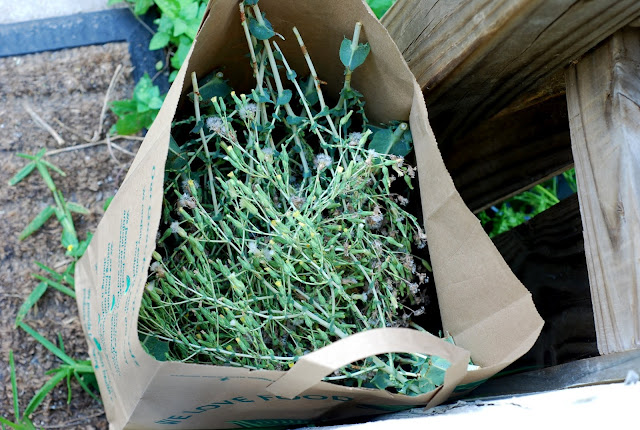
Wild flower seeds are also super easy to save!
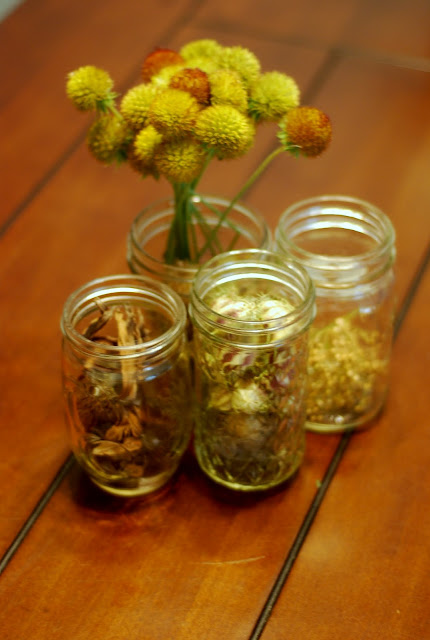
The “bouquet” in the back is made of the seed heads left behind by spent Blanketflowers. The jar on the left has Cone Flower Heads drying slowly. The center jar has the interesting pods left behind by Love in A Mist. On the right? Cilantro seeds, aka coriander.

Sometimes, “seed saving” is more of a harvest for our bellies than it is for the purpose of growing more plants. For instance – beans!
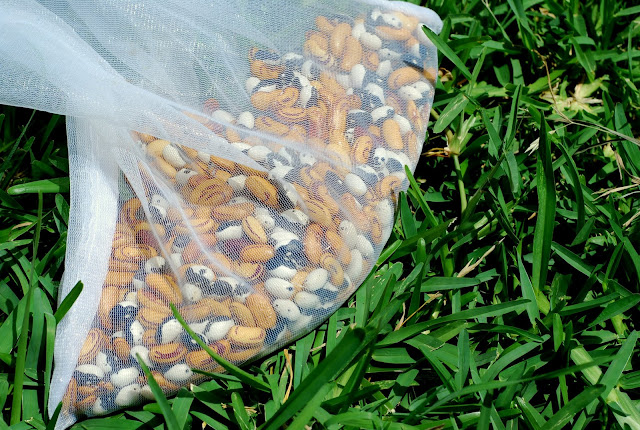
This is the main harvest of soup beans for the spring beds. Half Tiger Beans, and half Yin Yang Beans. It’s so nice to sit inside on a hot afternoon, grabbing some lunch and shelling beans. The dried bean casings make for good “brown stuff” for the compost, too!

I do save beans for the next season’s plantings as well, and I don’t save any old beans either – I start to play with the genes in the most simple way possible.

If a single plant has a lot more beans than the others, I’ll save a pod or two off that plant to hopefully encourage per plant production. If a single pod has five beans inside instead of four or fewer, I’ll save those beans as well to try and encourage more beans per pod. Occasionally I’ll remember to also save some of the first beans of the year (encouraging early production) and some of the last beans of the year (encouraging heat survival.)

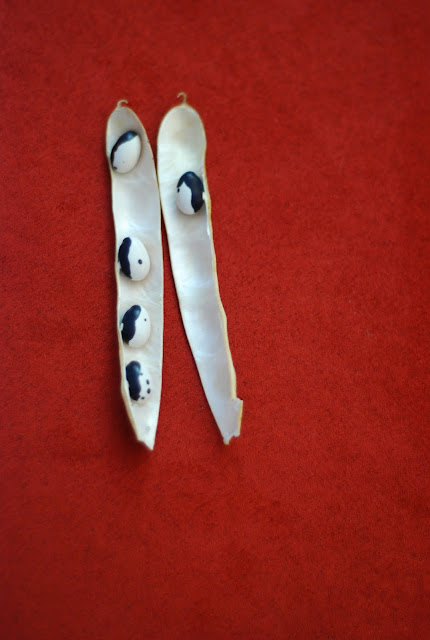
For instance, Yin Yang Beans most commonly have 3-4 beans per pod. This guy got to have his seeds saved for planting (instead of for eating.)
Not all seed saving attempts are successful. Most recently I tried to save seeds from a Farmer’s Market Patty Pan Squash. I scooped out the seeds, soaked them in water for a day or two, strained the goo from the seeds, and spread them on a paper towel to dry. When they had dried completely, it was clear that none of the seeds had had a chance to mature properly in the flesh, and wouldn’t be viable. I bought three more of the same patty pan squash this morning at the market to try my luck again. If I strike out a second time, I’ll simply break down and purchase the seeds I want. Then, when they’re growing in my garden, I’ll leave a squash on each plant to over-ripen so the seeds have a chance next year.

Other reasons not all seed saving ventures work out? Those “rules” the books and articles talk about. Beans are easy because they mostly self-pollinate. Other plants are friendlier with other varieties of the same type of plant. If you saved the seeds of cantaloupes planted next to cucumbers, you may not like what grows the next year! So the rules can be important, if you’re picky about the offspring being true to type, or if you want to make sure your snozzberries taste like snozzberries (which is important to do sometimes!)

Puzzles around the yard.

On a magical afternoon a few weeks ago, there were an untold number of butterflies fluttering by the front flower bed. How many butterflies can you spy?

And then there are these guys. There were at least five wandering around on our Mexican White Oak with their warrior paint marked boldly down their backs. Any ideas?

Harvests!

The first real harvests of the year have come in!

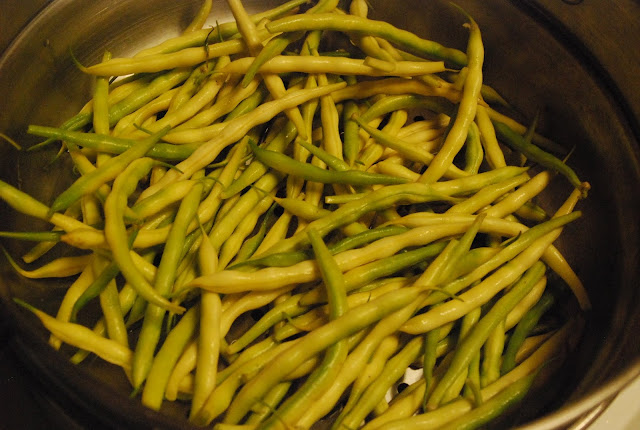
We got maybe four pounds of soleil beans this year so far. I thought about calling my grandmother to learn about freezing them. I didn’t end up needing to – we ate them all!

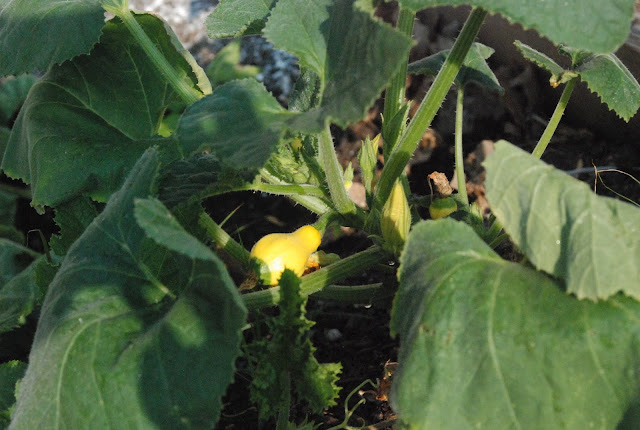
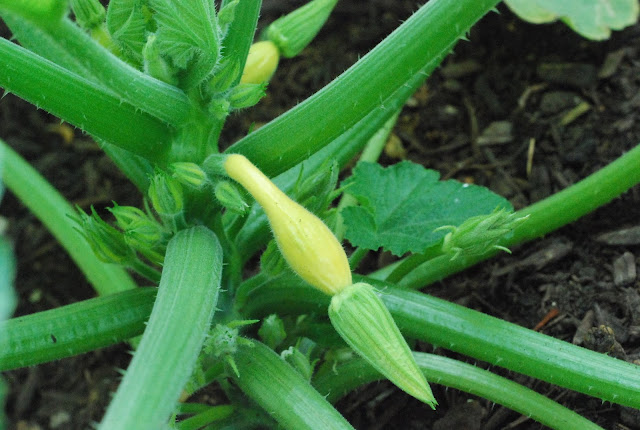
The squash have started suffering already…the heat, the fire ant infestation, the cucumber beetles spreading diseases, the powdery mildew from all of this (wonderful, unexpected, appreciated) rain. Still, they are managing to make squash. Say hello to my first ever, real-sized, on-purpose squash – the Summer Yellow Crookneck!

I’ve yet to pick these cute little guys, but they’re hanging in the heat better (they don’t have the fire ant issue either, which helps.)

This is my fourth or fifth year attempting squash, and the first time they’ve grown larger than my finger (we won’t talk about the years they didn’t set at all…)

Other first year successes after multi-year attempts?

Onions!

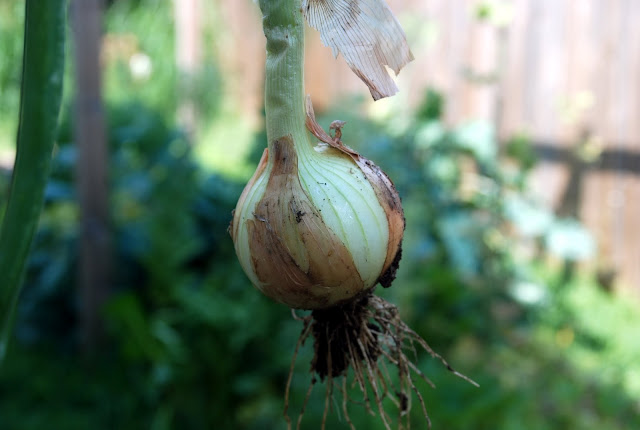
Every year previously I’ve either over-watered, or under-watered. Over-fertilized? Did that, too. Under-fertilized? Yep. Had a dog (not ours) dig through the bed, killing them all? Mhmm. Onions and I have not had an easy time, and considering I don’t even like eating them…I was kind of ok with this. However, DH eats them almost every day, so it made sense to keep trying. He was ever so excited to have this sweet one in his breakfast! What was the trick to my first success? Probably a few things all at once.

  • Don’t plant deep. Really. If you think you planted too shallowly, you probably need to plant a little less deep still. (If you’re me, anyway.)
  • Don’t fertilize the onions. Fertilize the soil about six inches down, four inches away from the onion row.
  • Water. Don’t keep soaked. But do soak when you water.
  • Let the caterpillar eat the tips of the greens, at least it’s not eating your chard again!

Another veggie that I’ve grown many times without success yet?

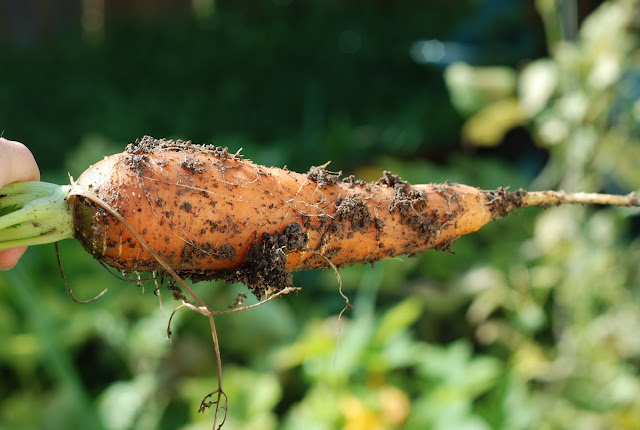
I could not believe how big this got! I sowed it just a few short months ago, as one of five carrot varieties. I tried carrots a few times over the last couple years as well. I lost an entire batch to a caterpillar invasion. Another time I lost them all to the shade of a ginormous squash canopy. Another time, as soon as I spread the seeds a thunderstorm hit and washed away all of the seeds.

Things I learned about growing carrots:

  • Don’t cover them with 1/8″ soil like it says to. Just sprinkle them on top of the loosened soil.
  • Keep track of where you planted the varieties, preferably by planting different veggies between varieties. I have no idea which type this one is, and would like to grow it again.
  • Water! Those wee little carrot stalks that sprout don’t have much of a chance if a hot spell hits.
  • Water some more.
  • The one thing I learned lately about carrots, that I kind of agree with, kind of don’t, is “unimpeded growth.” This carrot was surrounded by squash, other carrots, and volunteer lettuce. What it didn’t have was compacted soil, sticks, or rocks, to compete with underground.

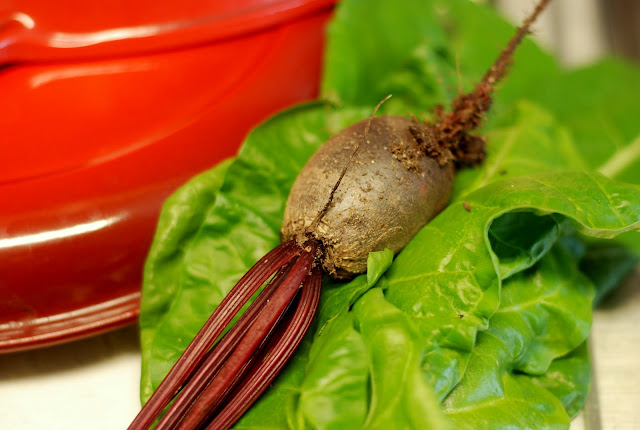
And, all of this new knowledge with carrots and onions, lead to my first attempt being a success with my newest favorite (to eat) veggie – beets!

I think aside from green beans, these were the easiest thing I’ve ever grown.

With all of this abundance, I surely had to make something tasty to celebrate.

Most mornings, I make some concoction in the form of a saute that starts with bacon, ends with egg yolks, and has any number of veggies added in between. I’ve yet to get chickens (DH doesn’t want to be “those neighbors” and with our small space, we would be), evaporate salt, or raise hogs, but the rest was grown by yours truly less than fifty feet from the pan that cooked it. There really isn’t much better than that for breakfast.

Tomatoes gone wild!

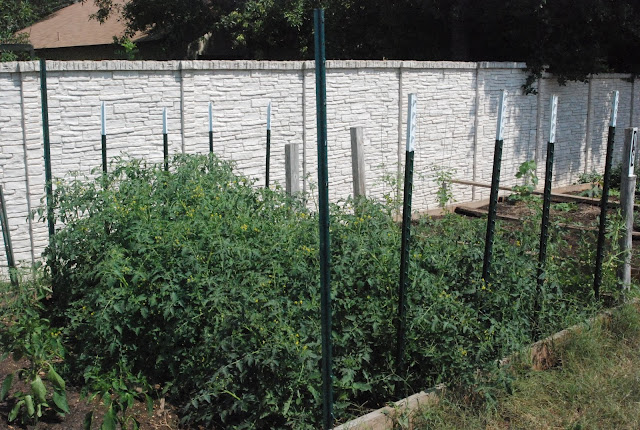
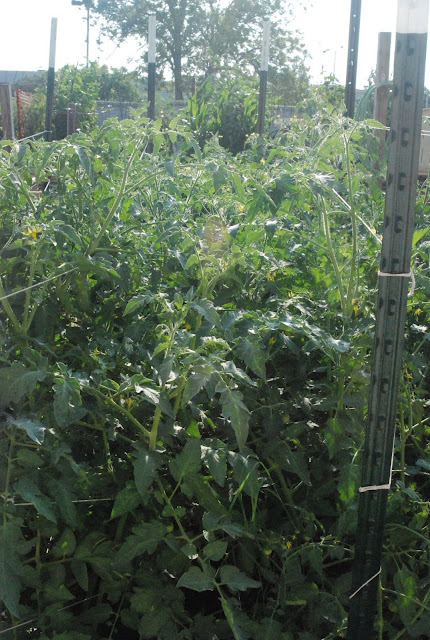
I meant to stake these tomatoes ages ago…I meant to plant them about two weeks before I had a chance to do so, and then to stake them I was about…oh, six weeks later.

Life getting in the way of gardening.

Better late than never! Stakes in the ground, thanks to DH and a post-driving-contraption of his father’s.

Things I learned are good to have for this process:

  • Ear plugs! Driving metal T-posts in with a metal T-post contraption is loud.
  • T-posts > U-posts. U posts are broader and have troublesome hooks on them that have to be hammered down before the post can fit in the contraption.
  • T-post drivers are handy. Much easier (and safer) than giant hammers, and much faster than regular-sized hammers.

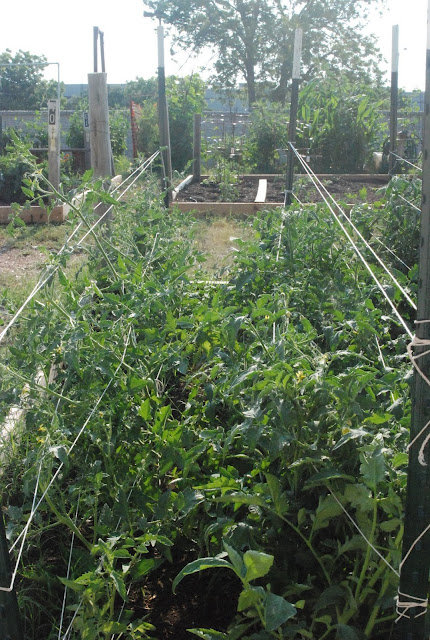
Stakes need string! I had intended to trellis these posts akin to a vineyard, and use stretchy green tomato tape to attach the tomatoes to the trellising…perhaps next year. So this year – more string it is.

These tomatoes are fairly well behaved, considering that they’re overgrown as they are.

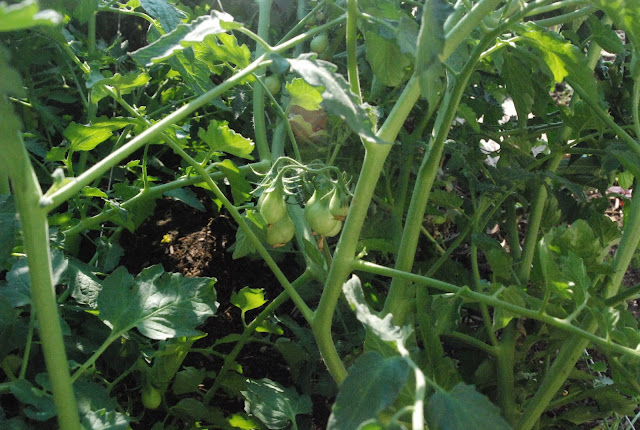
These other tomatoes…well, they can’t all behave can they?

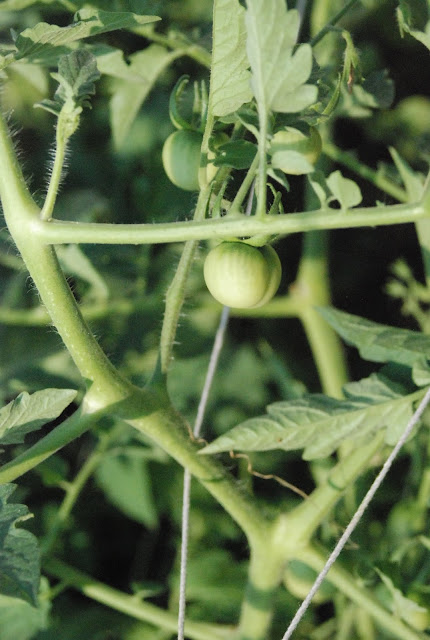
But, they’re all behaving well in the fruit-setting realm!

I expect these guys to come out yellow/orange in the end. I saved them from a farmer’s market “candy basket” last  year that I’m hoping to recreate. It had mini purple tomatoes the size of fat peas or small grapes, pear-shaped yellow-orange tomatoes, cherry-sized green stripies, and red-orange little gum drops. When they ripen, I’ll share photos in case anyone knows their names!

And my now trusty standby: Cherry Chadwicks!

Local changes.

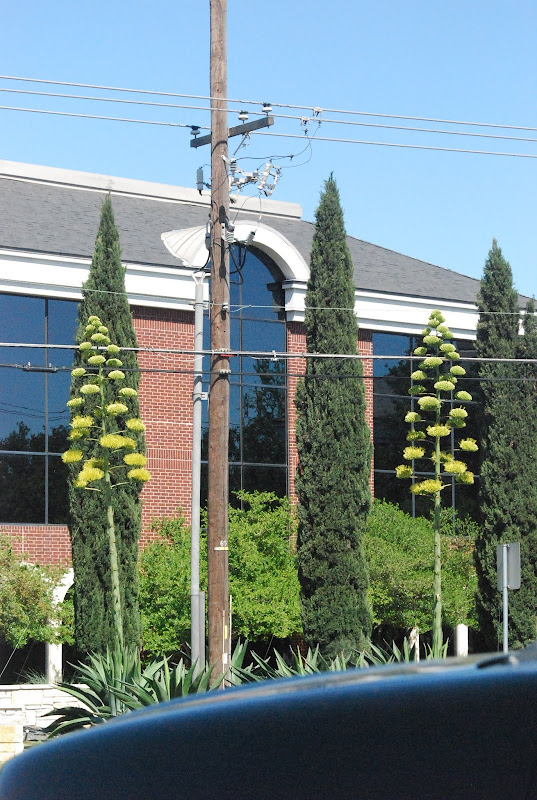
Most years, different agave varieties, and other succulent varieties, throw out their flower spikes. Usually these are neat little spikes 1/2″ to 1″ in diameter, and 3′-5′ tall. Occasionally, an agave goes bonkers.

Flower spikes in this family of plant, I learned last year, is their final hoorah before kicking the bucket. They’ll hang in there, growing bit by bit, year after year, until they sense that everything is just right. When that happens, the flower spike production begins, and occasionally – it gets breath-taking, awe-inspiring, and occasionally just downright funny.

I didn’t capture a shot of the largest one I’d seen to date (last summer? summer before last?) but it was HUGE. It was well over twenty feet tall. This year, this little cluster just brightened my day. Excuse the phone camera quality, shot at a stop light (from the passenger seat!) clutter in the frame.

I’m interested to see if they simply plant more agave (they usually do) or attempt to replace it with a quick-dying annual as other landscape crews in the city do.


Plodding along.

Things are plodding along in the garden beds here. We’re getting close to the “too hot to work outside” season. This is part of what motivates me to stay as busy as I can from Christmas through March around here, so that now, when the heat turns up, I mostly water, watch, and pull a weed or four.

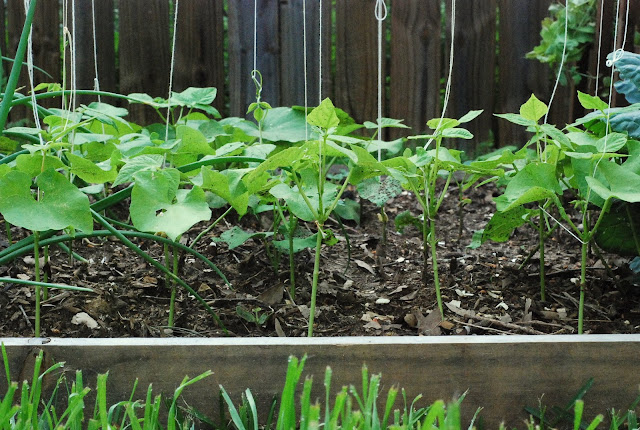
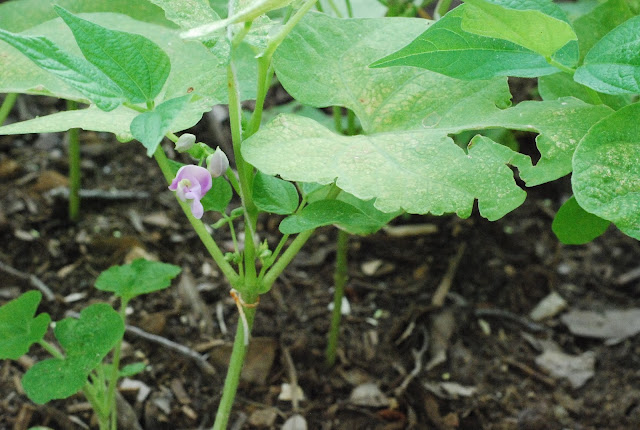
Which takes beans on March 23rd…

To beans on April 4th

To beans that are now three feet tall.

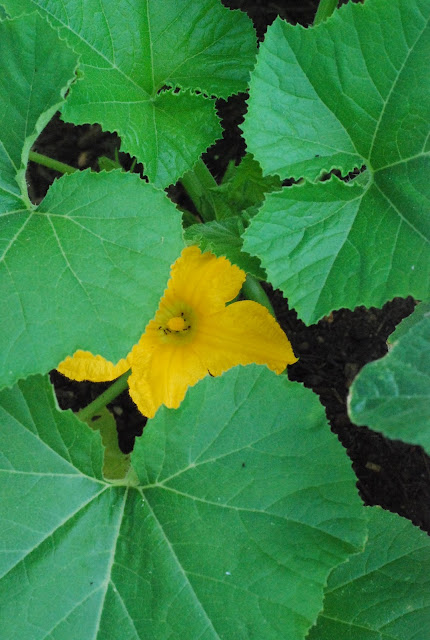
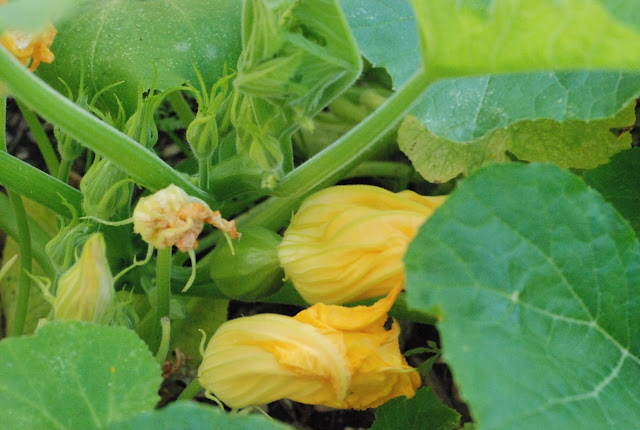
It also takes us from orange-yet-shy squash blossoms…

To mystery squash!

And yellow crookneck

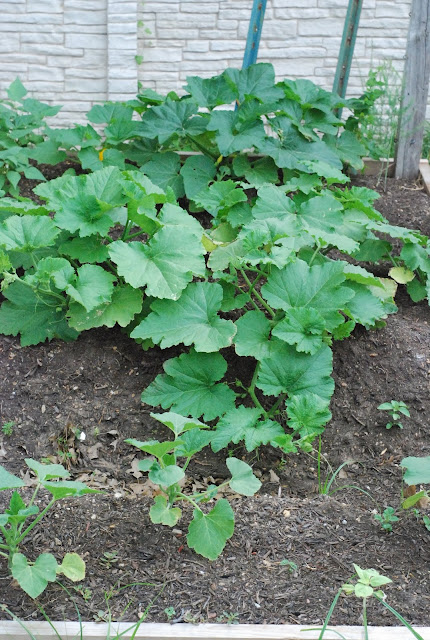
Unfortunately, my largest squash plants so far, the lemons (in the middle bed below)…

Are currently wilting due to a re-invasion (or perhaps never-left-asion) of fire ants. I sifted diatomaceous earth on them, as that had seemed to work on the ones by the walk-up at home, but apparently instead of causing them to relocate like the ones at home did – they simply burrowed deeper. I’m afraid boiling water might kill the squash along with the ants though. Before I try and scheme a plot to get boiling water two miles from my stove, I’ll dig the diatomaceous earth down where they live and see if that doesn’t agitate them enough to leave. Any other ideas on ousting fire ants? If only I had some phorid flies handy…

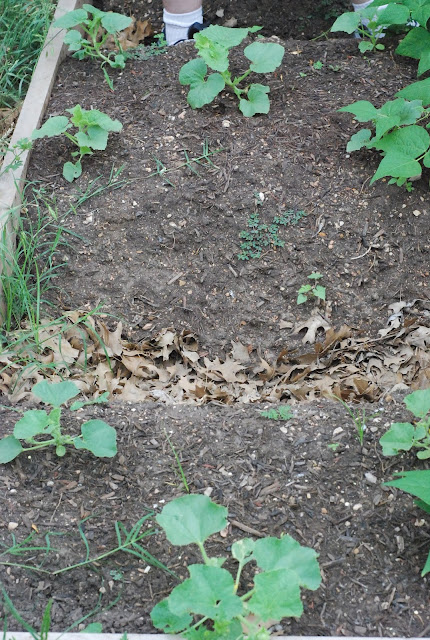
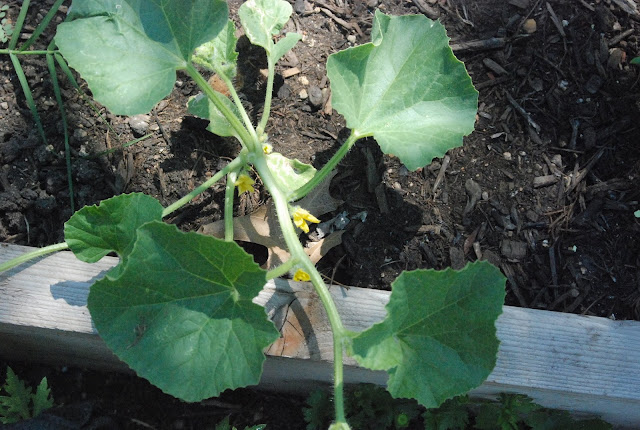
(A quick side note: Someone was asking about growth rates for melons. This is my second attempt at melons, but feel it safe to say they are slower growers. The picture above is of three squash varieties, all direct sown on the same day as three melon varieties.) The melon varieties?

A fair bit smaller than two of the squash types. Yet a mere three days later and we have a new surprise!

Melon blossoms!

Things I learned:

  • Fire ants aren’t gone just because you think they are.
  • Melons will take their time, but may surprise you in fits and bursts.
  • It’s ok to not be super busy in the garden all the time. Keeping it watered will keep it patient for your return.

Structure.

I like to play with structure. Build forts. Rope ladders. Tree houses. Box caves. I think so many wondrous things fall by the wayside on the wander into adulthood that sometimes as adults we may be just as boring as our childselves would say we were.

I find that there a few tried-and-true cures for such mature doldrums:

  • Sprinklers (even more so with four footed friends or the squeals of toddlers that belong to someone else.)
  • The consequent mud from said sprinklers.
  • Wrapping paper tubes (fort supports, light sabers, ski poles, I could go on…)
  • The ever sought and ever rare refrigerator box.
  • Sticks.

Perhaps by chance, or perhaps through purpose, my garden time tends to incorporate a lot of the same material. Sprinklers are a given. Mud – also a given. Wrapping paper tubes? I’ve heard that if you cut them (or toilet paper or paper towel tubes) into one inch rings and place them around seedlings, they help combat pests. (I have yet to confirm this, how about you?)

The fridge box: I’m not a cardboard composter or mulcher, but others are.

Sticks! Sticks are great for small tomato stakes, pea trellising, pole beans, and likely many other things.

I’ve known for a bit that I needed some kind of structure for my tiger beans. They’ll survive, and produce, decently without structure. With structure, I’ll get to more of the beans before the bugs do, and I haven’t tested the theory but would almost swear they make more beans while climbing. The issue? I planted them in a row in the middle of a long bed. Oops. I hadn’t planned it that way. I had it drawn up differently. When the day came to sow the seeds, my mind left me so much that I neglected to even reference the plan I’d carefully graphed, and simply sowed away. So it goes.

So what was I to do? Perhaps, I postulated, I could put a forked stick at either end of the bean patch, run a cross stick from end to end, and drop lines down from the beam. Except I was fresh out of forked sticks. Teepees? I’ve never had luck with teepees.

And then I realized that at some point I had also hoped to enclose the bed. A neighbor down at the garden plots warned of the possibility of large, wandering, hungry wild game (in the form of humans) who would help themselves to the literal fruits of your literal labors. I would like to think this wouldn’t really happen, but apparently it has in the past.

DH and I tossed some ideas around. The bed at home has a nice structure that is flexible to the needs of the plants within. We didn’t really want to invest that much lumber into a top structure that would be anchored to a weak (and in places rotting) base structure provided by the community garden maintenance crew. I knew I wanted a shade cloth option, and he convinced me that we could do double duty if we hatched a plan to replace shade cloth with plastic in the winter.

And then it struck. We were wandering Home Depot, as we are known to do, halfway through a list of soil sulfur, air filters, and rope for a cat scratching post, when we found ourselves on the plumbing aisle. We were caught in a stare. We both knew at once. And we both started talking at once: “What if we did this for the garden!”

Supplies for a 20′ x 10′ bed:

  • Twelve pieces of 3/8″ thick, 12″ long (or longer), rebar ($9.00 – we would have liked to have longer rebar, but with $0.75 each for 12″ jumping to $3 each for 24″, we made do.)
  • Seven lengths of 20′ x 3/4″ PVC ($30)
  • Four pieces of twine about 18″ long (Free after using it to tie the PVC into the truck on the way home.)
  • Hammer (we already had one, so free for us. A rock would also work.)
  • Something to stand on. (We borrowed a neighboring gardener’s lawn chair.)
  • Duct tape (we already had this as well. More twine (still free) would also work.)

How:

  1. Split the length of the bed into four foot sections, starting in a corner.
  2. Dig out a small hole (maybe four inches deep) and push a piece of rebar into the soil.
  3. Hammer the rebar into the soil so the end of it is just below the edge of the bed. (About 8″ underground, 4″ above ground.)
  4. Thread the PVC end over the rebar (this gets wiggly, as it it is twenty feet long and bendy. Feel free to laugh, we did.)
  5. Bend the PVC down to thread the other end over the rebar on the opposite edge of the bed. You just made your first “rib”
  6. Like this: 
  7. Tie the PVC to the corner posts to help anchor. 
  8. Continue on down the bed, threading PVC onto the rebar that you spaced every four feet.
  9. Your “ribs” are up! 
  10. Like DH is doing on the left of this picture, press each side of each rib down into the earth to help anchor it. The bowing of the pipe should create pressure against the side boards of the bed, but pushing the tubing into the ground helps prevent lift-off.
  11. Set the chair up under the first rib, and with the seventh length of pipe running under the ribs, lash the “spine” to the “ribs” with duct tape (or twine) just enough to tack it up.
  12. Proceed down the length of the structure, tacking each rib to the spine.
  13. When you reach the other end, lash it securely, and then work your way back up the bed. This time, tighten the meeting of the two pipes and tape in a cross-cross pattern.
  14. Ta da! 

Why “ribs” and “spine”? Well, aside from looking a bit like a giant rib cage, PVC and tape were what we used to construct a whale in third grade to put on a showing of The Old Man and the Sea. That, and you knew exactly what I meant, didn’t you?

I do plan to do similarly with the Right Bed now that I see our idea in real life (and love it!) But first, we need to trellis-up those tomatoes! (Another day.) And drop lines for the beans (maybe tomorrow…)