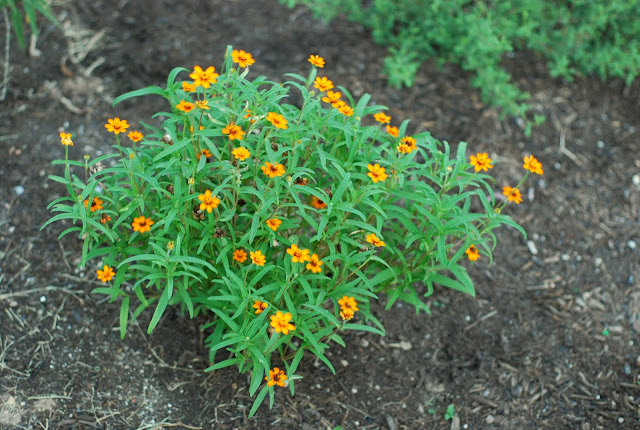
Nervous…

I sowed squash indoors weeks ago. They bloomed the other day. The Books say it’s ok to plant squash now. The Books are often wrong.

The Books reference zones based on frost dates. Based on frost dates, I should be able to grow anything grown along the valley of the West Coast of the United States. This is not actual truth.

What The Books fail to account for in their Zone System is temperature, and daylight, and precipitation. I can grow many things all winter that would not survive in other areas of the same zone. Why?

Well, for starters, it’s still hitting 100 degrees fahrenheit regularly here in my version of Zone 8a/b. In other areas of Zone 8a/b there are highs in the 70s. They are also dropping into the 49ers at night. Me? Maybe as low as 75 if I’m lucky. My tomatoes are barely alive (mostly due to my frugal watering) while theirs are done (due to their chilly nights.)

Next we have the concept of chill hours. Peaches grow beautifully and plentifully 90 minutes west of here, having just enough chill to fruit. Citrus grow outdoors three hours southeast of here, with the lightest of frosts being the rarest of things. Neither would be happy here.

As for daylight, the fluctuation is just as wide. Summer in Seattle as a child taught me how greatly the curve of the globe changes the daylight in rotation to the sun. The sun sets in June at nearly 11pm. We top out at just after 9pm. Winters in Olympia were miserable for me with the sun setting at 4:30pm. We don’t really set before 6pm.

Never mind the other oh-so-important water. Days with rain here? Maybe a third of the number of days up there. There are irrigation options, but that costs money and doesn’t change the surrounding soil so much.

And not that the Zones claim to say anything about soil, but clay is not clay is not clay. I’ll save that for another day.

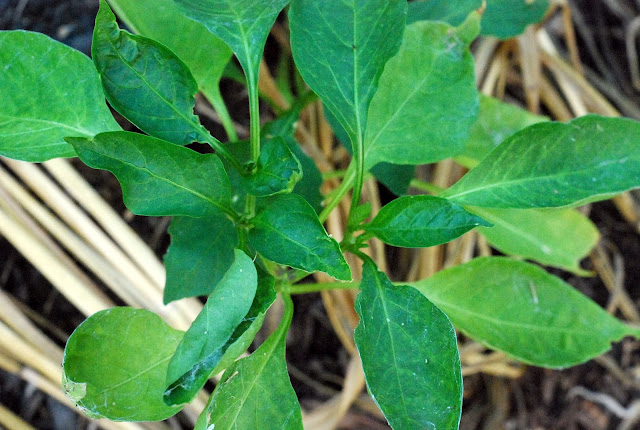
So today, I put eight seedlings of squash out. I’m nervous. I held eight back. The Books also say I can sow beets and put out my cauliflower and broccoli starts. I won’t be listening to them on those counts just yet.

And just for fun, some pretty clouds.

image

And they’re all / going to / Bug City / for the night…

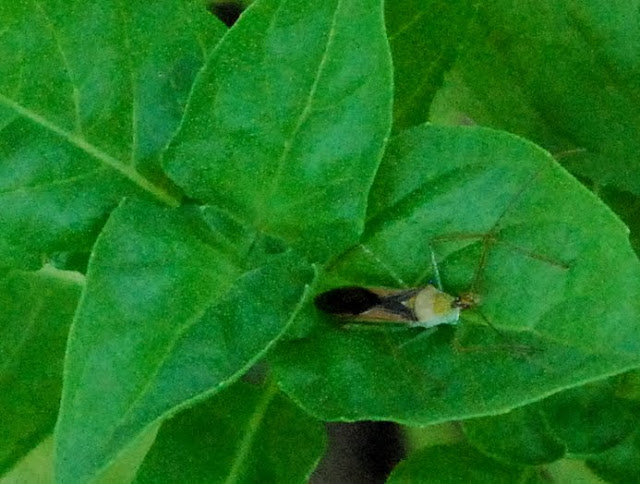
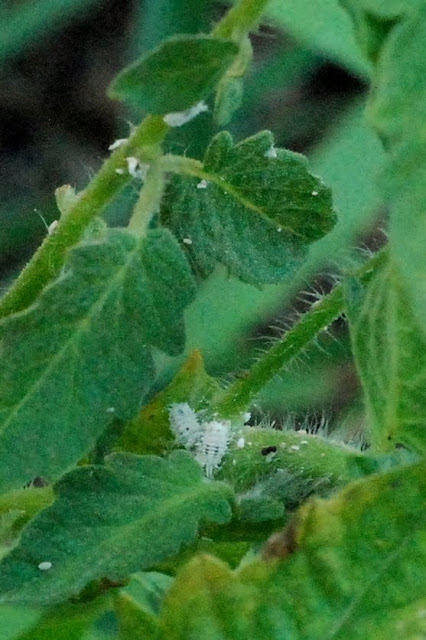
I apologize in advance for the graininess of the close-ups! Wrong lens in poor light – double whammy…

However – double plus bonus points for anyone who recognizes the song quoted as the title!

I guessed that this guy was a “bag bug” and he met his end shortly after this shot was taken.

I had let myself believe the mealy bugs wouldn’t return this year. Just when I thought we were safe (and just when I stopped taking good care of the plants in the backyard beds…which is always how it goes…you’d think I’d learn 😉 ) they’ve returned.

If I had it in for any bug more than a squash bug, it would be these. They were what tried to kill my Oxalis. They completely decimated my tomatoes in 2010. As much as I cannot squish caterpillars, I can squish these with my bare fingertips without hesitation.

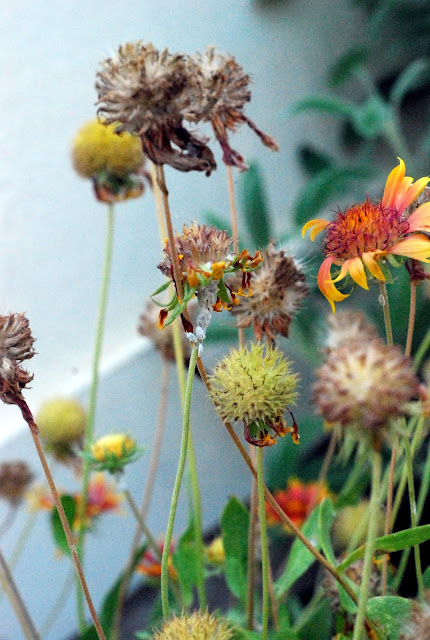
Oddly enough, they also like Blanketflowers?

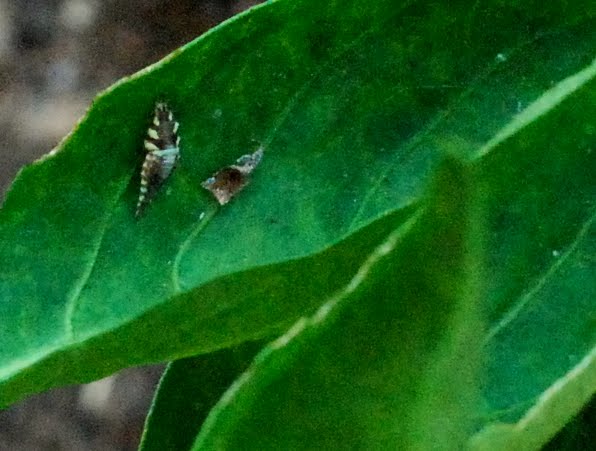
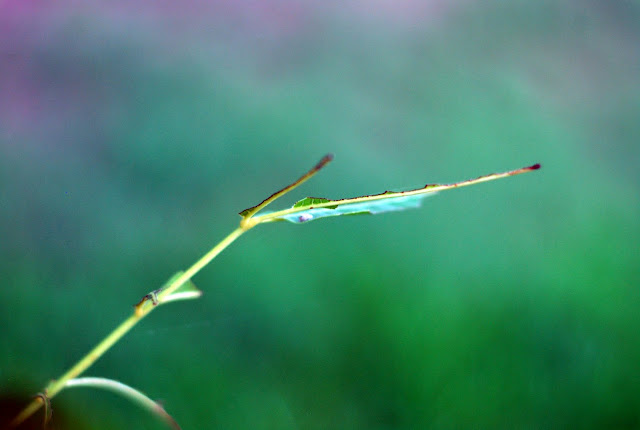
This crawler, I have no idea. Do you?

This is only the evidence. The caterpillar, and subsequent moth, are long gone. If you ever see a leaf curled up like this, be sure to make certain the tunnel is empty!

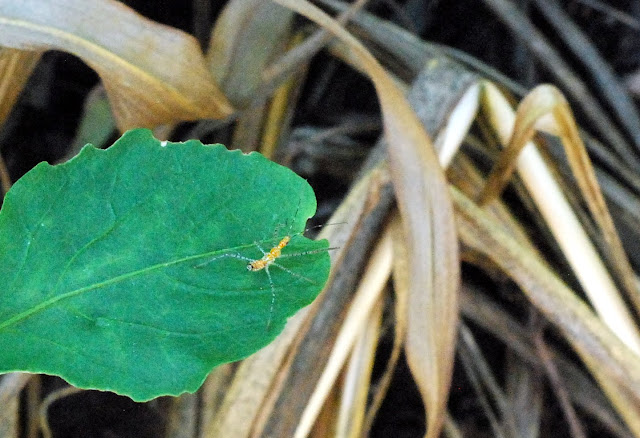
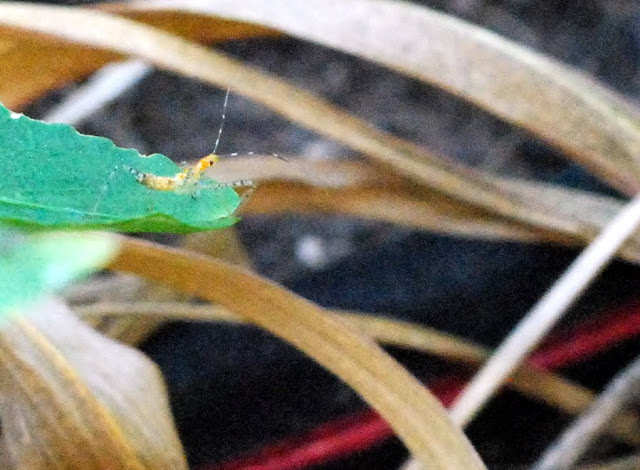
This guy, I wasn’t 100% sure on. I am slowly learning my adult-bug identification, but at the nymph stage…I’m farther behind.

With a side view, I could see his striped antennae. I remembered that Leaf-footed bugs have striped antennae (as I’m sure many other bugs do, but oh well) and this leaf was his last meal.

August harvests

In my little speck of earth, there aren’t many harvests in August. Some of my gardening neighbors down at the Gardens have given up, cleared out, and are waiting for fall.

Others have given up, and are waiting to clear up until later – leaving any possible harvest to the birds and bugs.

But I’m a little too stubborn for that.

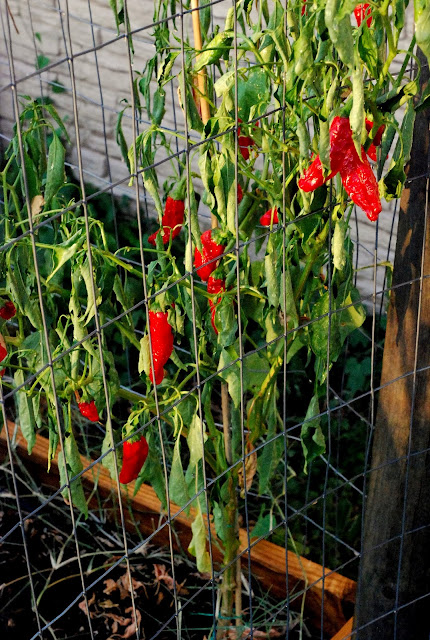
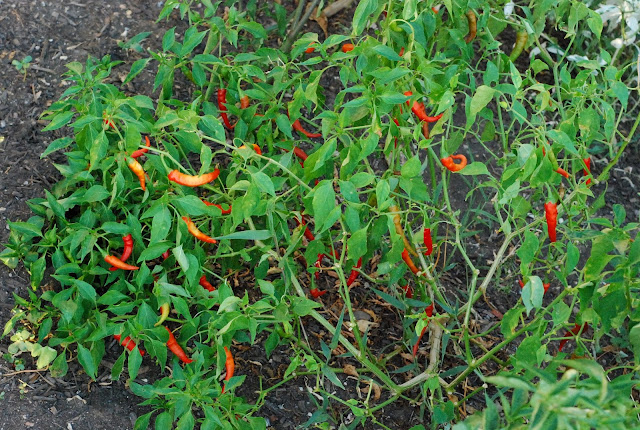
Peppers are still going. The bell peppers are thirsty ladies, and have slowed down, but the hotter, smaller, and drier the pepper, the happier they seem to be.

This cayenne, for example, had out done itself – literally. It made so many peppers it fell over.

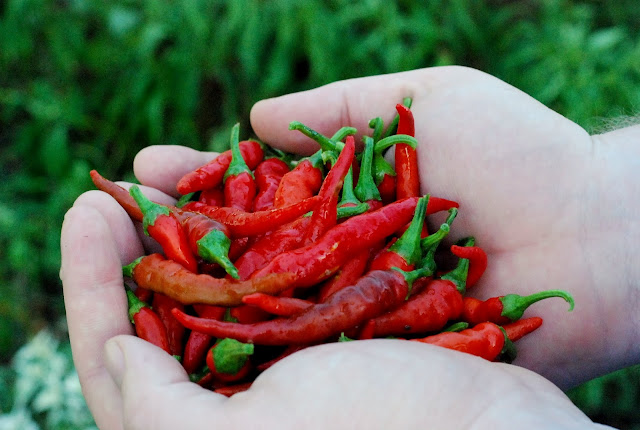
That one plant  just gave us a heaping double handful.

I actually planted two this year. I’ve learned that a household really only needs one cayenne plant.

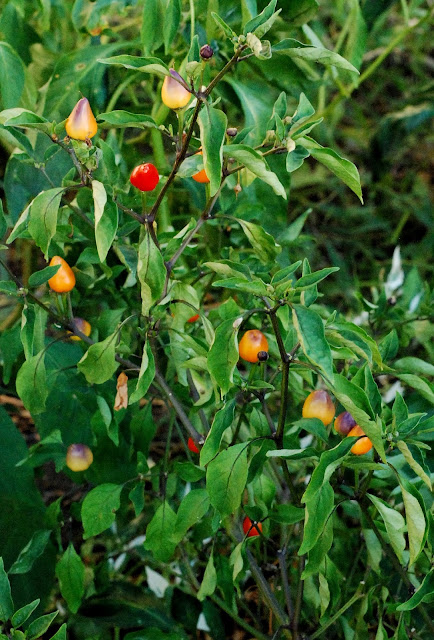
One of the prettiest peppers I’ve ever grown has made a comeback. Don’t these just make you think of the Christmas lights from the 50s?

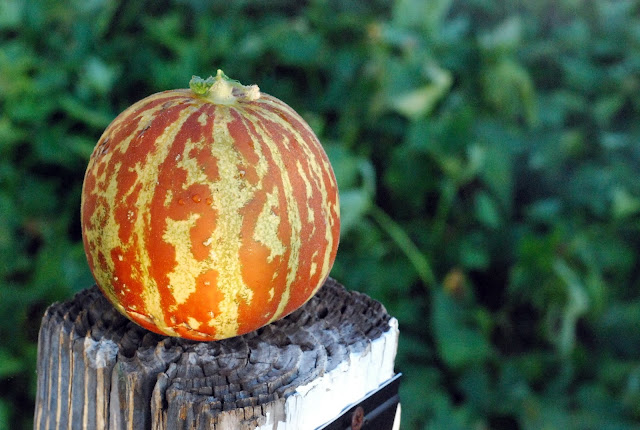
And how about this? I grew a melon! I still feel like it should be bigger, but I’ll taste it all the same. It’s also possible I’m mis-remembering the qualities of the variety and really does only get this big. I have only had melons set fruit this year (third year trying) so perhaps next year I’ll have learned just that extra bit that helps them grow larger.

Some surprises from the backyard garden as well!

A walkabout the neighborhood…

We walk our dog every evening. (DH also walks him each morning.) I often wish I had my camera handy on our walks, but most often I don’t (and quite often, it’s dark by the time we go on the prowl.)

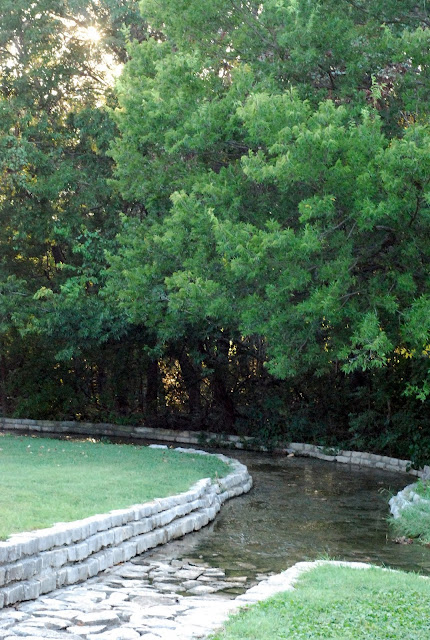
Not tonight! After feeding the ducks the snails and caterpillar, we wandered down the greenbelt that follows the creek. It had rained yesterday and again last night, and the pond had again swelled to its tippy toes and started the creek up again.

When it’s still raining, runoff flows down the left branch as well.

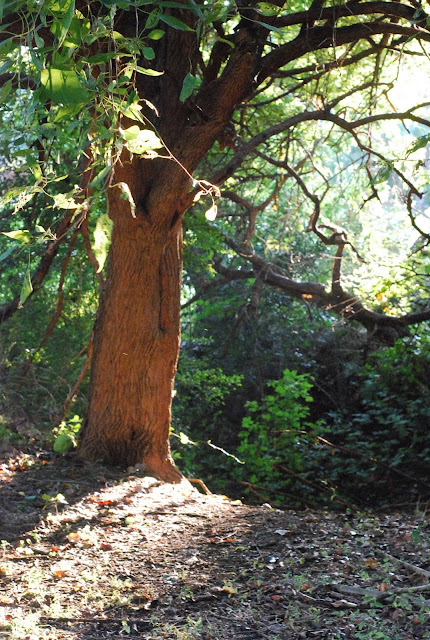
We were quickly losing the light, and the glow through the thickets were magical.

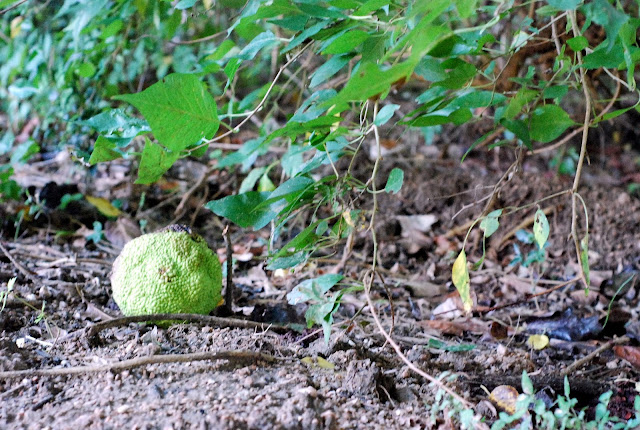
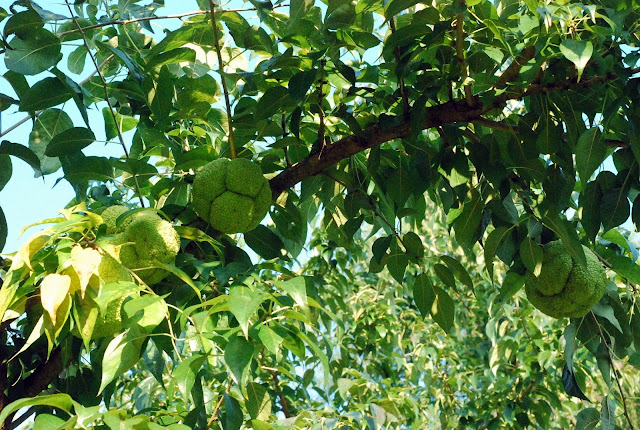
The flood a few weeks back made some changes to the landscape around the pond and creek, one of the smaller of which was relocating many a’ horse apple to a new location.

(If you’re saying, “umm…what’s a horse apple?” I didn’t know either until we first encountered them in this neighborhood and went a’Googling. They have quite a neat history in the USA.)

They’re really interesting to look at by themselves, and they grow like pull-a-part rolls!

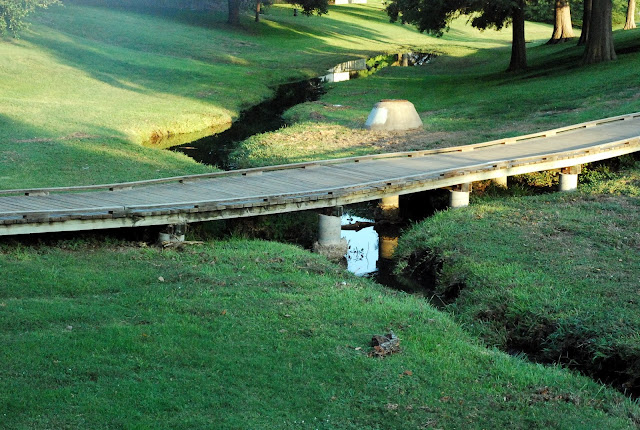
Oh! Remember that bridge I showed you during the flash flood that I was worried would float away? Here’s how small that creek is supposed to be (with the bridge still in tact.)

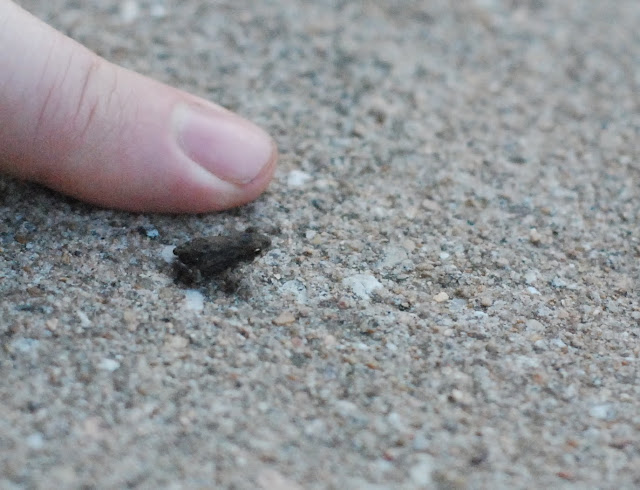
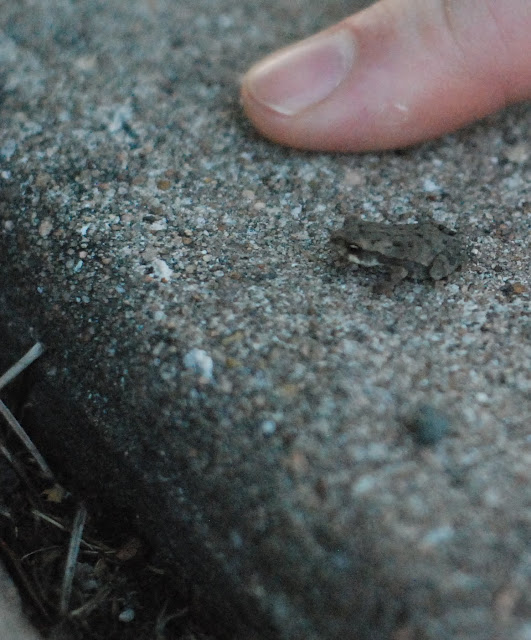
We left the greenbelt at this point, and wandered up the neighborhood toward home. A few strides up the hill and suddenly DH exclaimed, “Watch out!”

I froze.

“What?”

He pointed.

How adorable is that? He even had a “big” brother.

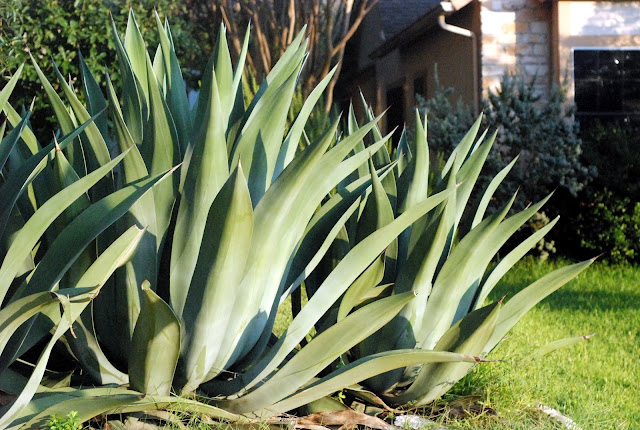
Up the hill a little further are some of the happiest looking (and healthiest looking) agave I’ve seen in a neighborhood.

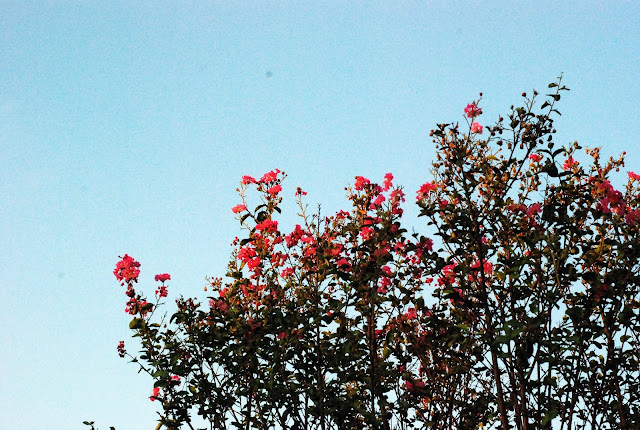
With the light fading, I’ll leave you with the pink blossoms ablaze in the setting rays…

Brrr…

At 10:30 this morning, I decided to head to the Gardens and do some loooooong overdue clean-up on my tomatoes.

  • Floppy hat: Check.
  • Old socks and play shoes: Check.
  • Green bag for possible harvest: Check.
  • Camera: Check.
  • Molasses, clippers, and gloves? In the garage…

I opened the front door. Fully expecting the wash of moist heat to crash against my skin…nothing. I took a few steps off the front porch toward the garage. I stopped.

I thought, “What day is it?” (August 19th) and then “Am I awake?”

I went back inside.

Me: Hey! It’s almost chilly out!

DH: *laughs* It’s not exactly chilly out.

Me: It is! I almost need a jacket. And my phone says it’s only…

DH: 85?

Me: 74!

In a race to beat the cloud cover’s inevitable break (which would let the heat come pouring in) I threw together the rest of my accoutrements, called the dog, and headed to the Gardens.

I was met with a lot of pruning. Little leaflets that mostly drop in your hand with a light grasp…
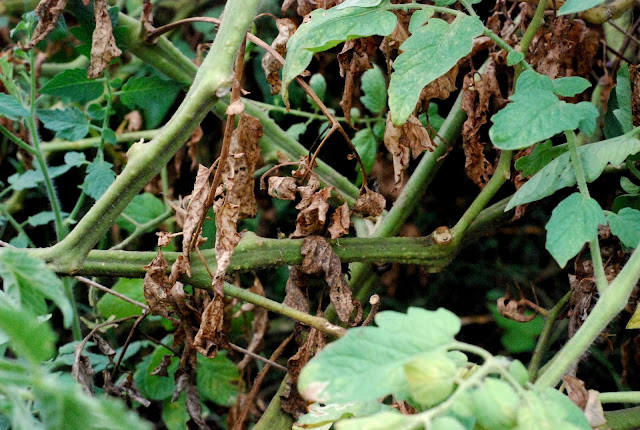
To entire plants that are ready to come out…
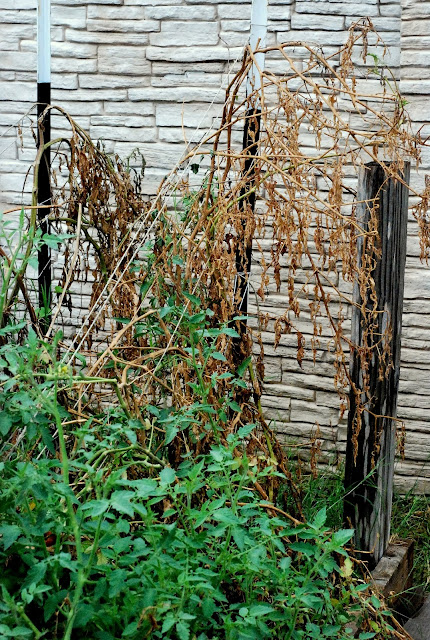
You can even see that it’s cloudy.

Two hours passed quickly, and while I nearly filled a garbage bin, the visual proof of progress was less impressive.
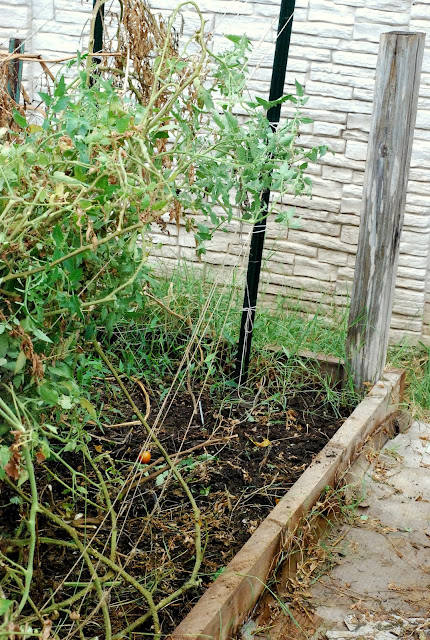
I did make a few discoveries during my work.

  • What you don’t prune in the spring, you will prune before fall.
  • If at first grasp the brown tomato “twigs” don’t fall off, don’t pull. The healthy vines will suffer. Let go, snake the pruners into the shadows, and snip the elbow.
  • Always follow a vine all the way up to the tip, and all the way back to a joint, before making a decision. You don’t want to accidentally lop off your best chances at a fall harvest, nor do you want to end up making four cuts when you only needed to make one back at the joint.
  • If your staking is preventing a vine from coming loose, then do cut it four times into manageable pieces.

I learned last year that fall fruit only comes from new growth. Once fruit has set and dropped, that vein won’t fruit again. As with most pruning, tomato pruning encourages the plant to redirect energy to the new growth. So as slow as this process is, it works for me. I’ve seen others who demolish all of their tomatoes except for about 12″ of the trunk, mound up the mulch, and wait until fall. I’ve seen yet others cut an 18″ length of new growth from the top of a plant, bury it 12″ under, water, mulch, and wait until fall. I’ve never attempted either of those methods, but last year pruning all of the spent vines off the living branches resulted in more tomatoes than a salad could hold for weeks before the first frost took them all.

Keep in mind! Not all varieties will like this method. (Also good to always keep in mind – not all varieties will like you.) Cherry Chadwicks love this method. Black Princes will give one more round with this method. You may get a Zapotec or an Oxheart.

What won’t you get?

Well, I won’t get any of these:
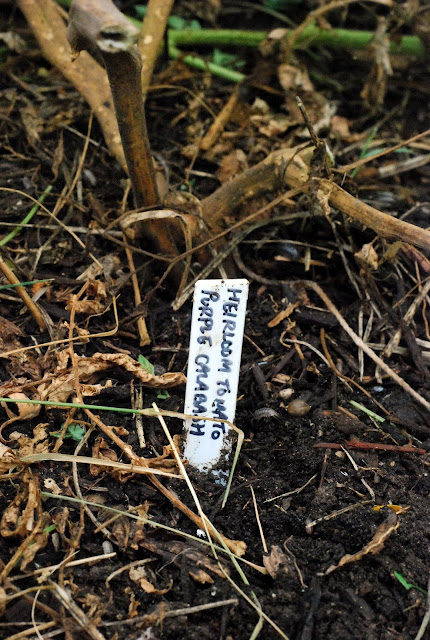
Or these:
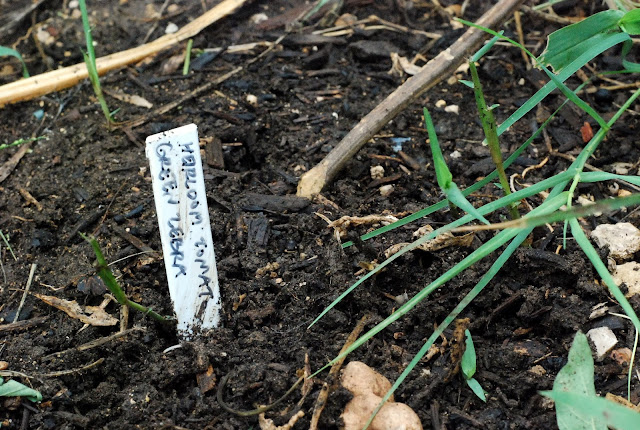
As much as the Purple Calabash grew into a vigorous plant, and as much as the Green Zebra hardly grew at all, neither gave up a single fruit this year. (They were also the only two tomatoes in the plot that I didn’t sow myself.)

Next year, I may really make the time to stake and prune the tomatoes like I’d like to. (I always make this vow. I’ve yet to keep it!) But why? Why worry about staking and pruning when this year’s harvest was epic, and the pruning can happen now?

It has to do with air.

The jungle that grew this year didn’t let air circulate. This is part of why there were bunches upon bunches of brown “twigs” throughout the tomatoes. When the air doesn’t circulate, the soil doesn’t dry out. This can be a good thing, in that the soil stays cooler even when the mercury passes 105. Like with most things, a balance is important. This year, my soil was a little more damp than ideal. How do I know?
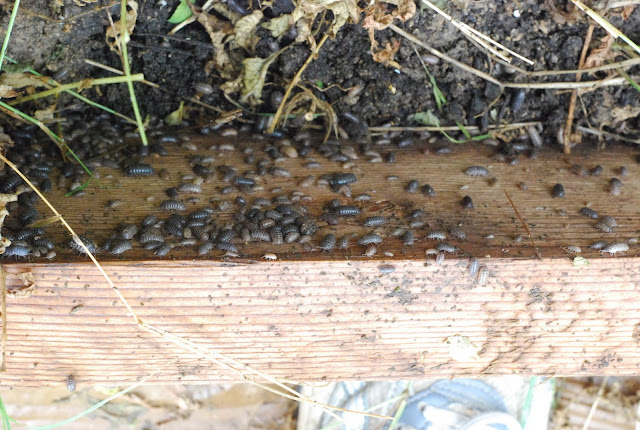
These guys. They like the moist. They like the dark. They like the rotting. They’re not “bad bugs” when they’re just here and there. When they reach these levels? They can take out a small transplant in a night. With the area cleared up a bit, pruned a lot, and re-trellised a smidge, they’ll be moving along to some place less airy and full of light (and more damp and dark) …like the rest of my tomato patch is still.

Guess who else I found hiding under the lush vegetation?
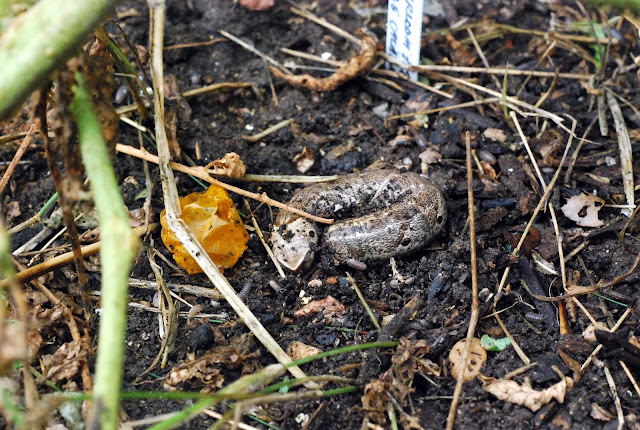
I don’t squick easily. I like most bugs. This thing…well, I thought it was dead. It didn’t mind the potato bugs crawling on it. It didn’t mind the spiders scampering across it. I couldn’t quite tell what it was, and decided to poke it with a “stick” (really, a length of tomato trunk.)

Lordy did that thing move! I managed to catch it. There was one other gardener working a plot this morning, and I walked over to her side of the allotments. She jumped back when she peered into the tub.

And that’s when I saw the horn.

This one made the one on the pecan look like a miniature caterpillar. I couldn’t squish it, it was too big and that would be actually disgusting to me. I found myself wondering if I knew anyone with a large pet bird or reptile. Instead, I left it in the tub on the porch until it was time to go snail hunting.
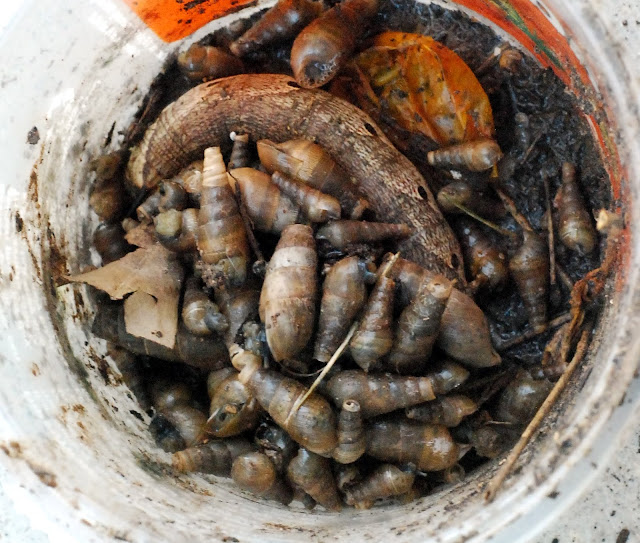
And the tub came along on our evening walk, which tonight had a detour to the pond.
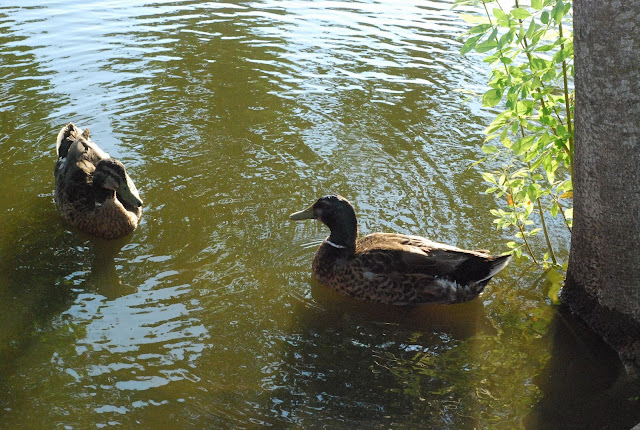
I do so enjoy how gardening challenges me. It challenges me to let things go, it challenges me to let things be “good enough” when they’re not perfect, and it challenges me to allow for (and occasionally enable) the natural state my dad tried to explain to me as a child when I was sad about a lamb lost to a coyote: “They have stomachs, too.”

I didn’t stay to see whether or not the ducks (or the geese they ended up chasing around a tree, amusingly) found the snails and the caterpillar, or whether they’ll all just make their way into the bacterial stomachs on the pond floor.

Some people find their practice in yoga, or running, or painting, or baking. Something where the purpose isn’t achievement. The purpose is practice. Mine, for now, comes from the soil.

 

Something’s missing…

One could philosophize as to whether the leaf is missing, or the caterpillar that ate it is. I would simply argue that both are long gone. DH was upset enough that as soon as I found the perpetrator, the perpetrator was no more. No chance for a photo op for the hungriest caterpillar.

Not only was it the hungriest I’ve seen (our poor small pecan lost nearly every leaf in such a short span of time) it was (likely as a direct result of its voracious eating) also the largest caterpillar I’ve ever seen.

If you haven’t seen the caterpillar for a Sphinx Moth before, I hope you get to some day (outside of your own gardens, that is!)

It was easily more than two inches long, and bigger around than my thumb. Not unlike this photo I found:

I am grateful, however, that I didn’t come upon it when it had reached this stage:

As that guy actually creeps me out a bit.

The one in our yard had unfortunately nearly finished off every leaf by the time I found it.

But thankfully, a few short weeks later, the tree looks to be making a solid come-back.

Lesson learned: Don’t leave your trees to fend for themselves.

I’d never really considered checking trees for caterpillars or other pests before. Growing up in the Pacific Northwest, there are so many trees that to do so would be a full-time job that never ended. Here though, where our trees are more sparse, it would be easy to simply do a quick walk-by and make sure that I found the smooth criminal (or fuzzy!) long before an entire tree was in danger of being eaten.

The landscape these days.

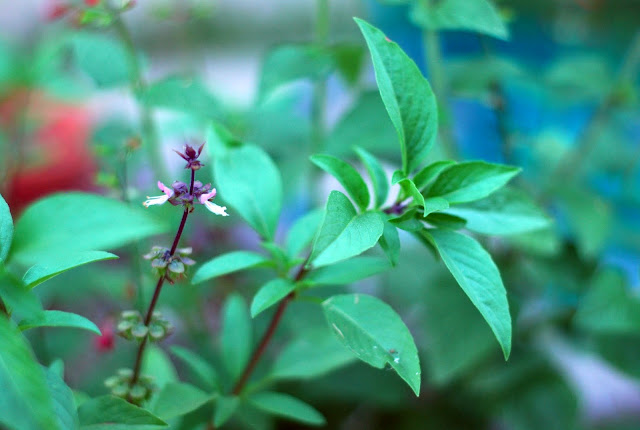
The Thai basil from the front bed that froze to the ground last December and showed no signs of returning?

Yeah. It hasn’t returned.

It has finally had some self-seeded sprouts reach maturity though! The bees around here must love licorice, because they cannot get enough of the blossoms on these ones.

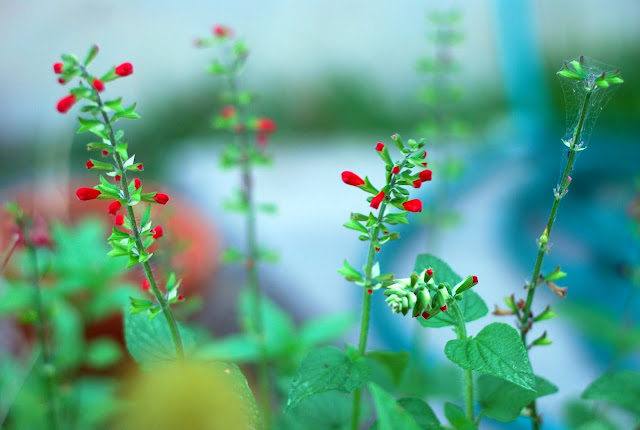
Speaking of self-seeding herbs, it took me two years of trying to get my Texas Hummingbird Sage seeds to sow, another year after that to get them to put on their first real leaves before kicking the pot, and finally last year, in my fourth year, with the last of the seeds in the packet, four seedlings reached transplant strength…only to lose three their first night out in the world. You had better believe that that fourth transplant last year received some serious babysitting and careful attention!

Lessons learned?

  • Don’t try and start herb seeds indoors like veggie seeds.
  • If you do, double your efforts. They are much less forgiving.
  • Get them into pots before they look like plants. Once those first real leaves appear, I think it’s a matter of days before it needs a pot or keels over. (This could just be me!)
  • Don’t over nourish the soil with compost or seaweed.
  • Put them outside in their pots. I think they hate AC.

All of that effort finally paid off when it survived the summer, flowered, and went to seed. Then came the next test – would I have to order another seed packet? Or would it really prove it was “Texas” Hummingbird Sage and successfully self-sow?

We don’t eat this herb (yet.) It has a curious flavor profile to DH, and I downright don’t like it. What I do like? Those beautiful scarlet blossoms that emerge from the Japanese-Temple-style buds.

July around here was lovely. We stopped with the triple digits for a few weeks. It rained (yay!) multiple times. It was actually a summer I could call “lovely” by Texas standards and was such a mental relief to so many local residents after the built up anxiety of having another year like last year.

That loveliness translated into a resurgence of growth in my Heat Bed! Totally unexpected, and such a pleasant surprise.

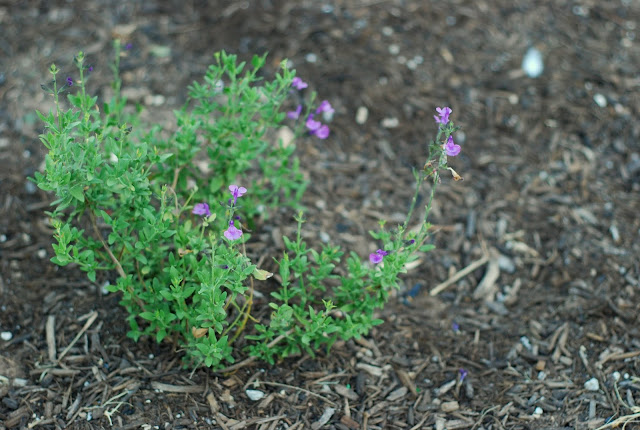
This little gentleman tried to die in his pot on the porch. Then he nearly died his first week in the ground. Again he looked like a thicket of dead twigs nearing the end of June. He’s even happier now than he looks here.

And this one has managed to bloom and re-bloom, grow and grow some more, and barely blinks when it hits 100. (Shh…it secretly gets to hide in the late afternoon shade of the Fragrant Mimosa.)