Sweet potatoes bought and grown.

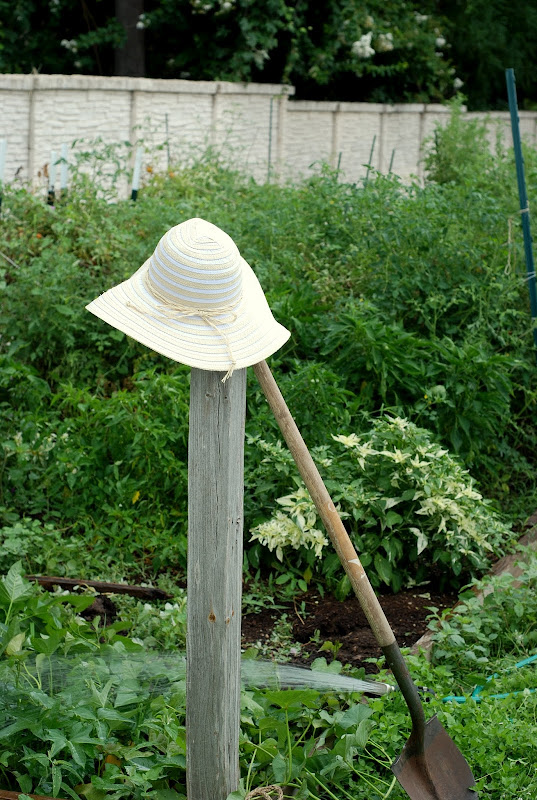
In the foreground are the sweet potatoes, followed by the pepper patch, and finished up with the tomato jungle. Nevermind the leaning shovel and sunhat taking center stage.

Isn’t the foliage on the fish pepper lovely? I didn’t expect a varigated leaf from the description on the seed packet, but am absolutely adoring this plant (and it grows a lot of peppers!) DH says they taste like “a jalapeno bite without the jalapeno heat.”

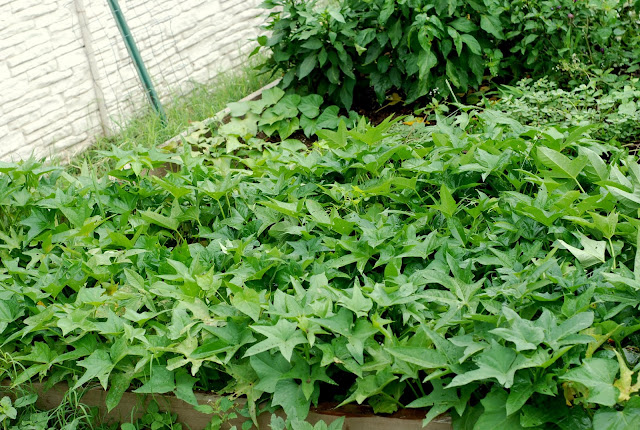
The things I’ve read on sweet potatoes say how much they don’t need watering once established. They sure do seem to like the water we’ve had lately though. They’re trying to escape their bed, climb the corner post, and move into pepper territory.

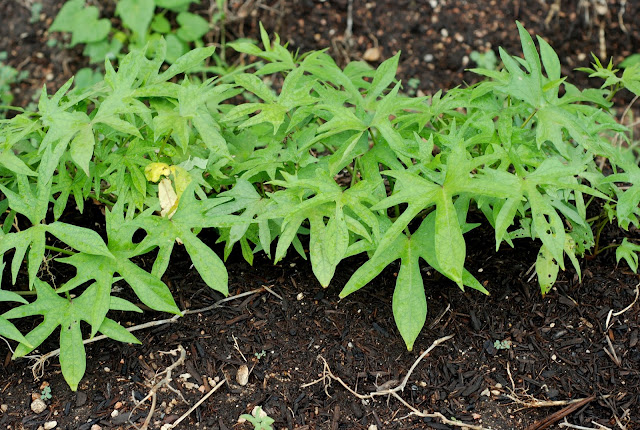
Those are the sweet potatoes that sprouted in my pantry, that I cut into thirds, dusted with diatomaceous earth, and buried. I did buy some sweet potato sprouts this year as well. Let’s check in on their progress…

Unless the pantry potatoes are all show and no potato, I know what I’ll be doing again next year…

An herbalicious mess.

When I planted each of these less than 18 months ago, they were from cute little 4″ pots, or even smaller transplants of my own. I over-pruned the sage in the back this spring (oops…) which created room for the rosemary to expand (and DH rarely cooks with rosemary.) The Italian Oregano made SO many seeds last year, I could plant an acre or more, and it’s starting up again. Nevermind those lovely purple trumpets on the Mexican Oregano, they can stay as they keep the bees, butterflies, and other flyers happy.

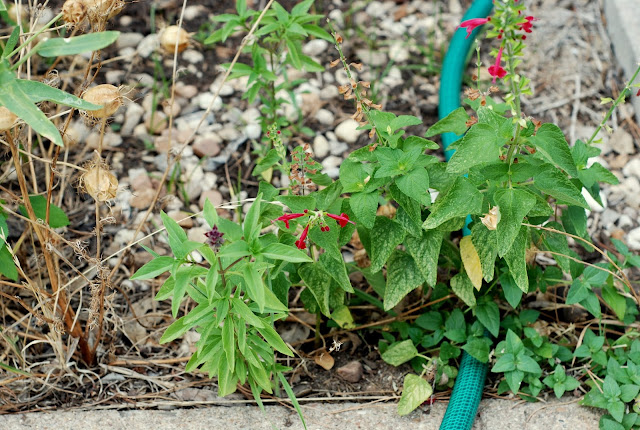
The volunteer Texas Hummingbird Sage and Thai Basil are popping up in some far-away places! Here they are fighting the good fight against some more Henbit.

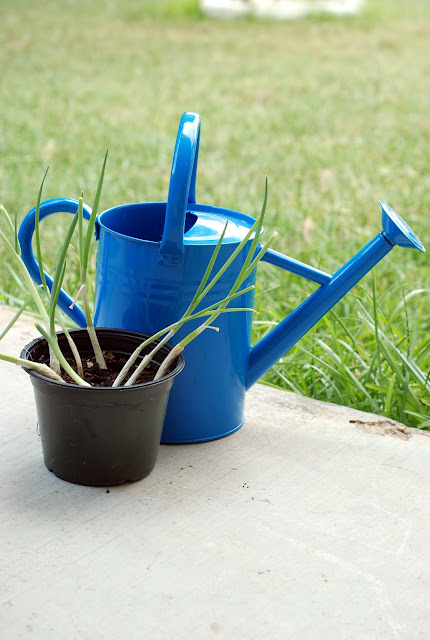
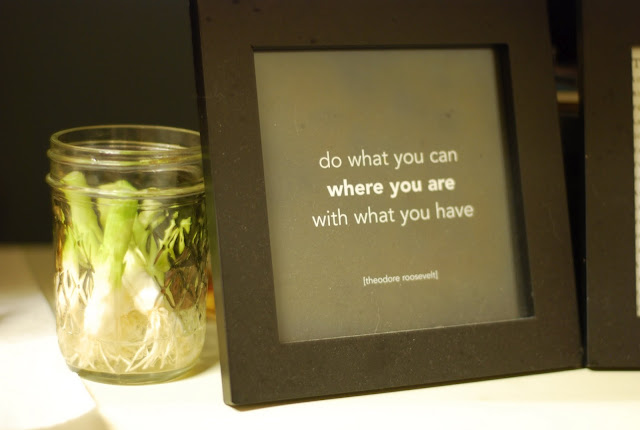
And those green onions I had in a jar on the kitchen counter? They’ve earned a pot – right next to my new watering can that I like maybe a little more than a sane person should.

The tops of the onions made it onto a burger for DH the other day. I’m curious to see how many more times it will re-grow.

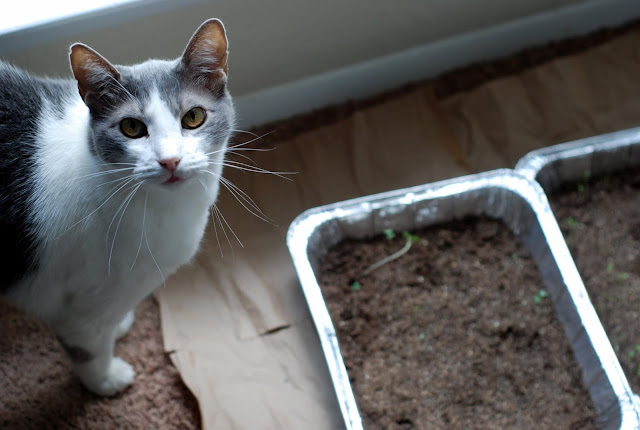
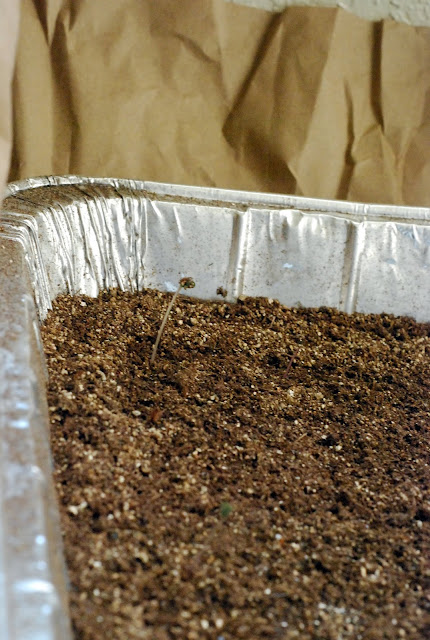
Speaking of re-growing? This guy had co-existed peacefully with five seed trays for the last month.

Notice I said “had.” This morning I was awoken by DH, who was obviously unhappy. When I inquired what was the matter, he said he had some bad news. I automatically started running various grandparents through my mind and then he explained that the truce was broken and four of my seed trays were demolished by the charming-looking feline pictured above.

I worked quickly, plucking the wee sprouts from the piles of tossed earth and replanting them in a resurrected tray. The cat has been locked in the other room all day. We’ll see how I feel about letting him out tomorrow.

Fingers crossed that the baby cauliflower, broccoli, lettuces, and greens recover. So much for keeping track of varieties this year…

The last two hours of light.

I’ve never so enjoyed two hours of pulling weeds. With our dog on a longer rope to wag his way to greet any wandering garden neighbors, my big floppy new garden hat, and my mud-stained leather gloves, I squatted in the garden and pulled weed after rooted weed and lobbed it at the stone wall. The sprawling kind with the fragile arms. The tall ones with the white pillar flowers. The ones like those, but deep purple. The ivy. The frilly crawling ones. One after another, the hit the wall and fell to the earth. Soon there was a spongy bed of pulled weeds along the wall and a clear patch of earth between the peppers and sweet potatoes where for months there had been a growing bed of foliage.

Now the fish peppers are free to stretch their stripey fruit and variegated leaves toward the sweet potatoes.

And the sweet potatoes, they have a bit of a head start on the reaching-toward-the-peppers…

With the weeds gone, I marched to the tool hut for a shovel and wheelbarrow. Our gardens are supplied with a regular pile of mulch that composts nicely. The hut was sans shovel. It was then that I remembered the hut had been sans shovel for months. That’s ok. I’d learned last time that a wheelbarrow tilted just-so with a hoe to pull the mulch worked as well as I needed.

I tilted the wheelbarrow just-so. I pulled the mulch into it. Tilted it level. Backed it up off the mound and…nada. The wheelbarrow wouldn’t move. Perhaps I was in a hole? Check…nope. No hole. A completely flat tire? Yeah, one of those.

I went looking in the tool hut. There were two new contraptions. They’re like buckets, with tall backs like chairs, that have handles in the back and wheels on the front. Handbarrow? Not sure of the actual name, but it would have to do the trick. It worked surprisingly well! It only held about half of a wheelbarrow’s worth at a time, but was easier on my shoulders than a wheelbarrow. I don’t think it would work outside of a well tended path area, but for a place such as our gardens, it seems kind of perfect.

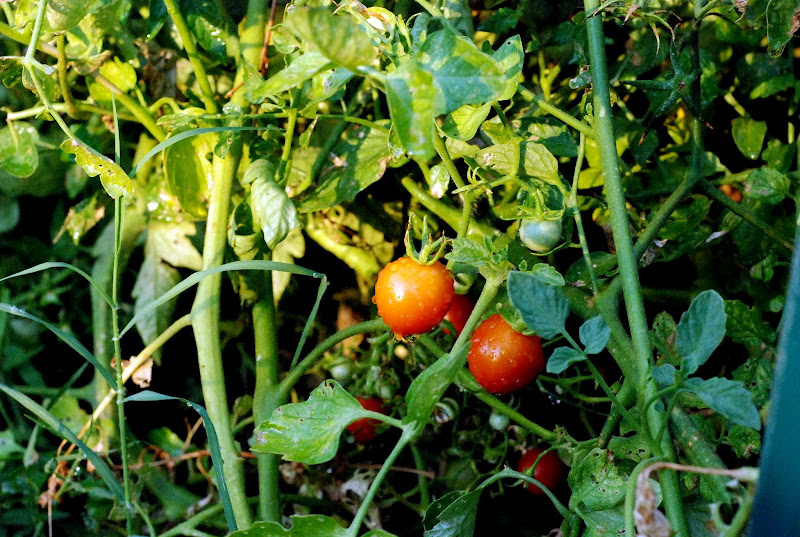
I hadn’t planned on watering, but with the triple digit heat before this “cool spell” and more heat expected, I figured the last hoorah of tomatoes could use the extra juice.

The tomatoes are definitely slowing down on production in this heat. Last year production didn’t make it until July, and this year the later heat and additional rainfall (additional? I mean the fact that there was rainfall at all) has them still going for at least the next week or two.

As much as they’re slowing down in production, they’re still growing. The camera is sitting on the top of a T-post, five feet tall.

They’re getting taller. Last summer my Cherry Chadwick vines were 15 feet long by the time the first frost hit in November. As they get taller, they point out the weaknesses in my trellising plan. These aren’t the tallest vines, they’re just the ones that have yet to fallen over. The others have all fallen over. They don’t fall sideways, because of the twine. They instead fall down the line, between the lengths of twine. This keeps the picking areas as clear as they have been, but it creates such a deeply thick jungle of vines and leaves, that the fruit is hidden from view. A little tomato hide and seek.

I know the Cherry Chadwicks, and the Black Princes will make it through the summer with careful water management and send a second harvest into the world after the heat of the summer has passed. I am excited to see if any other varieties do the same.

Delicious homecoming!

Coming home is always so nice. Aside from DH and the boys being here, it has so many reasons that I love coming back. It smells like DH’s cooking. It has the right pillow. I have gardens to walk through.

More reasons?

Sprouts!

This is the cauliflower pan. As many varieties as I like to grow of peppers and tomatoes, so far I’ve only grown one variety of cauliflower – Amazing.

And the delicious part of coming home?

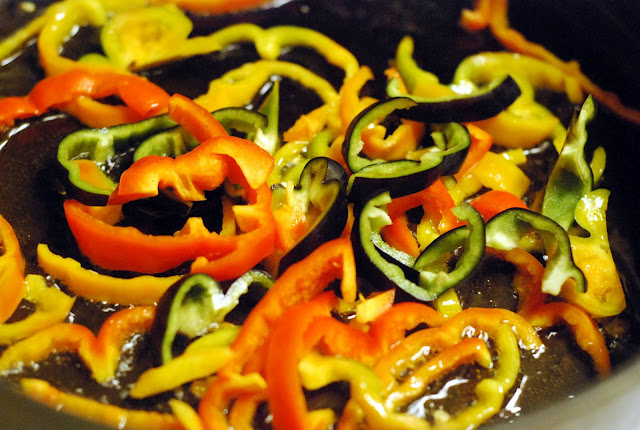
Bell peppers from the garden! Orange and purple, even.

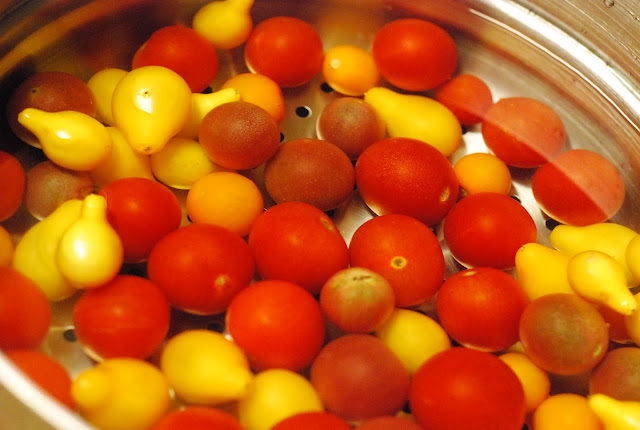
And those tomatoes? Still going strong. We broke the 40 lb mark and still can’t keep up. I’m taking more to work tomorrow to give away, and still have too many. What to do? The internet says you can freeze cherry tomatoes, which is about all I have time for currently. So as much as I’d like to try my hand at canning tomatoes for the first time, I didn’t grow any typical canning varieties and honestly don’t feel like blowing up the kitchen with my canning shenanigans. (If anyone knows how to keep the kitchen moderately clean while canning, I am all ears.)

So, I removed the stems, and put them in a strainer for a quick bath.

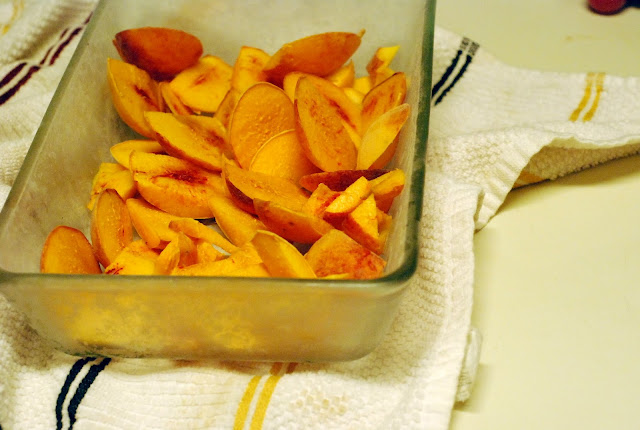
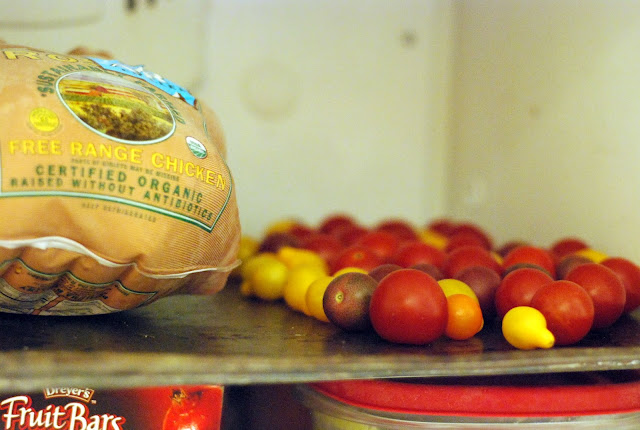
I gently rolled them on a tea towel to dry, placed them on a cookie sheet, and started to put them in the freezer…ooops! No room! So I made room by taking out the peaches I just froze and putting them in a ziplock for longer storage.

Oh, and making sure your cookie sheet actually fits in the freezer? Good idea BEFORE  you put the rolly-polly tomatoes all over it. Also, because you don’t own a cookie sheet with edges, right? Right. (I don’t.)

So carefully tuck the cookie sheet into the freezer…and then! The chicken doesn’t fit. Luckily those tomatoes are rolly-polly! So I rolled them over, and the chicken made friends.

But not all the food is a success. This was my second year attempting melons, and my first year with melons setting on the vines. I think I may have planted them out too late though. They’re ripening while still tiny-sized. One Tigger Melon ripened and went bad in a day. The other? Ripened at the size of a golf ball. And this poor guy, a Kansas Melon, was growing nicely and we hit 102 this weekend. Boom. Ripe and bug-infested. But doesn’t the flesh look lovely?

The Farmer’s Market here is a good gauge for me as to when things should be ripe. I try and work backwards from when things at the Farmer’s Market are available to when I should be sowing similarly plants. The melons were ripe here about a month ago. I direct sowed these melons…where are the notes…that I didn’t make on the melons! Ha! My timeline shows that I intended to sow them March 15th. With how this year has gone, I probably sowed them about March 30th. So next year I’ll start them indoors Feb 1st and see how that goes. We have gotten a freeze in March once in the last nine years (for a few hours) but this year we didn’t have a freeze after…December?

And today we hit 106.

Home, hot, sweet, delicious, home!


P.S. If anyone remembers to remind me, I do not care for Jiffy Organic Seed Sowing Mix. It’s like powdered dirt it’s SO light and fluffy. I couldn’t recall if I liked Jiffy and didn’t like MiracleGro’s Organic, or vice versa. I’ve just re-learned my preference, but that doesn’t mean I’ll remember it.

Pepper lessons, basil confusion, and a landscape raspberry.

I spent a four-day weekend on a business trip and arrived home just in time to do some more work before ordering some take-out and hitting the gardens. The light was fading fast, and the insects were emerging with even greater speed. The fire ants had once again relocated, and I had once again been too stubborn to don real shoes and received two more bites for my troubles. I had remembered to leave the bug spray in the car though, and escaped with nary a mosquito bite. DH managed only one fire ant bite, no mosquito bites, but took the cake with a mean mystery bite on his back.

We were once again rewarded with pound after pound of fresh heirloom tomatoes! DH struck up an easy conversation with a neighboring gardener, and we managed to send her home with a few of his heaping double handfuls of the smaller varieties. She’s raking in buckets of apple-sized tomatoes herself (we politely declined any.)

What about non-tomato news?

Things I’ve learned about peppers this year:

  • Two cayenne plants is more than enough to make an attempt at a ristra for the first time
  • Two jalapeno plants is not enough for DH’s appetite.
  • One fish pepper plant will make more fish peppers than you know what to do with (assuming you know what to do with a fish pepper, which…I don’t yet.)
  • Two Anaheim pepper plants is perfect.
  • Two poblano plants is half as much as necessary for prepping portions to make chili with in the winter.
  • One Chinese Five Pepper is one too many (apparently something likes to devour every last bit of leaf on the poor thing as soon as the peppers are close to ripe! That, and I’m not sure if they’re ripe when they’re purple (their first color), white (their second color), or if I’m supposed to wait until they’re dried and shriveled and orange…)
  • We both miss the magic of the Czechoslovakian Black Pepper.
  • Purple and orange bell peppers are magical when combined in a dish. One of each is not nearly enough!

Things I still don’t know enough about to help thrive? Basil tops the list. I can get it to germinate. I can get it about two inches tall. I can keep it alive if I buy it…until it gets mealy bugs, gets woody, keeps over, or bolts immediately.

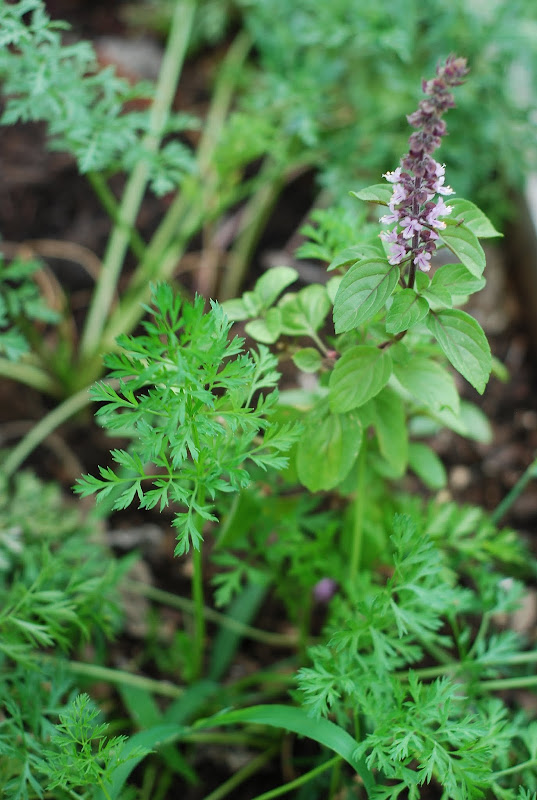
In the “bolts immediately” category is this lovely African Blue Basil. Not a week after planting it in the backyard bed (under a shade cloth!) it flowers. It’s lovely to look at, and perhaps I should reconsider basil as a landscape plant for the bees instead of a seasoning for us.

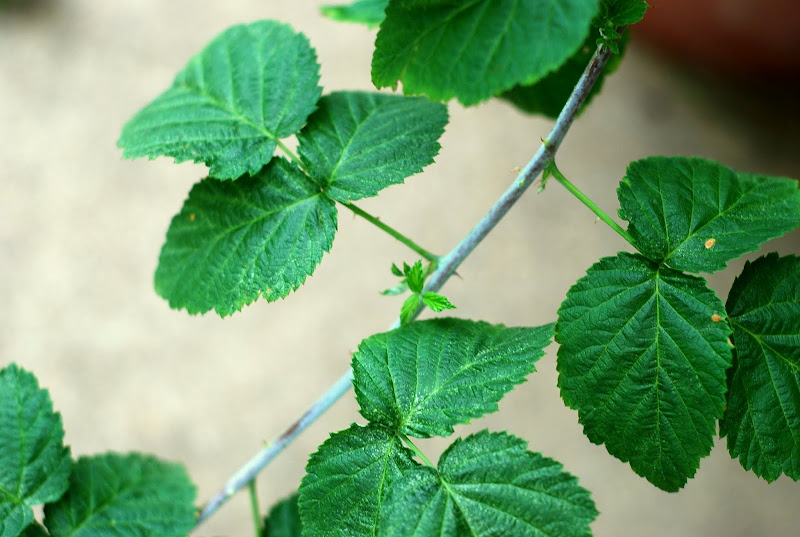
Speaking of landscape-plants-that-I-would-like-to-some-day-eat-from, my raspberry is happier this year (it’s third year) than last!

Beginnings and ends.

I think I’m still getting used to cycles in this part of the globe. As a child, the pensive hours, the long days indoors, and the ends came in the winter months before the beginnings of spring. The holidays were there to keep you company. With family, with baking, with decorating, with giggling cousins or parents’ friends’ stories, the long grey days seemed warm (and the wood stove helped!) There was candlelight and cookie icing to brighten the end of the year and hold everyone over until the daffodils broke ground. Until the green shone through the drizzle. Until the beginnings began again.

This part of the world, you get your cabin fever in the summer. You get addicted to the AC. You avoid the UV. You make your alphabet soup with different letters, but it’s still alphabet soup. It occurred to me today, that as I finish harvesting the carrots, the beets, the chard, the beans. As I finish harvesting the more sensitive families of food, it’s time to sow the seeds for the fall. Minus the heat-lovers and the cool-friendly, the rotation is about the same – what grows in the spring grows again in the fall, except here the die-out is over the summer.

So the onions, beets, and carrots will begin again in October, even though they’re also ending now.

The peppers and tomatoes are still going strong. They are loving the heat, but will soon lose their taste for it when it averages another 10 degrees higher each day. As they end, their seeds are dried, labeled, and stored for sowing just after Christmas.

It’s an adjustment, to find new-growth withdrawals as summer officially begins with the solstice tomorrow, but I make do.

It’s simply odd. When the winter doldrums are setting in for most gardens I hear about, read about, or dream about, they are ever-surprised at the winter growth going on in my beds. It only makes sense that when other gardens I hear about, read about, and dream about are in full growth swing with their flowers blossoming, their growth beginning in the summer: I have the same surprise, the same envy.

And so, I help new life into the world. I bring the sunshine in. I sow the seeds of the next cooler season and watch hope grow. Hope for evening breezes, for light sunshine kisses, for days so glorious you beg them not to end.

This time, hope takes the form of Lemon Basil, Cumin, Dark curly leaf parsley, and always – always – a volunteer squash.

The year of the tomato.

I thought I got a huge harvest on June 8th. Look at all those bigger guys out of focus in the background!

And then, on June 14th, I put the 8th to shame. Nearly twice the harvest as before!

Sunday, for Father’s Day Birthday, DH’s family came over for dinner and afterward wanted to head to the garden. It was really neat walking around the gardens with them. Oooh and Aaaahing over the giant gourd squash, the comically huge sunflowers, the beautiful squash flowers, and the mystery corn-grass in others’ plots. It was also fun to hear them get excited over all of the ripe tomatoes in my plot like I do. Once again, the harvest left the previous harvest in the dust. Once again, the latest harvest was double the previous.

Want to see what (at least) 10 pounds looks like?

Why only “at least”? Well, the scale broke. I thought it took regular batteries, and knew it had been dying slowly. It finally died, and I go to replace the batteries…giant watch-style batteries. Crap. So we’re guessing on the weight this time.

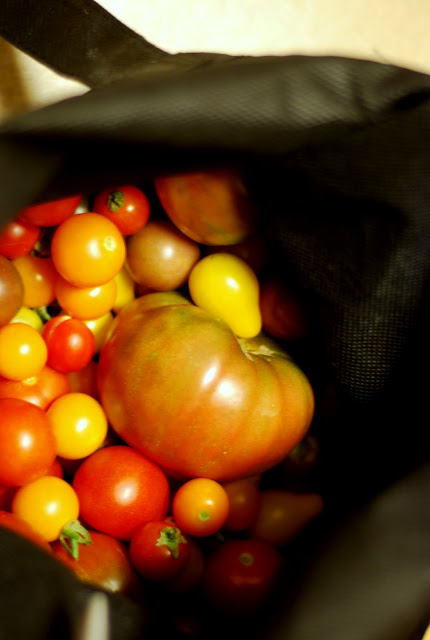
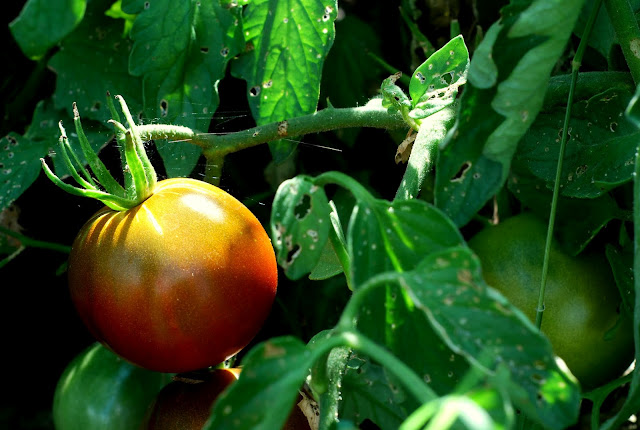
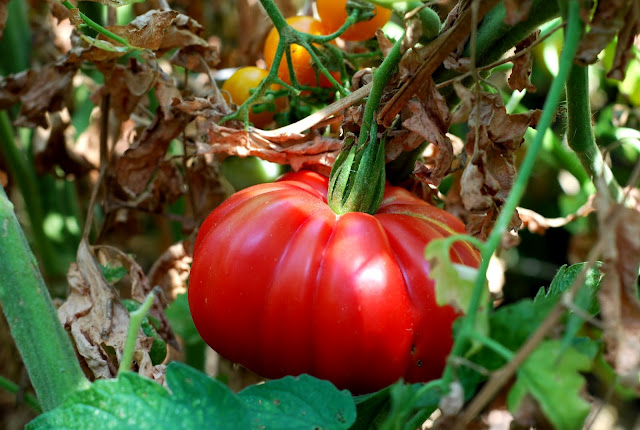
That morning I snapped a shot or two  of two of the large varieties in the early light. The Black Prince (so named for the dusting of darker green/purple shoulders) and the Zapotec (the pink wrinkly one.)

Colors!

I braved the heat today. Even now, at 9:15 with the sun completely gone and the night black – it’s 92 degrees. But I added taller trellis lines to the tomato posts. I watered. I found another melon baby. (That makes three!) And I witnessed my first sunflower’s first bloom.

That 92 degrees has been busy though. Busy baking my harvested bean plants to the ground, busy stressing out my melon vines (sorry, guys! I’ll water you more often I promise…), busy making even the sweet potatoes wilt.

You know who wasn’t wilting in this heat? The tomatoes.

Do you know what they were doing?

The first tomato harvest of the year wasn’t just one or three lonely little Chadwick Cherries like it usually is. I suppose it would have been had I ventured out to check on it days ago.

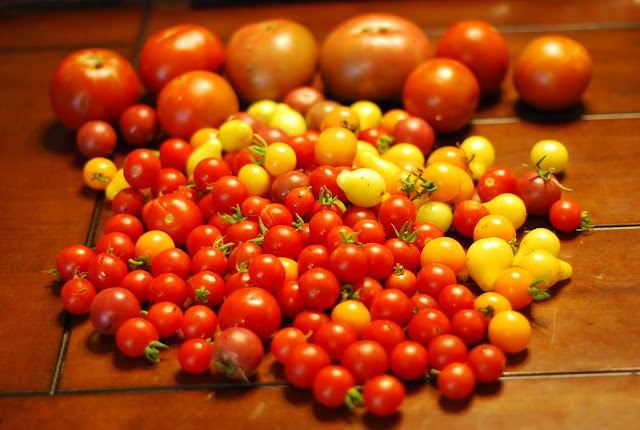
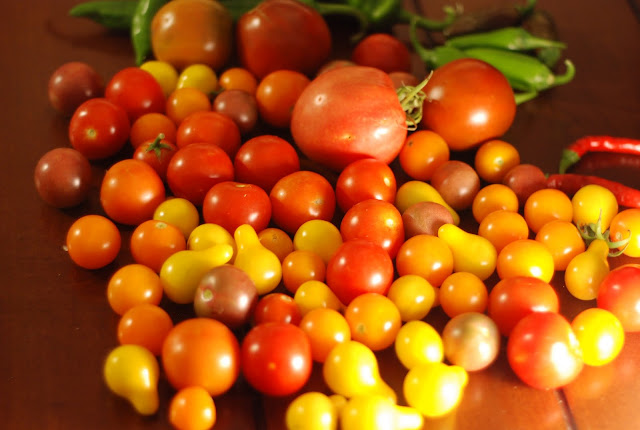
It’s hard to photograph tomatoes properly, I find. The oranges in the photo aren’t nearly the day-glow orange the tomatoes are in real life. The pinks look less pink and the purples look more purple.

Surely the internet has lessons in how to properly capture such colorful globes of flavor? Time to investigate!

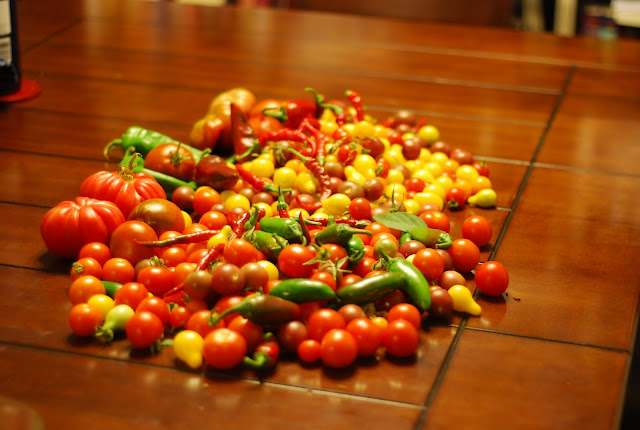
In the background, we have more Anaheim peppers, more Jalapeno peppers, and the first ever (for us) Cayenne peppers! I don’t have the names of the yellow pear shaped ones, the day-glow orange, the small purple, or the small red – those were saved seeds from a colorful pint at the Farmer’s Market last year. Oddly, in the pint last year, they were all much smaller. The larger red cherries are the Chadwicks. The pinkish one taking center stage is an Oxheart or a Zapotec, I’d have to reference either my planting chart or last year’s harvest photos. The bigger guys in the background? Those are the Black Princes.

Sadly, the monster heirloom from saved seed from a Newport, Oregon Farmer’s Market went missing. It didn’t lose half its flesh to birds. It wasn’t infested with crawlies. It wasn’t even on a snapped branch on the ground due to too much weight and too little support. I’m trying my hardest not to think someone walked away with it. Perhaps those in the community gardens with fences have the for a reason after all…

Operation: Wild Bed

Over the last six months or so, I’ve been slowly chipping away at a small plot of grass at the front of our lawn.

Tangent: If this wasn’t a rental, that wouldn’t someday in the not-so-distant-future have tenants living in it, all of the lawn would be gone. All of it. But. It is what it is. And. The front lawn specifically is mostly ours, and partially the neighbors. By ripping out all of ours, I would be directly (negatively) affecting the property value of our neighbors by diminishing most of their front lawn to about…four feet wide. Basically – that’s just rude. Ultimately, if their property value is reduced, so is ours. Someday, I will not live surrounded by lawn. Today is not that day. /end tangent

I’ll make due with a patch though! This spot will be a wild bed. A bed for the bees, the butterflies, and maybe even the birds made with drought tolerant plants and natives. I  started with some plants gifted to me by my folks, via Landscape Mafia. A few holes in the lawn, a few scoops of manure, some beneficial fungus, and in they went. Months passed as I worked on the new 400 sq feet over in the community gardens, worked more than I’d expected, and trained for the mini-tri in the evenings. What I didn’t realize, was that what was, to me, very clearly a garden bed…wasn’t so clear to other human creatures. DH was kind enough to mow around the plants…and apologized for accidentally over one that was completely hidden under the grass. The folks that pick up the recycling at the curb thought it appropriate to put the recycle bin (the big kind, on wheels) back down in the bed instead of the street. That was the end of another plant. Thankfully, the two lost plants were of the kind that I had three so no single variety was gone.

DH, in his wisdom, suggested I communicate the existence of the bed more clearly to other human creatures.

We headed over to Whittlesey’s again, this time for rocks! We meant to get enough for this bed, the White Oak, and the new pomegranate in the back yard. We thought we got extra. Usually, that’s true. Never having purchased rock before…

We were a little short. The front bed got its boarder, and the White Oak has a C. The pomegranate is still without stone.

Over the last two weeks, I’ve been able to spend a little time every few days removing the sod and weeds from the front bed. When I started, we were still only in the high 80s, and I got a good space done in an afternoon. Now we’re always in the low 90s, and the spot gets sun all day. I can sneak in about an hour before the sun sets where the light is dying and it’s not sweltering. I’m getting there though!

Want to see what else is joining the Fragrant Mimosa, the Verbena, the Mexican bush sage, and the lone survivor of the Recycle Bin Lawn Mower Incidents?

We’ll see how they do. I may end up moving the Day Lily and the Lobelia due to too much sunlight.

As much as I enjoy growing food from seed (and saving seed from food) I haven’t ventured into non-food seed sowing other than simple flowers (wild flowers, zinnias, violas, nasturtiums, etc.)  Last year was the first year I’d ventured out of veggies into flowers, maybe next year I’ll venture more into the seed sowing aspect of non-food. Maybe not til the year after.

Do you save seeds?

Which ones?

I try and save seeds when I can. I read a few books on seed saving. I read a few articles, blogs, and pamphlets on seed saving. The verdict? Holy cow, are there a lot of “rules” for seed saving!

As much as I am a fan of rules sometimes (logic is fun!) other times, I’m perfectly content to find my bliss outside the lines.

Some seeds are super easy to save. Lettuce is one of them. I often lose track of my lettuce. I’ll eat it, and eat it, and it’ll grow back again and again. Until at some point I either need a break from lettuce wraps and salads, or the elements conspire for lettuce growth, and before I know it, my lettuce has bolted a few feet in the air. At that point, I know (from experience) that it won’t taste that good. Pull it up? Make room for something else? Sometimes.

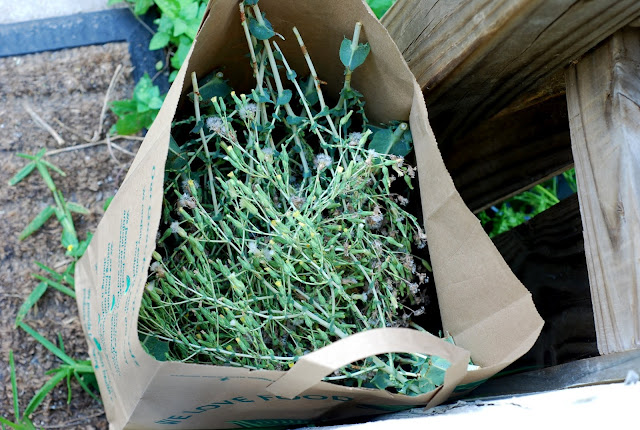
This year, having lucked out with acquiring 400 square feet of allotment in a community area, I’m experimenting with a long time goal of mine – a volunteer garden. Last fall, a few lettuce varieties volunteered in my lawn. I transplanted them into the garden after taking down the tomato forest. They reached about five feet tall before the flowers began to appear. About two minutes, a paper bag, and a pair of clippers results in more romaine seeds than I will possibly need.
Wild flower seeds are also super easy to save!
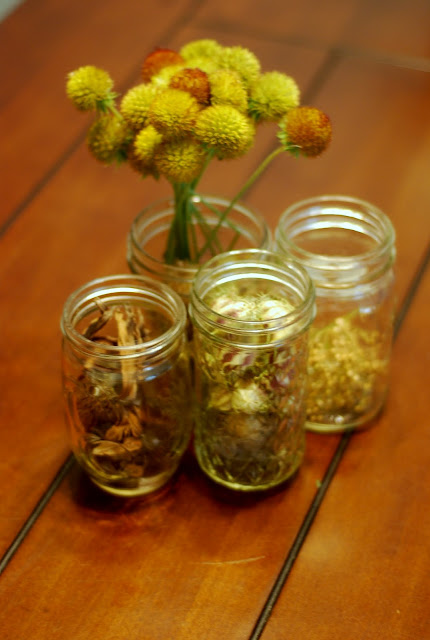
The “bouquet” in the back is made of the seed heads left behind by spent Blanketflowers. The jar on the left has Cone Flower Heads drying slowly. The center jar has the interesting pods left behind by Love in A Mist. On the right? Cilantro seeds, aka coriander.

Sometimes, “seed saving” is more of a harvest for our bellies than it is for the purpose of growing more plants. For instance – beans!
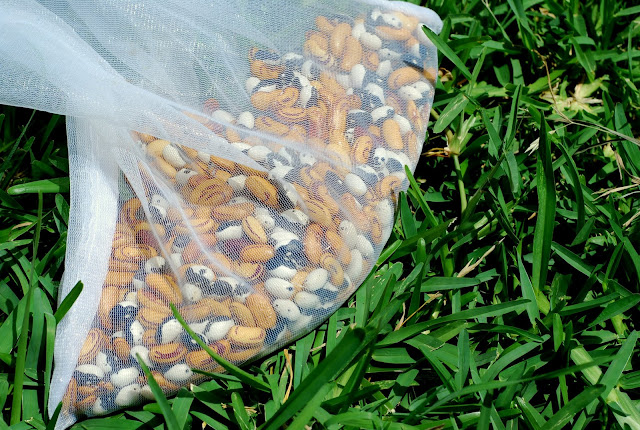
This is the main harvest of soup beans for the spring beds. Half Tiger Beans, and half Yin Yang Beans. It’s so nice to sit inside on a hot afternoon, grabbing some lunch and shelling beans. The dried bean casings make for good “brown stuff” for the compost, too!

I do save beans for the next season’s plantings as well, and I don’t save any old beans either – I start to play with the genes in the most simple way possible.

If a single plant has a lot more beans than the others, I’ll save a pod or two off that plant to hopefully encourage per plant production. If a single pod has five beans inside instead of four or fewer, I’ll save those beans as well to try and encourage more beans per pod. Occasionally I’ll remember to also save some of the first beans of the year (encouraging early production) and some of the last beans of the year (encouraging heat survival.)

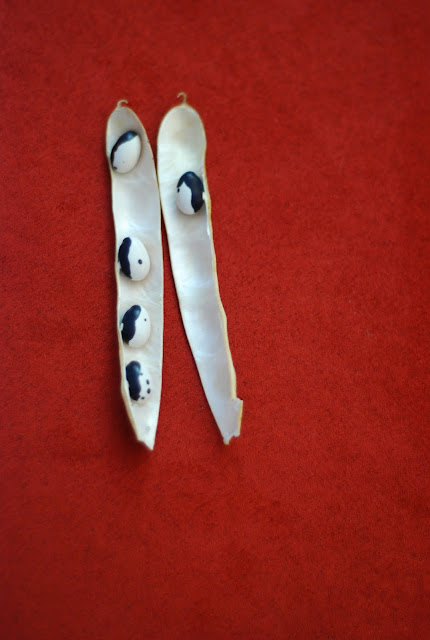
For instance, Yin Yang Beans most commonly have 3-4 beans per pod. This guy got to have his seeds saved for planting (instead of for eating.)
Not all seed saving attempts are successful. Most recently I tried to save seeds from a Farmer’s Market Patty Pan Squash. I scooped out the seeds, soaked them in water for a day or two, strained the goo from the seeds, and spread them on a paper towel to dry. When they had dried completely, it was clear that none of the seeds had had a chance to mature properly in the flesh, and wouldn’t be viable. I bought three more of the same patty pan squash this morning at the market to try my luck again. If I strike out a second time, I’ll simply break down and purchase the seeds I want. Then, when they’re growing in my garden, I’ll leave a squash on each plant to over-ripen so the seeds have a chance next year.

Other reasons not all seed saving ventures work out? Those “rules” the books and articles talk about. Beans are easy because they mostly self-pollinate. Other plants are friendlier with other varieties of the same type of plant. If you saved the seeds of cantaloupes planted next to cucumbers, you may not like what grows the next year! So the rules can be important, if you’re picky about the offspring being true to type, or if you want to make sure your snozzberries taste like snozzberries (which is important to do sometimes!)