Volunteer Acorn.

image

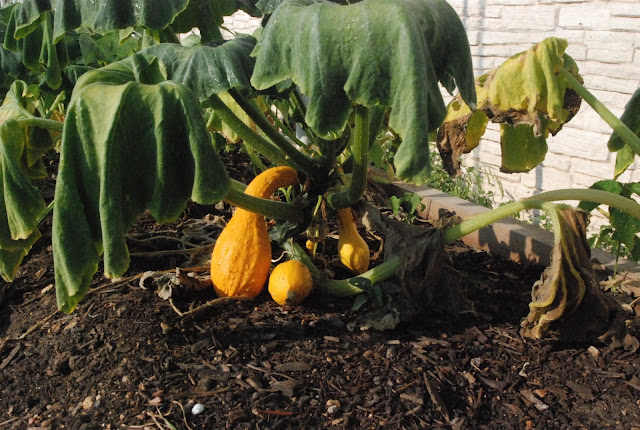
The past two springs here have given my backyard garden a blanket of volunteer squash. This year it wasn’t the mystery bowling ball variety, but instead every volunteer came up acorn. And then, too busy once again to keep vigil for Squash Bugs and Squash Vine Borers, one morning I glanced outside to see the blanket of squash leaves and pops of orange blossoms were gone. Deflated. Too late to save by attempting heroic efforts involving knives and twine or hand-picking and sprays. They were done for. I picked these this morning. Not from a bed of lush squash green, but from dried up and crispy beige. I left them on the dying vines as long as I could, hoping they’d find the energy necessary to ripen. Having never grown Acorn squash before, I have no idea how long they take to mature. I’d always assumed they would take months, like other winter squash, and thus avoided them as an on-purpose-plant. Fingers crossed these squeaked in under the wire!

Harvests!

The first real harvests of the year have come in!

We got maybe four pounds of soleil beans this year so far. I thought about calling my grandmother to learn about freezing them. I didn’t end up needing to – we ate them all!

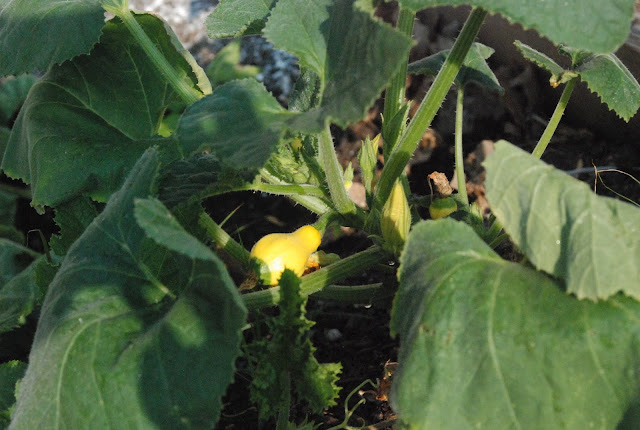
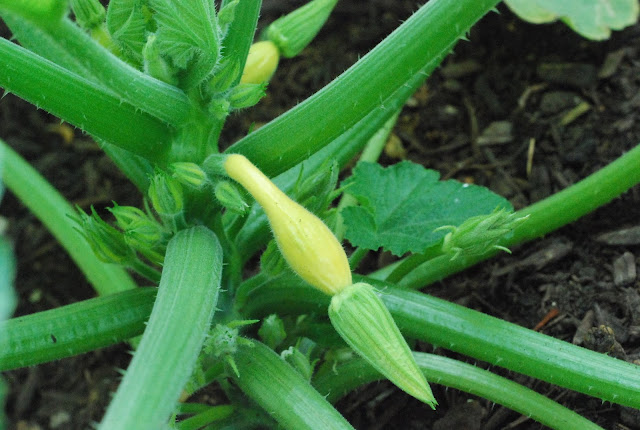
The squash have started suffering already…the heat, the fire ant infestation, the cucumber beetles spreading diseases, the powdery mildew from all of this (wonderful, unexpected, appreciated) rain. Still, they are managing to make squash. Say hello to my first ever, real-sized, on-purpose squash – the Summer Yellow Crookneck!

I’ve yet to pick these cute little guys, but they’re hanging in the heat better (they don’t have the fire ant issue either, which helps.)

This is my fourth or fifth year attempting squash, and the first time they’ve grown larger than my finger (we won’t talk about the years they didn’t set at all…)

Other first year successes after multi-year attempts?

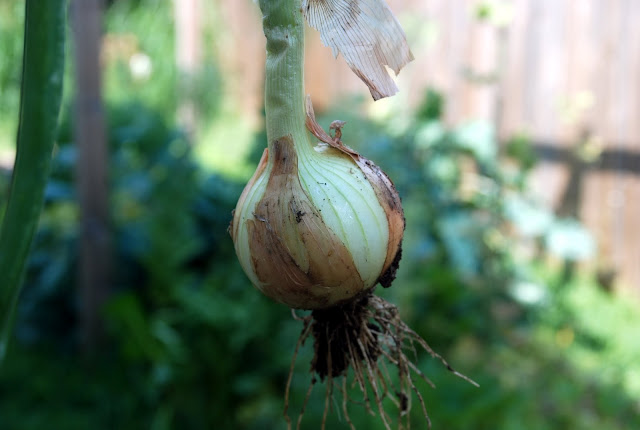
Onions!

Every year previously I’ve either over-watered, or under-watered. Over-fertilized? Did that, too. Under-fertilized? Yep. Had a dog (not ours) dig through the bed, killing them all? Mhmm. Onions and I have not had an easy time, and considering I don’t even like eating them…I was kind of ok with this. However, DH eats them almost every day, so it made sense to keep trying. He was ever so excited to have this sweet one in his breakfast! What was the trick to my first success? Probably a few things all at once.

  • Don’t plant deep. Really. If you think you planted too shallowly, you probably need to plant a little less deep still. (If you’re me, anyway.)
  • Don’t fertilize the onions. Fertilize the soil about six inches down, four inches away from the onion row.
  • Water. Don’t keep soaked. But do soak when you water.
  • Let the caterpillar eat the tips of the greens, at least it’s not eating your chard again!

Another veggie that I’ve grown many times without success yet?

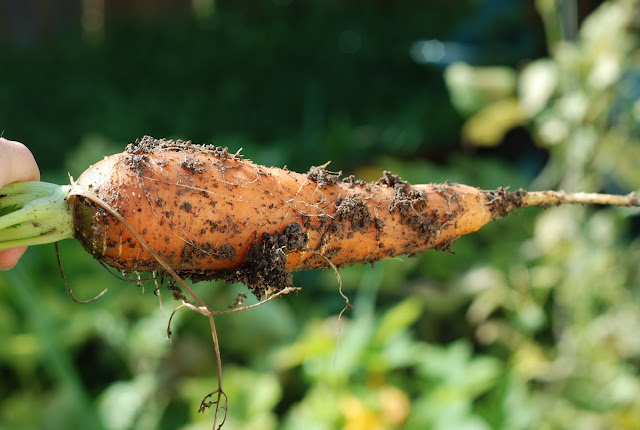
I could not believe how big this got! I sowed it just a few short months ago, as one of five carrot varieties. I tried carrots a few times over the last couple years as well. I lost an entire batch to a caterpillar invasion. Another time I lost them all to the shade of a ginormous squash canopy. Another time, as soon as I spread the seeds a thunderstorm hit and washed away all of the seeds.

Things I learned about growing carrots:

  • Don’t cover them with 1/8″ soil like it says to. Just sprinkle them on top of the loosened soil.
  • Keep track of where you planted the varieties, preferably by planting different veggies between varieties. I have no idea which type this one is, and would like to grow it again.
  • Water! Those wee little carrot stalks that sprout don’t have much of a chance if a hot spell hits.
  • Water some more.
  • The one thing I learned lately about carrots, that I kind of agree with, kind of don’t, is “unimpeded growth.” This carrot was surrounded by squash, other carrots, and volunteer lettuce. What it didn’t have was compacted soil, sticks, or rocks, to compete with underground.

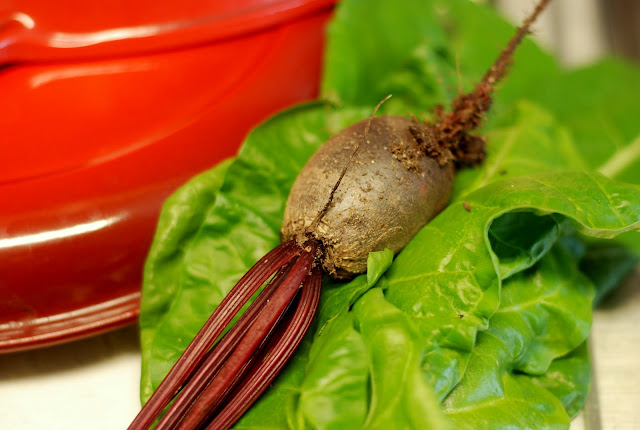
And, all of this new knowledge with carrots and onions, lead to my first attempt being a success with my newest favorite (to eat) veggie – beets!

I think aside from green beans, these were the easiest thing I’ve ever grown.

With all of this abundance, I surely had to make something tasty to celebrate.

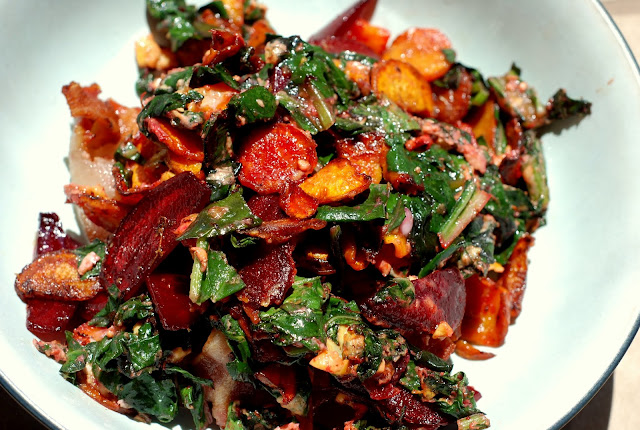
Most mornings, I make some concoction in the form of a saute that starts with bacon, ends with egg yolks, and has any number of veggies added in between. I’ve yet to get chickens (DH doesn’t want to be “those neighbors” and with our small space, we would be), evaporate salt, or raise hogs, but the rest was grown by yours truly less than fifty feet from the pan that cooked it. There really isn’t much better than that for breakfast.

Tomatoes gone wild!

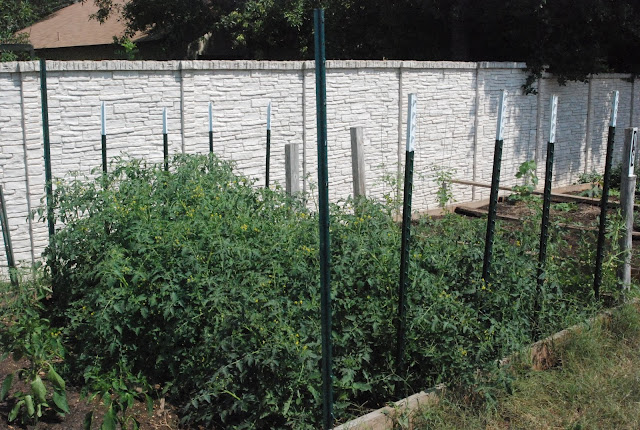
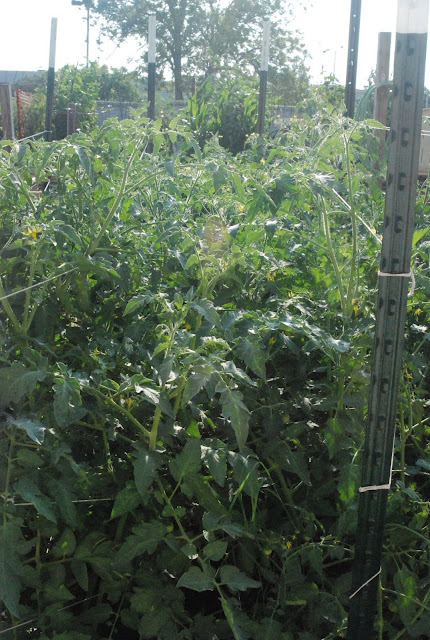
I meant to stake these tomatoes ages ago…I meant to plant them about two weeks before I had a chance to do so, and then to stake them I was about…oh, six weeks later.

Life getting in the way of gardening.

Better late than never! Stakes in the ground, thanks to DH and a post-driving-contraption of his father’s.

Things I learned are good to have for this process:

  • Ear plugs! Driving metal T-posts in with a metal T-post contraption is loud.
  • T-posts > U-posts. U posts are broader and have troublesome hooks on them that have to be hammered down before the post can fit in the contraption.
  • T-post drivers are handy. Much easier (and safer) than giant hammers, and much faster than regular-sized hammers.

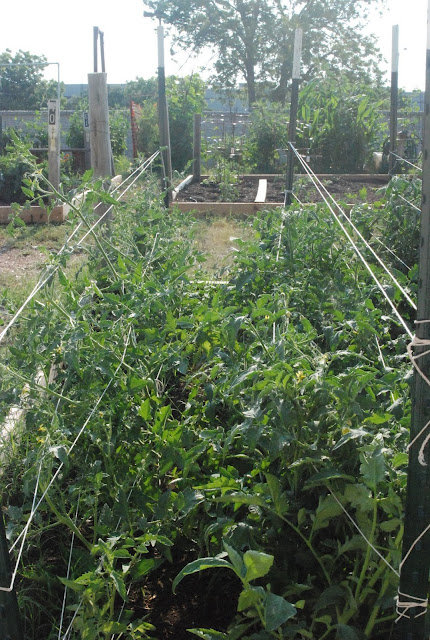
Stakes need string! I had intended to trellis these posts akin to a vineyard, and use stretchy green tomato tape to attach the tomatoes to the trellising…perhaps next year. So this year – more string it is.

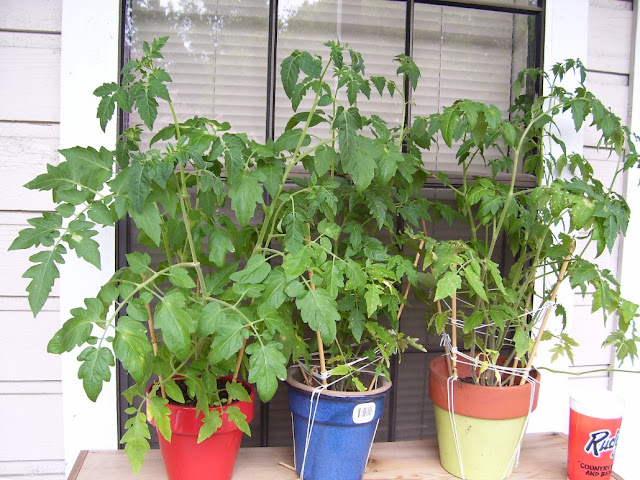
These tomatoes are fairly well behaved, considering that they’re overgrown as they are.

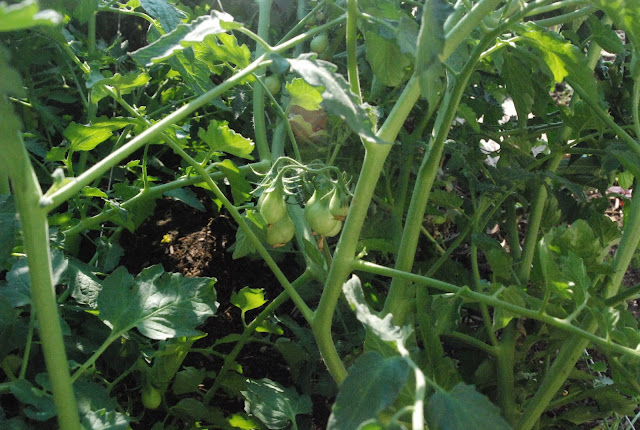
These other tomatoes…well, they can’t all behave can they?

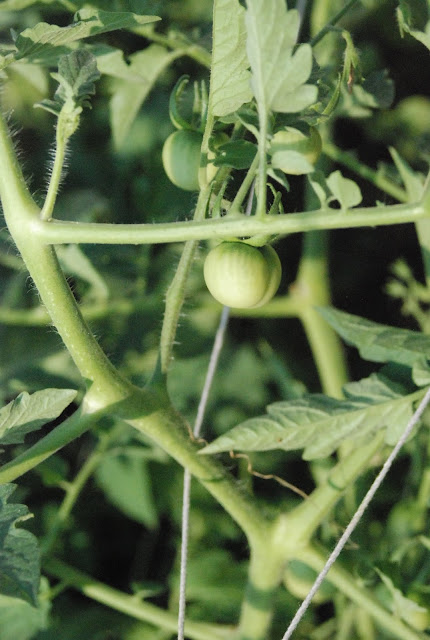
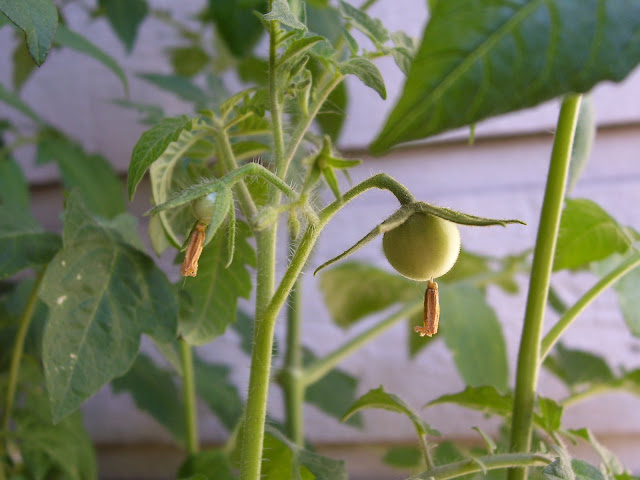
But, they’re all behaving well in the fruit-setting realm!

I expect these guys to come out yellow/orange in the end. I saved them from a farmer’s market “candy basket” last  year that I’m hoping to recreate. It had mini purple tomatoes the size of fat peas or small grapes, pear-shaped yellow-orange tomatoes, cherry-sized green stripies, and red-orange little gum drops. When they ripen, I’ll share photos in case anyone knows their names!

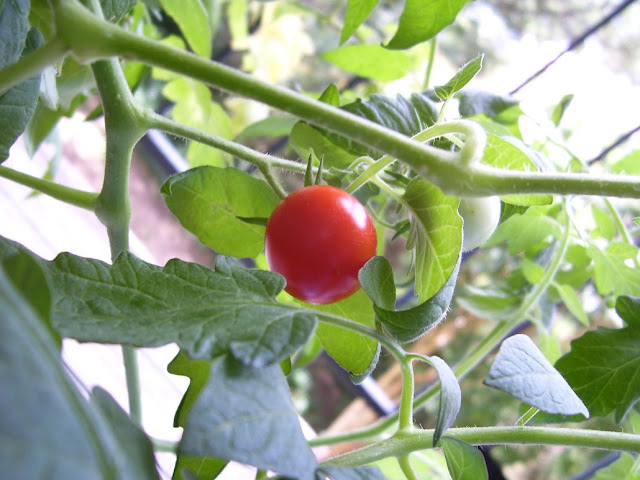
And my now trusty standby: Cherry Chadwicks!

Local changes.

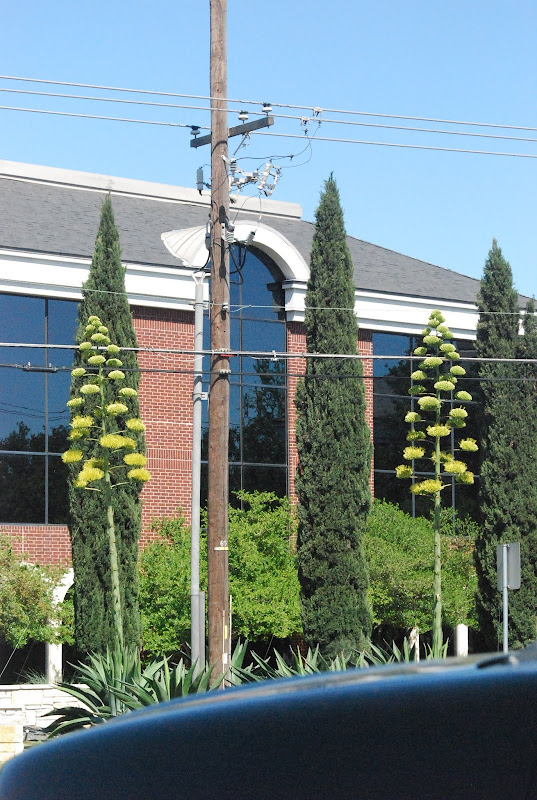
Most years, different agave varieties, and other succulent varieties, throw out their flower spikes. Usually these are neat little spikes 1/2″ to 1″ in diameter, and 3′-5′ tall. Occasionally, an agave goes bonkers.

Flower spikes in this family of plant, I learned last year, is their final hoorah before kicking the bucket. They’ll hang in there, growing bit by bit, year after year, until they sense that everything is just right. When that happens, the flower spike production begins, and occasionally – it gets breath-taking, awe-inspiring, and occasionally just downright funny.

I didn’t capture a shot of the largest one I’d seen to date (last summer? summer before last?) but it was HUGE. It was well over twenty feet tall. This year, this little cluster just brightened my day. Excuse the phone camera quality, shot at a stop light (from the passenger seat!) clutter in the frame.

I’m interested to see if they simply plant more agave (they usually do) or attempt to replace it with a quick-dying annual as other landscape crews in the city do.


Plodding along.

Things are plodding along in the garden beds here. We’re getting close to the “too hot to work outside” season. This is part of what motivates me to stay as busy as I can from Christmas through March around here, so that now, when the heat turns up, I mostly water, watch, and pull a weed or four.

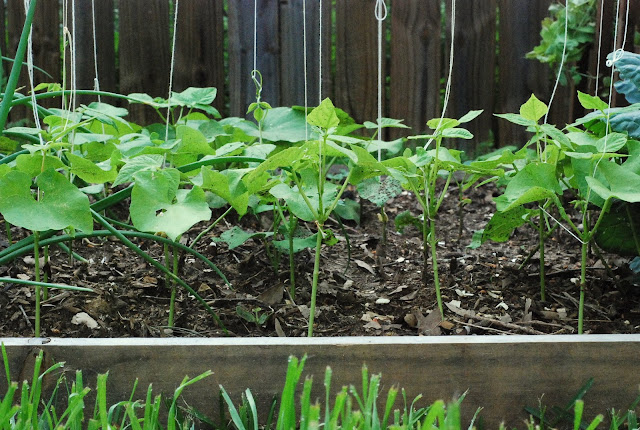
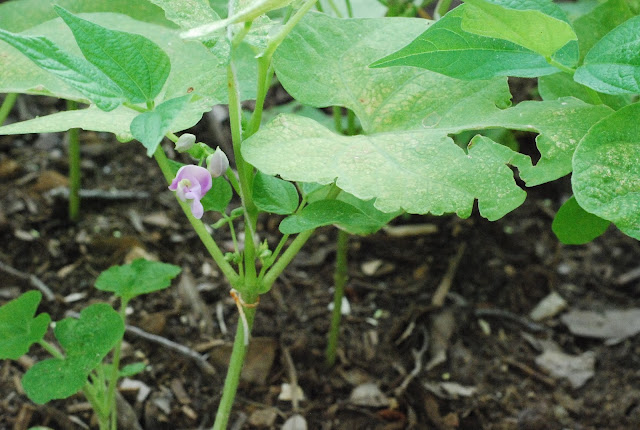
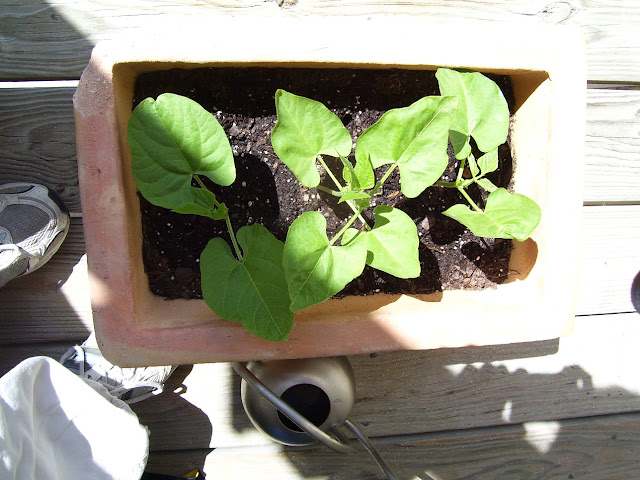
Which takes beans on March 23rd…

To beans on April 4th

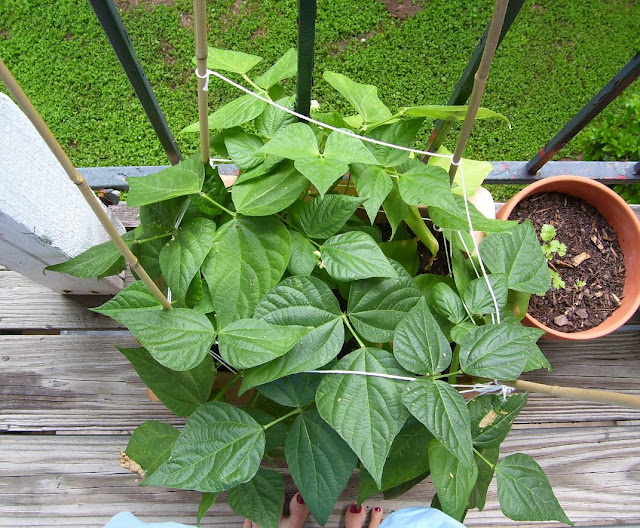
To beans that are now three feet tall.

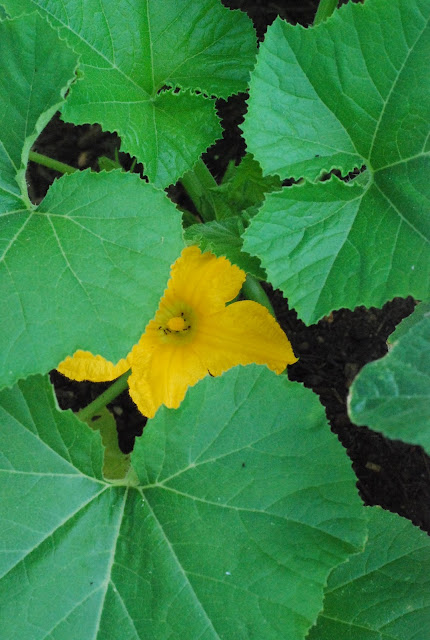
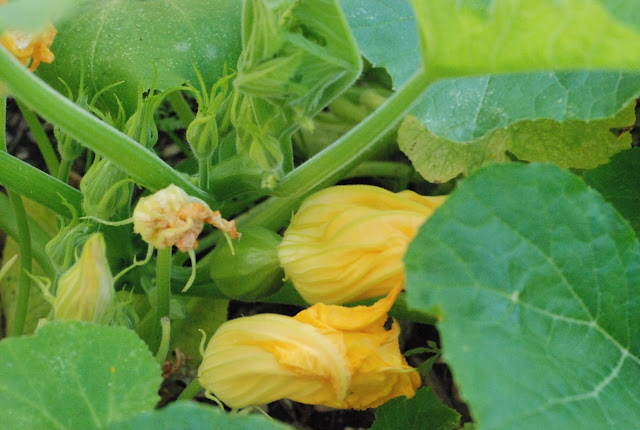
It also takes us from orange-yet-shy squash blossoms…

To mystery squash!

And yellow crookneck

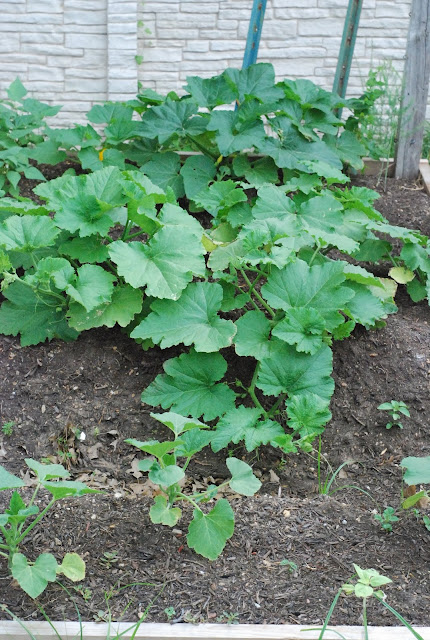
Unfortunately, my largest squash plants so far, the lemons (in the middle bed below)…

Are currently wilting due to a re-invasion (or perhaps never-left-asion) of fire ants. I sifted diatomaceous earth on them, as that had seemed to work on the ones by the walk-up at home, but apparently instead of causing them to relocate like the ones at home did – they simply burrowed deeper. I’m afraid boiling water might kill the squash along with the ants though. Before I try and scheme a plot to get boiling water two miles from my stove, I’ll dig the diatomaceous earth down where they live and see if that doesn’t agitate them enough to leave. Any other ideas on ousting fire ants? If only I had some phorid flies handy…

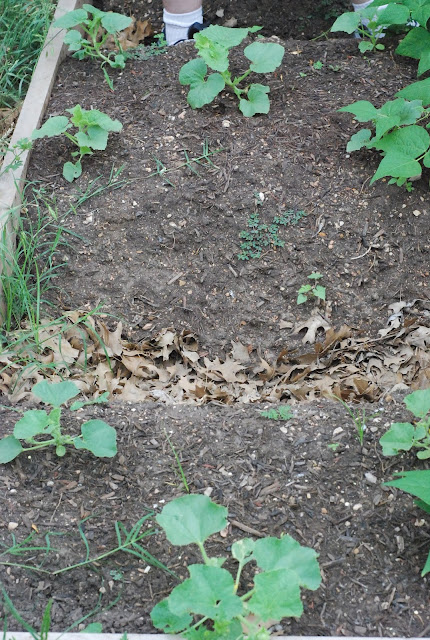
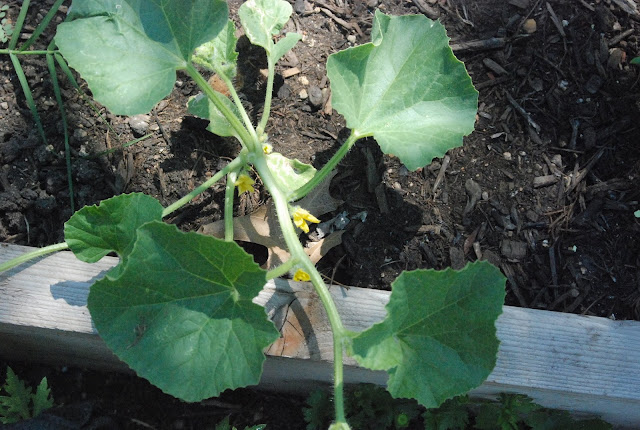
(A quick side note: Someone was asking about growth rates for melons. This is my second attempt at melons, but feel it safe to say they are slower growers. The picture above is of three squash varieties, all direct sown on the same day as three melon varieties.) The melon varieties?

A fair bit smaller than two of the squash types. Yet a mere three days later and we have a new surprise!

Melon blossoms!

Things I learned:

  • Fire ants aren’t gone just because you think they are.
  • Melons will take their time, but may surprise you in fits and bursts.
  • It’s ok to not be super busy in the garden all the time. Keeping it watered will keep it patient for your return.

Right Bed, say hello to your new inhabitants.

As I’m sure many of you do, I have a particular way I like to do things. Oddly enough, I think that defaults into a particular way things should be done.

Years ago, I encountered someone who had decided in their marriage, that “should” was a dirty word. I rolled this thought around in my brainpan for awhile, and over the years, have done my best to remove “should” from as many aspects of my life as possible.

Enter gardening. Gardening, in our household, is my realm. It’s what I love. It’s what I read about. It’s what I decide. It’s what I do. But the more gardening has grown for me, the more space, and the more work, the more I’ve needed to ask for help. DH is happy to help. DH is not happy to necessarily do things “my way.” Oh, right. Sharing.

I remember just over nine years ago, talking with DH, and worried that with how much we talked about every little thing, that someday we would run out of things to talk about. DH assured me that day wouldn’t come.

So here we are, still finding new conversations to navigate. We made it through, like we always do, by donning our work boots, and wading through the muck together. Amusingly, with gardening, that’s as literal as it is metaphorical.

And look what we accomplished!
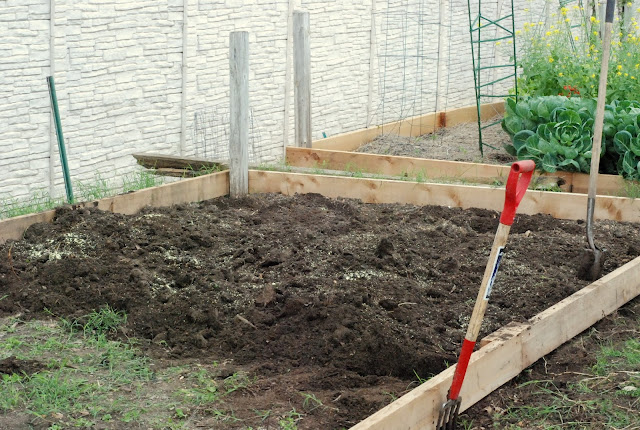
All of the henbit, all of the dandelions, all of the thistle, and all of the creeping, crawling, t-bar-rooting grass dug, discovered, and carried to the rubbish bin.

A quick dusting of sulfur, and we called it a day.

Then, on Sunday, I headed out late in the afternoon to finally let my tomatoes loose from their Sonic cups, and into the soil.
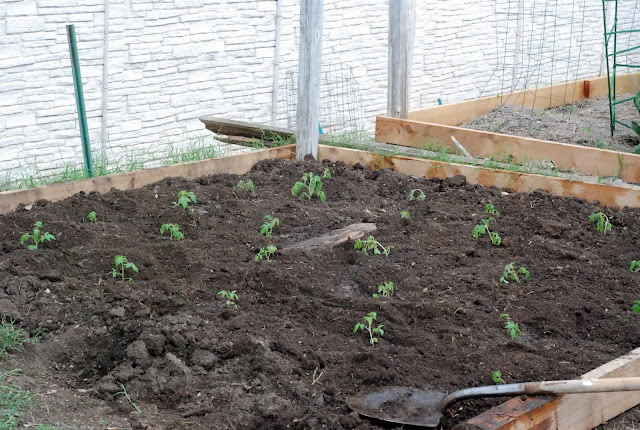
And then two days later, we had the biggest thunderstorm I’ve ever witnessed. The sky glowed lavender in the middle of the night. Thunder that lasted for nearly a minute at a time. Water literally pouring from the sky in solid sheets. The flash flood warnings had been up all day. The next day, the creeks raced one another to the sea.  It’s amazing what a terrible drought will do to your perspective. I don’t mind the rainy days this spring. I revel in them. I still don’t do well with two cloudy days in a row, and miss my sunshine when it happens, but will take every drop of water the sky wishes to give us, but look how happy the pond is these days…
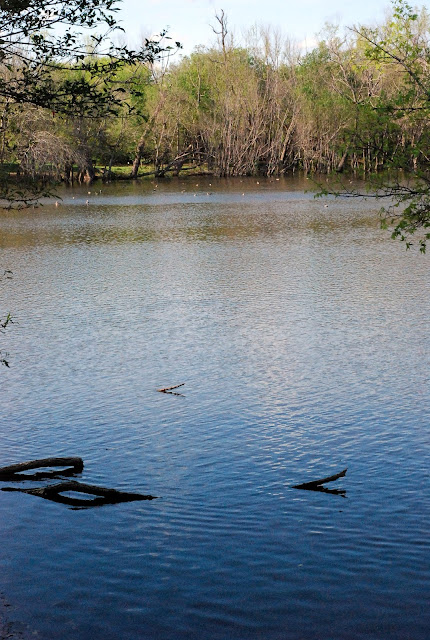
So what happens when it dumps buckets on the freshly turned soil?
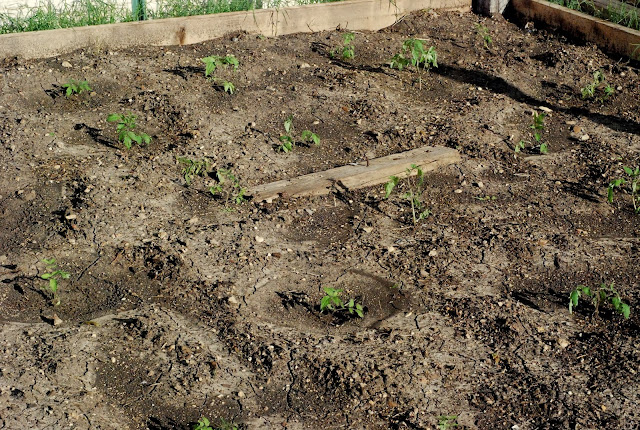
Beaten down baby tom-toms, and a cracked surface.

Thankfully, the community garden gods that be, delivered a new truckload of mulch sometime in the past three days!
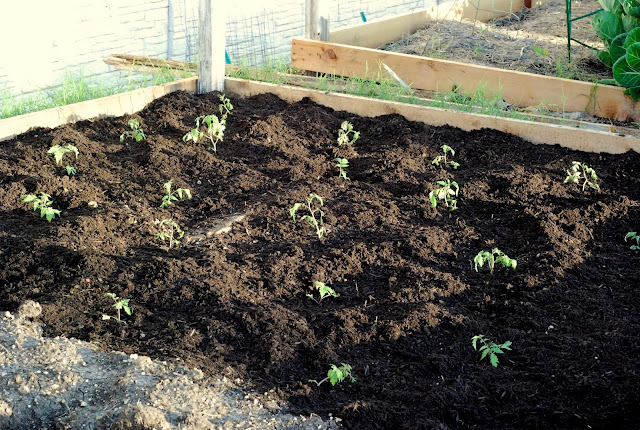
That catches us up to…Wednesday.

Saturday, it was time to prep more of the bed to get ready for peppers. DH was responsibly studying at home, so it was up to me to get as much done as I could. In the three or so hours I was there, I managed to not get sunburned, water the squash, the melons, the beans, and the tomatoes again – and dig another 60 sq ft or so. My hamstrings (go figure) are still sore. But! The weeds are out, the earth is crumbly, and the worms were found. (Not that they were lost.)

That was it for Saturday, so when my borrowed shovel returned to me, I packed up the dog, my dusty self, and headed home.

Sunday was much less labor intensive, but I must say the heat is already pushing me to restructure my day to avoid the late afternoon. Sunday was transplanting my pepper starts from their Sonic cups (happy hour at Sonic, if you don’t have a Sonic near you, is dangerous) into most of the rest of the Right Bed.

DH and I had stopped by Green and Growing for some diatomaceous earth and mycorrhiza. The mycorrhiza made an appearance in each hole before laying the pepper roots in the ground. I just learned about mycorrhiza on an episode of Central Texas Gardener – apparently it is a beneficial fungus that creates a happy relationship with the roots of most plants. It enjoys the carbs the plant roots offer, and in exchange delivers minerals and other nutrients to the roots of the plant. It also is purported to help with water absorption which is always appreciated in this area.

The diatomaceous earth was purchased for a few reasons:

  1. Fire ants have invaded the crack between the sidewalk and the lawn, and also like to travel on the Right Bed’s border board. I’m allergic and have yet to boil enough water to kill them off or make them relocate.
  2. Supposedly it can help with other pests (caterpillars, I’m eyeing my chard since I can’t find you myself) so I thought I’d give it a try for that.
  3. And since I did remember to get some, and forgot to pick up more rock salt or bring a beer to the gardens, my nearly-demolished Soleil beans (and their neighbors) got a border sprinkle.

And so, the bugs were battled and the peppers were planted.

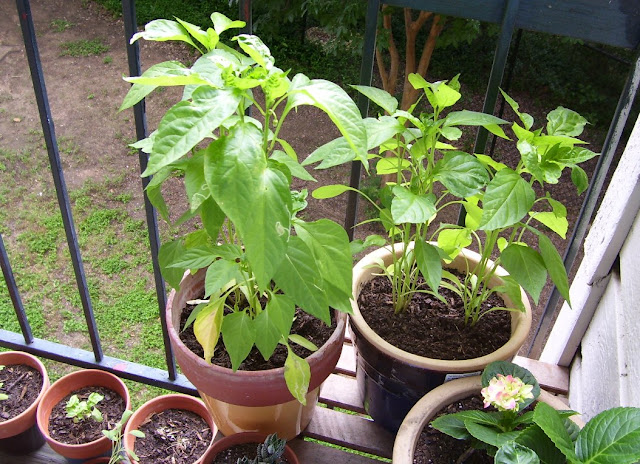
In planting the peppers and accounting for how many of each variety had survived my neglectful sowing process this year, I realized that in twelve pepper plants, I had zero bell peppers. Did I mention that I don’t eat tomatoes? Or hot peppers? So so far, the Right Bed is all for DH. I’m ok with that. It’s just kind of funny that I didn’t realize it until now.

Pepper Plants Planted

  • Anaheim (two)
  • Cayenne (two)
  • Chinese Five
  • Czechoslovakian Black (sadly, only one)
  • Fish
  • Jalapeno (three)
  • Poblano (two)

With twelve in the ground, I have room for at least three more in that area, and have yet to decide what’s going in to the bean spots when they’re finished, so perhaps that means I do get to go plant shopping after all!

And while I’m on the topic of seedlings I’ve killed so far this year, I’m fairly certain all of my ground cherry sprouts kicked the bucket in their secondary pots. If the tomatoes were happy, and the peppers were mostly happy, I’m not sure what went wrong, but shall try and try again.

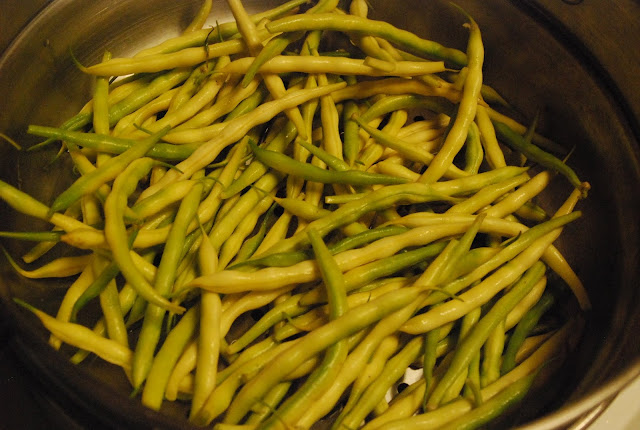
Stringing string beans with string.

There are a lot of ways to grow green beans. Bush beans are the compact varieties that purport to not need supports. Pole beans need a decently tall support system.

I’ve seen people use beautiful trellises. I’ve seen 1″x1″ sticks whipped into a teepee. I’ve seen wire cages and a myriad of other contraptions. When I first started growing beans in 2007, they were in a pot on a balcony.

That pot wasn’t going to hold a trellis. I didn’t have the budget for a wire cage either. I thought about using the balcony railing itself, but with afternoon sun hitting this balcony straight on, I wanted it mobile in case my learning curve required movement. I looked around my small space, and found a bamboo stick. I had some string left from a tied quilt. A longtime fan of building forts with what’s on hand, I thought to build a climbing “fort” for my beans.

Things I learned from this project:

  • Bamboo stakes, in a pot, will lean.
  • Bamboo stakes, in the earth, will rot, break down, and snap off.
  • Beans want to grow UP, not around. In this arrangement, I ended up with multiple stalks climbing up the bamboo stakes themselves, not around the string as I’d hoped.

And so adjustments were made. For the last four years, and again this year, I’ve used the same simple system. I ditched the bamboo stakes all together. I kept using the same string, and from last year to this one – I’m actually using the exact same pieces of string.

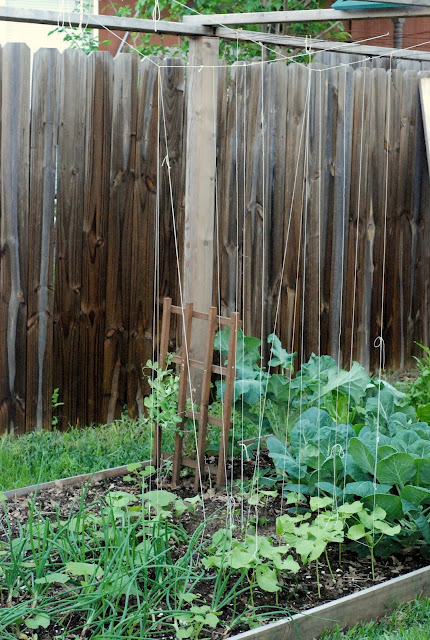
See? I did mow and edge! But really, last year DH helped edge this bed in planks, and also helped dig in six posts and screw in cross beams to create a top structure that mimicked the rectangular shape of the bed. From there, he screwed in anchor screws every 3″ for me where the beans would be, and strung wire across the width of the bed. From those wires, I tied off falls of string, which met with the beans on the earth.

At the end of the season, I carefully saved the strings so as to not let them knot, and here they are again! In my crop rotation, the beans are under sections that lack the cross-wires. Because I wanted to get this done in the snatch of evening light I had available, I didn’t ask DH to add more wires. Instead, I ran a cross-string from one wire to another, and tied my drop lines from it.

Now the beans are set. When each one buds its climbing vine, the string is ready. I learned (and finally remembered!) to string the beans before the climbing vine appears. Once it does, it will grab onto whatever it can…other beans, tomatoes, onions, weeds… and getting it to gracefully retreat to take to the string as you want can damage it, or whatever it’s attached to.

But what about bush beans? Don’t those stay compact and not need a structure?

Yes, and no.

Bush beans definitely won’t grow 10 feet tall, it’s not in them to do so. They will on occasion, depending on variety and environment, grow tall enough to fall over. When that happens, the beans you were hoping to nurse onto your plate, or into your saved-seeds, will be devoured by the hungry critters on the ground. Or mold. Or mildew. Or otherwise allow diseases to enter into the plant more easily, creating an issue.

So, I give them a hand. They don’t necessarily get strung on strings (unless I have extra strings) but they may get some good mulching, or string, or a random trellis I acquired. Anything to give them just that little boost to stay off the soil can help.

Last year, I gave the Tiger beans a little string, and left the Yin Yang and Soleil beans alone. The Yin Yang beans didn’t mind, but the Soleil were a little iffy. So this year, the Tiger will get their structure – perhaps a trellis akin to a vineyard? We’ll see. The Soleil, unfortunately, are being demolished by a mystery pest.

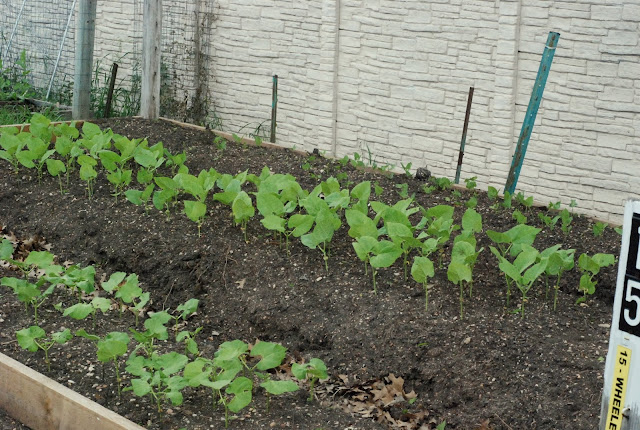
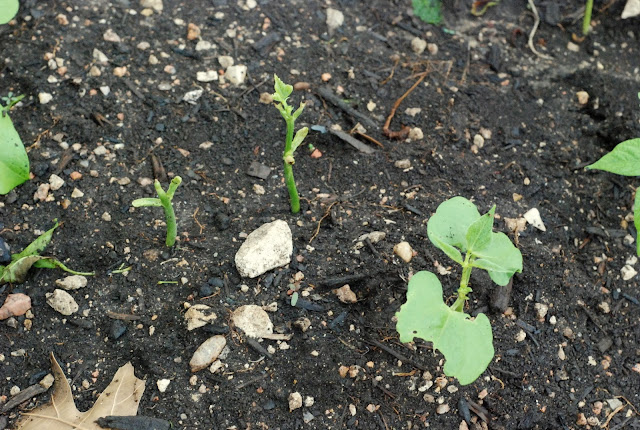
The near ones are the Yin Yang, the middle are the Tiger, and the back ones, that are small when they’re not eaten, are the Soleil.

Any ideas on the pests? All I’ve seen are rolly-pollies. The damage looks like caterpillars to me, but I haven’t seen a single one.

The things to which we grow accustomed.

I grew up in the Pacific Northwest of the US. I grew up in grey drizzly falls, cold wet winters, and misty meadow spring times. Summers in the PNW are a magical time. Days that seem to last for weeks full of gorgeous sunshine, emboldened life all around, and crisp cool nights full of hoodies and jeans after the sun goes down.

I’ve been in Texas for more than eight years now. Today is our second or third day of drizzle. Cold (for Texas) and days (instead of minutes, or hours) of rain. I honestly forgot what it was like to live someplace where outdoor activities were restricted by the wet and the soggy. In the PNW, there is no such thing as “too hot.” I loved the 105 degree August days. On the rare occasions where the thermometer in the vineyard would break 110, I would bask in the heat. Literally. Over the last few years, Texas has inculcated my flesh and understanding of “too hot.” I’ve acclimated. Anything under 70 degrees and I wear a hoodie. (Hoodies used to be reserved for anything 25-50 degrees, and coats were only used for particularly hard rains, or extending periods of playing in the snow.) In contrast, jeans and long sleeves in the 70s feels fine. I am not a true Texan, who will still wear jeans and long sleeves comfortably when the mercury has added a third digit to the scale.

I digress.

Today I found myself in an odd place. I had forgotten what to do when it rained for days. Last night, I baked. Today, we went shopping. (Shopping! I never go shopping.) Hoping the winds blustering about would carry the rains west to the desert, to the peach farmers, to the wild flower fields, and give me a sunny gap of an afternoon. It was not to be.

What to do?

Well, there were those 8-10 pounds of apples we’d been hanging onto for worringly-possibly too long…

DH, months ago, took it upon himself to buy some organic apples (I forget if they were Braeburn, Fuji, or Gala, or a mixture), peel them, and blend them with some blackberries and honey into an applesauce. I was ecstatic. It was delicious. And it was portion-sized out in the freezer such that if I caught it just-so in the thawing process, I had the most delicious fruit slush snack.

About six weeks ago, organic Fuji apples went on sale again. $0.83/pound. We bought as many as we thought we would peel, which ended up to be about 8-10 pounds. And promptly forgot about them. Work ate me, school and work combined to swallow DH whole, and here we are.
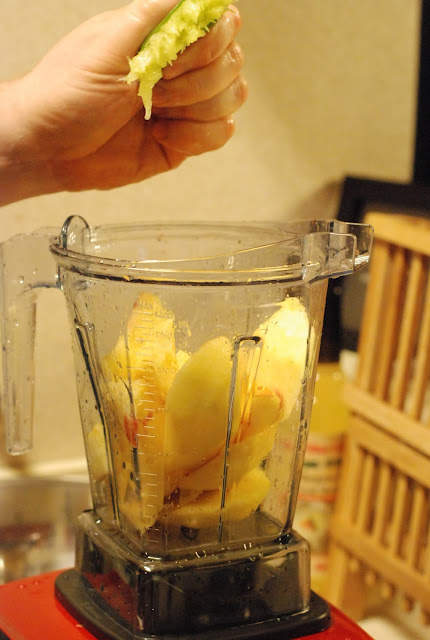
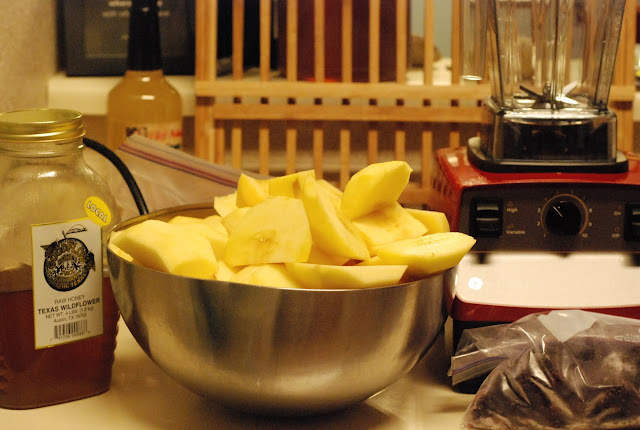
Apples – peeled, cored, and roughly chopped. (You don’t have to peel them if you don’t want to. Apple peels tend to upset my stomach, we we compost them.)

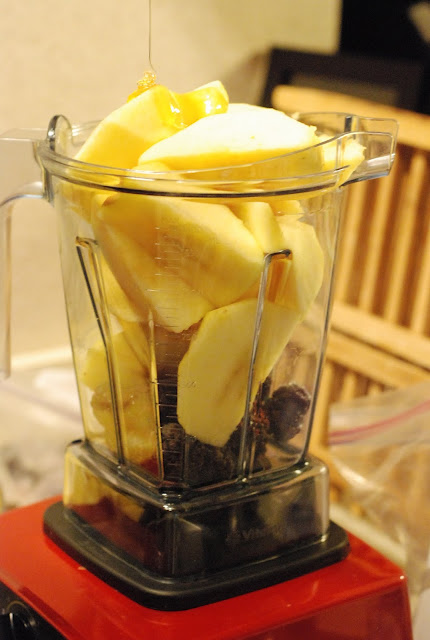
Honey – a spoonful per blenderful is all you need.

Blackberries (or other flavoring) – about a handful per blenderful.

Or, if you’re a visual person:

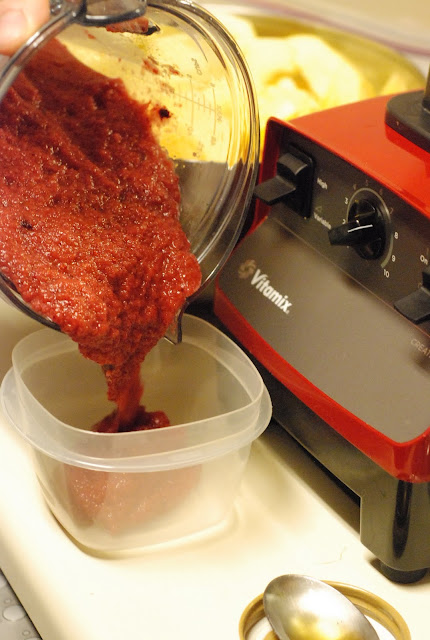
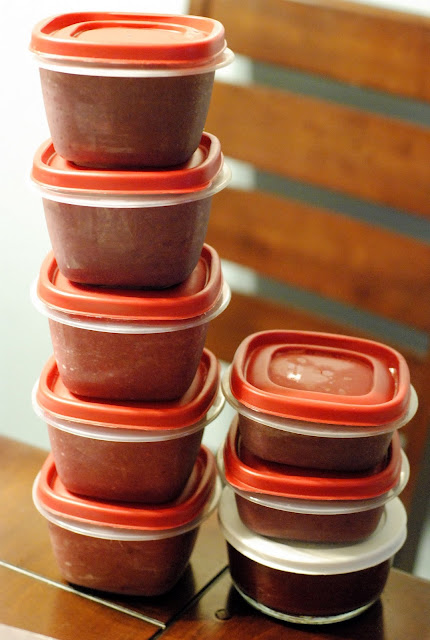
Blend, and pour.

Stack ’em up, and freeze all but the one you want to eat first (in this case, the glass one will stay in the fridge.)

We ran out of blackberries (or so we thought, before we checked the deep freezer) and DH did what he does best – gets a crazy idea, that just might work, that turns out deliciously. In this case? A ‘Rita Ringo Sauce. (Fun fact of the day: Ringo is Japanese for apple.)

Lime juice (from two limes), honey, and apples. After a quick taste test, I wonder if I shouldn’t add a splash of tequila, freeze some in a Popsicle tray, and wait for summer!

And, because I couldn’t help myself…

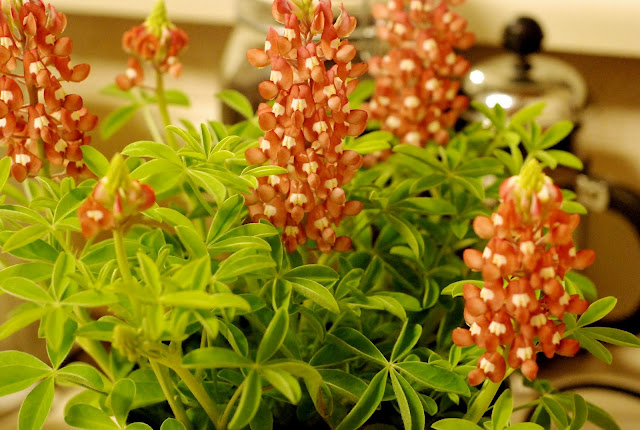
Texas’s state flower is the Bluebonnet. Something I recently learned, is that blue is the dominant gene for the flower, but not the only one. I actually saw these lovely flowers for sale last spring at the grocery store. Last spring I had yet to install my garden bed, and every pot already had a tenant. Last spring, I passed on bringing these home. This year, I had so many places I could put it, that I succumbed to the desire. I did only buy one pot, currently on my kitchen counter, but may just have to go back and get 2-4 more to round out the native bed I started.

What do you do when rain comes during your garden time?

It’s dark out.

I find myself with enough energy and time in the evenings to put in some good garden time, but by this time it’s already dark out. DH is studying, and if I don’t find something else to do, I’ll end up logging some more hours with work.

So tonight, I think I’ll do a little history.

Once upon a time, there was a girl in an apartment. The apartment had a little balcony, maybe 5’x10′, that was south-facing. It was a second floor balcony, with an upstairs neighbor of the bamboo mat/wind chime variety, and a downstairs neighbor that rotated through from friendly drug dealer that kept to himself, to unfortunate alcoholic couple that started out loving us and ended up leaving us with a few sad stories, to a couple of newly weds who fought a fair bit (although less often and less vocally than the previous neighbors.)

Below the balcony was a small plot of land that used to house some grass and a tree. The grass had long since been shaded into packed dirt, and the tree left only a stump for some interesting fungus to feed upon. Across the strip of bare earth was a fence, and behind the fence – wilderness. Well, as wild of a wilderness as you can find in a suburb. Enough wilderness to get birds in the trees, squirrels digging around for acorns, and the occasional raccoon. Our first spring there revealed a lovely surprise – blub, burgle, bubble, gush.

There was a waterfall through the trees, just outside our bedroom window! When it rained, the water would rush over the small fall and make the most beautiful serenade to the spring days. We could walk out of our building, through the fence, and be at the waterfall in less than a minute. Sometimes you could even hear children laughing as they made their way to the pool at the bottom to wade.

This unexpected gift gave the girl a longing for nature like she hadn’t known in years. She and her DH would wander down the creek path and take pictures, hold hands, and talk of the future. The future that would hopefully include a home-home, as they called it, on land, with a large kitchen garden and an orchard surrounded by a low-slung stone wall with a gate.

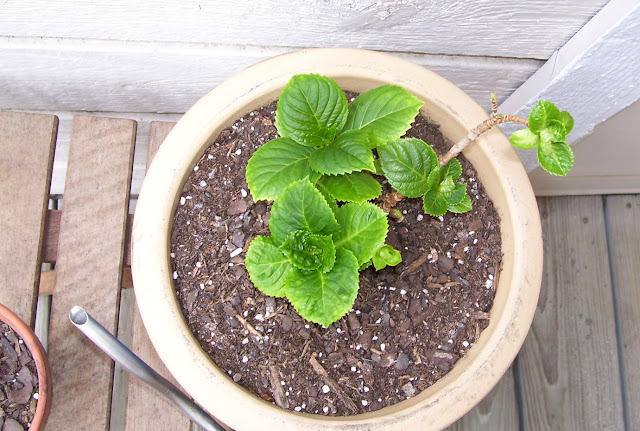
Over the years, she’d carted along on her many moves a few green things. There was the cactus, Napoleon. There was Heidi, the Hydrangea, too.

Heidi had been in the “family” for nearly five years at this point. Never having blossomed, she earned her keep on hope alone.

She tried her hand at some edible plants for the first time as well. Rarely one to take the easy route as first choice, she started with seeds.

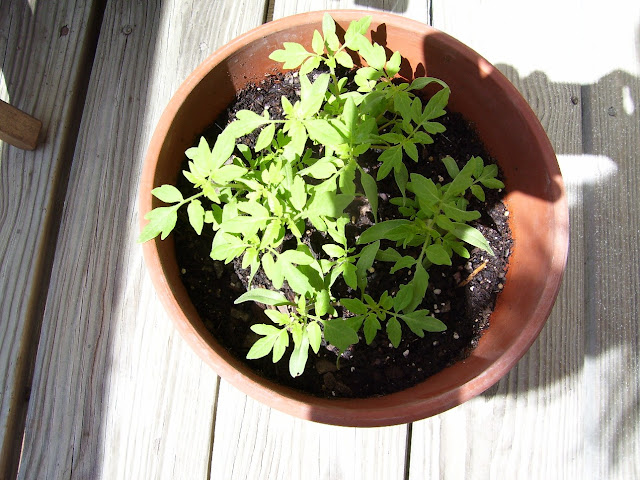
Tomatoes!

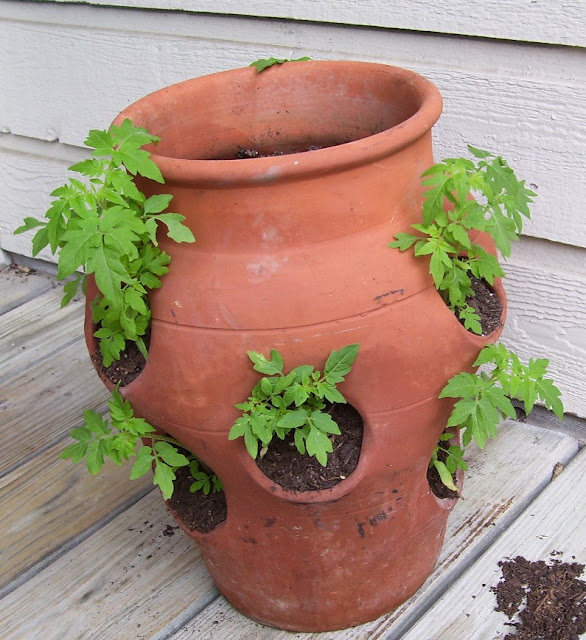
Who were split and transplanted into a strawberry pot…

Where they HATED it…and so were moved again larger pots…

Where they got a little busy with the bees…

And then the sun worked its magic…

And that, dear readers, is the story of DH’s first balcony tomato! And just part of the beginning of the story that has gotten us here. This is also my first experience with Cherry Chadwick tomatoes. Just wait to read about what these tomatoes ended up accomplishing in their short lives.

Oh, and all I could find so far for a picture of Napoleon, has him in the bottom of this frame, poking up.

You can also see, on the right, that Heidi finally bloomed! She left the world after that bloom, but it got rather pink and lovely before she went.

Things I learned in those days: 

  • I honestly don’t know what would like to grow in a Strawberry Pot. The tomatoes hated it. Herbs hated it. Maybe strawberries would actually like it? Although I doubt it for how much water they seem to want.
  • Peat pots, are not my favorite. The roots struggle to bust out, and no matter what the label said, I never witnessed the netting composting naturally in the transplanted pot.
  • Balconies never yielded enough food to replace any store shopping, but there still isn’t any comparison to be made between a tomato still ripe from the sun.

Lamos (Spanish for Limes) aka Bill

Note: Lamos is not actually Spanish for limes. This is an inside joke. The Spanish word for lime is actually lima.

Christmas of 2009 I got DH a lime tree. Someday, he’d like to have an orchard. He dreams of a place where plums and citrus, apples and almonds, avocados and olives all live in happy harmony with the climate. Until we discover such a place, his orchard (currently of the potted variety) must enjoy our Central Texan Climate.

Enter Bill.

Bill, the lime tree, hails from Lake Jackson, Texas. I found John Panzarella online, gave DH a coupon for Christmas for one trip to Lake Jackson to pick out a tree, and that January we were on our way. If you live anywhere near Lake Jackson, and have any interest in purchasing a citrus tree – you need to visit this man. He makes trees that grow lemons that taste like oranges, oranges that look like limes, limes without acid, pummelos, kumquats, and has an avocado tree larger than I knew they could possibly grow. He had fruit that I hadn’t heard of before, and have since forgotten the names of. All of it growing in his well-tended, greatly-loved, suburban backyard.

The first year with Bill, we got about five limes. He got a little spindly looking, so in an attempt to encourage branch development and leaf production, last January when he started to bud, we knocked off his flowers. He didn’t make a single lime last year. He did, however, grow a few new branches with a lot of leaves.

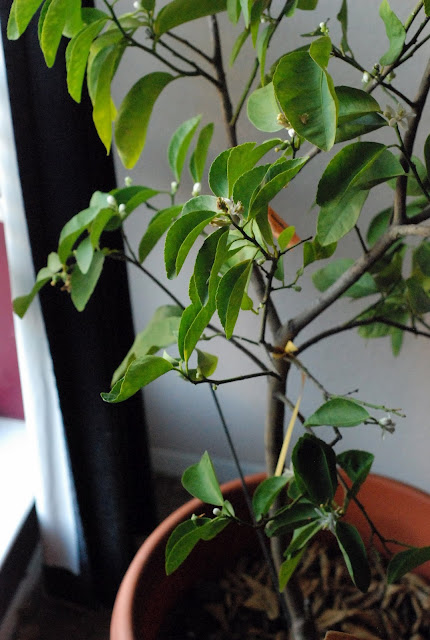
This year? He seems to be making up for it.

This photo hardly shows all of the blossoms visible from this angle – nevermind that this is only half the tree!

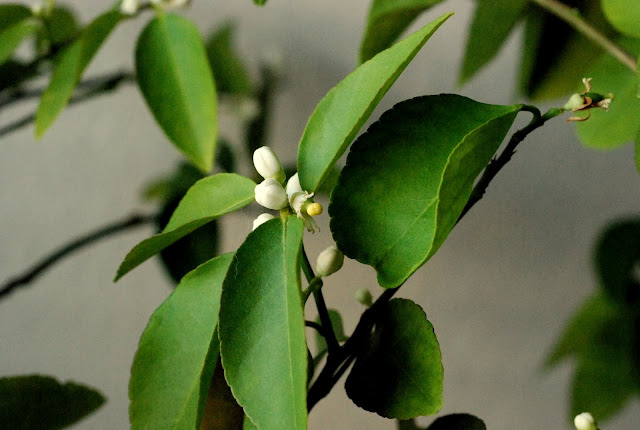
I wish we could put him out side again already. The honeybees adore the sweet blossoms (which smell like limes) and could likely use the nourishment this time of year. Unfortunately for the bees, we’re not yet into our frost-free time and so they must wait a few more weeks.

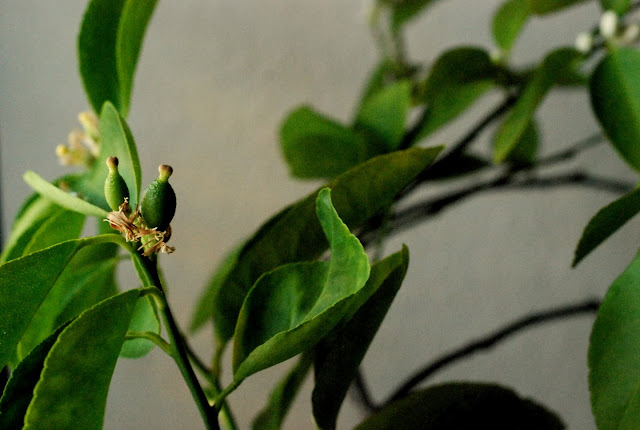
The buds start out small, round, and green. As they grow, they blanch into little popcorn-looking buds. Finally, they open into flowers only to have the petals fall away and a baby lime with a yellow nose appear.

I do think that this year, for the first time, we may end up with more limes than we know what to do with. Lime sorbet, perhaps? Lime juice ice cubes for drinks throughout the summer? I’ll have to look up some more ideas.

Right now, Bill is in a sizable plastic pot. This is his third pot while in our care, and it keeps him at about five feet tall from pot bottom to tree top. While we would love it if we could plant Bill out and let him grow ever larger, there are occasional freezes here that would put an end to Bill all together, so he must stay small enough to be carried indoors for 3-4 months of the year.

DH does want to see if we can prune him short, but allow him to gain some strength and heft, by increasing his pot size once again. To that end, DH put together a quick project.
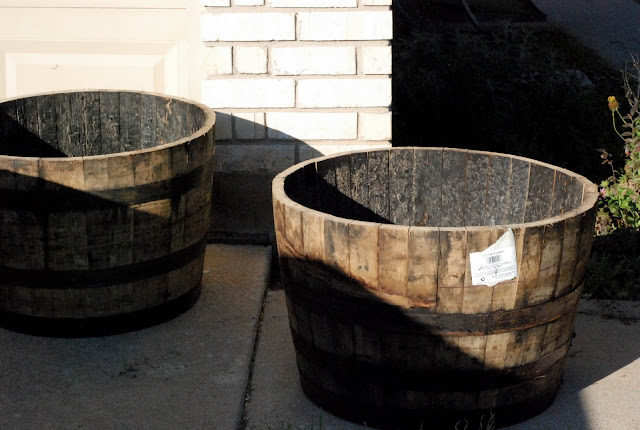
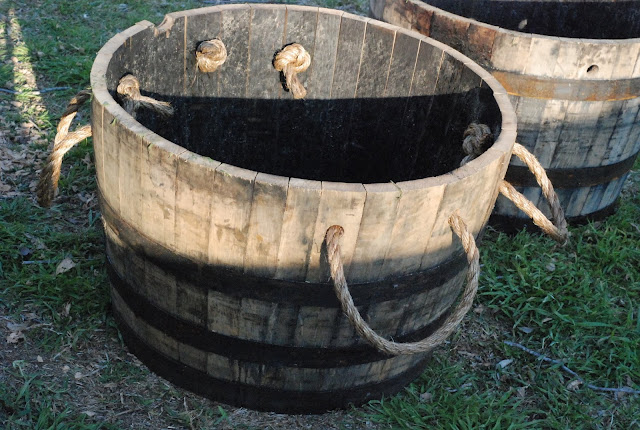
Step 1: Buy a barrel cut in half.

These are from the Jack Daniels distillery in Eugene, Oregon. Having lived in Eugene previously, I wondered upon discovering this fact if they were any cheaper directly from the source. After factoring in travel, I was actually kind of surprised (and glad) they were priced at $30 each and not higher.
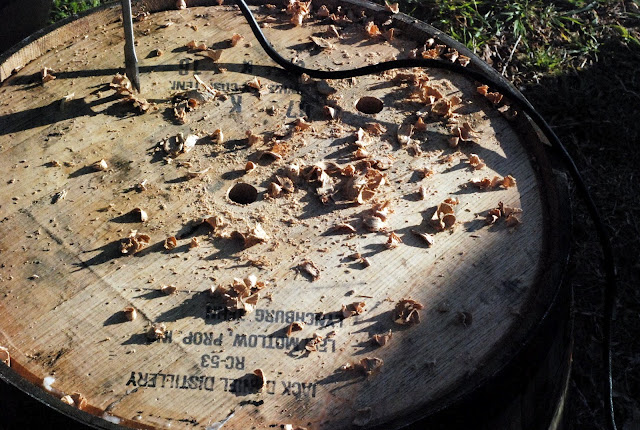
Step 2: Drill drainage holes.

This will prevent root rot for larger plants planted in the planter.

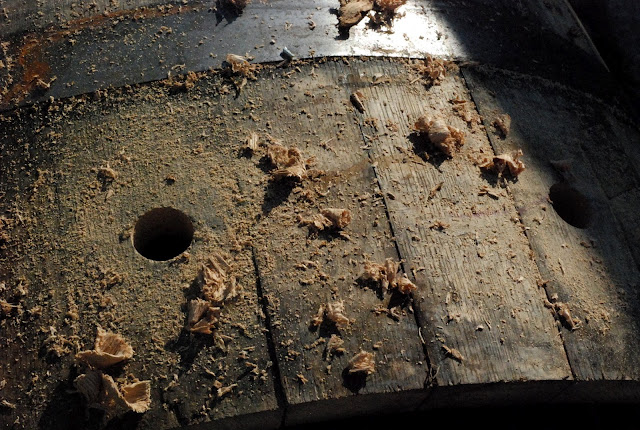
Step 3:

Set the barrel on its side, brace it so it doesn’t roll away, and drill handle holes.

The pot Bill currently lives in has no handles. When full of a tree and the soil necessary for the tree, nevermind if that soil happens to be moist – the pot gets heavy enough to bend the plastic when being carried from spot to spot. Thus the need for handles on an even larger, heavier, pot.

Step 4:

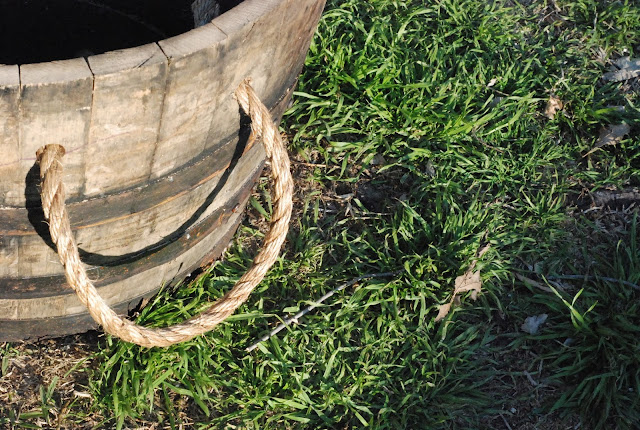
Buy some strong, thick rope. Cut to length. Thread through the handle holes, and knot off.

When cutting the rope to length, remember to add some length for the knots, as well as enough rope that when you lift the handle your knuckles don’t bump against the barrel.

I had originally thought two handles per barrel half would be perfect. Each person has a handle with which to carry the pot. DH had a better idea.

Things I learned that day: Two people, four hands, four handles.

The plan was to move Bill from his current pot into one of these when he made the move back outside. However, with the level of joy Bill is showing off through flower and fruit production in his current pot, we won’t be rocking the boat. So until next fall when we do swap pots, these will likely house some flowers, a few herbs, and hang out by the grill on the patio.