Brain-free days.

Some days, it would seem that my brain takes the day off. I’m sure most folks have these days. Days where you almost lock your keys in the car after almost forgetting to lock the front door. Days where you walk into a screen door? Days where you just aren’t functioning at your usual level. Maybe you had a sleepless child keep you up the night before. Maybe you have the flu. For whatever reason, on days like these, I do my best to limit my exposure to mistake-making situations.

Today was one of those days for me, so instead of planning how to rearrange my planting plans to accommodate the extra 400 sq ft of garden space I recently acquired (community garden plots are a FANTASTIC use of under-power-line space!) I did simple maintenance tasks outdoors.

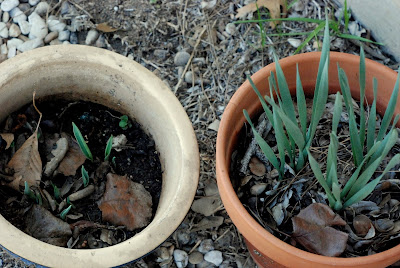
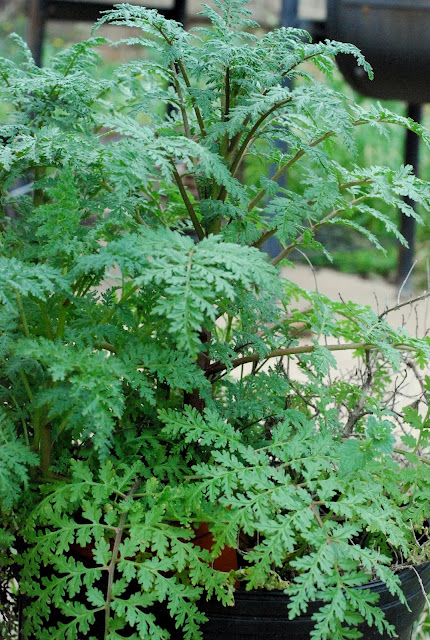
I watered our newly planted Mexican White Oak, and my potted things including this fern that volunteered itself in the pot of a rosemary that didn’t survive the summer.
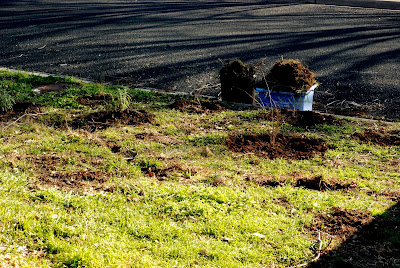
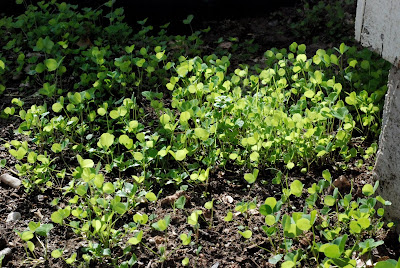
These have been volunteering for months now along the sidewalk as well. I sowed them late last spring, a few tried their might against the heat, but it came on too soon and too strong and they were no match for the sweltering Texas sun. Apparently the more cautious among them remained dormant through the summer and our unexpected November showers brought them out of hiding.

I hear they’re edible – is that true? If they are from my seeds, they’re Fiddleneck ferns. I only hesitate to say they are, because so far they have not behaved like any Fiddleneck I saw in the forests of my childhood. And if it is true, do you saute them? Steam them? Put them in salads? All of the above?

I gazed about the space to find something simple to do. The dandelions smiled up at me. My eyes moved from the unmade bed where the chainlink had come down, the vines had come out, but the short wall had yet to be built. There was no way I was up for building a wall today. I let my gaze wander to the patio. DH has been wanting to build troughs along the perimeter for more herbs and peppers to have nearby while he grills. I measured the patio edges. That was easy. It was also too quick.

Oh, right! Dandelions!

I retrieved my Hori Hori and quickly had it strangled in clay.
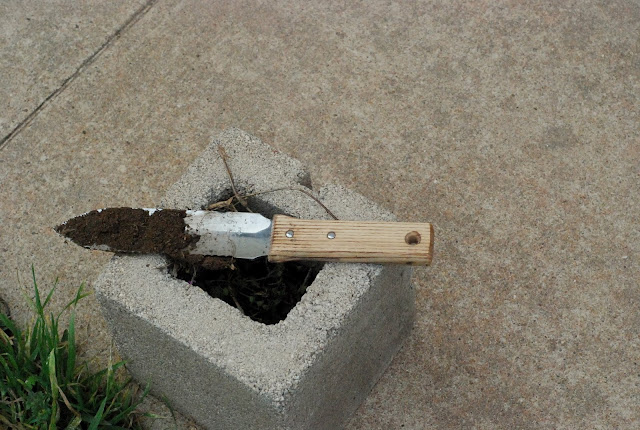
It proved to be the simplest of tools for removing dandelions. Easier than a trowel, spade, or hoe (all previously used dandelion-removal-tools by yours truly.) Simply slide into the earth, tilt, hear the root pop, and lift. Dandelions (and thistles) will let loose at ground level if you try to pull them up by their greens. They send down a deep tap root that, if left untouched, will simply sprout another fan of leaves in a matter of days. It’s messier and takes a bit more effort (and tool clean-up) but in the end is less work to get them from underneath.
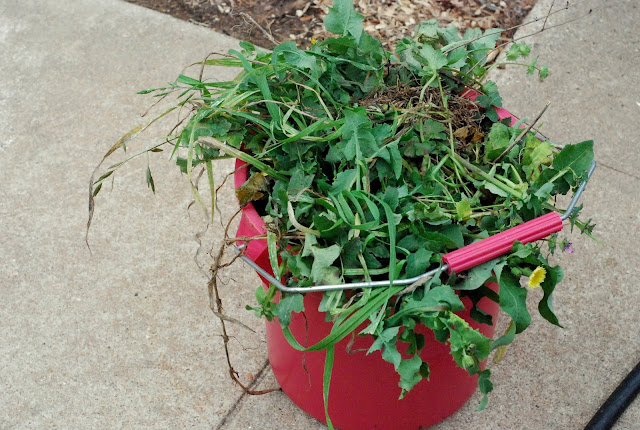
After filling the bucket twice and emptying it into the trash bin for the weekly collection, I had made a dent in the dandelion population as well as my outdoor time.

I have never been one to mind not having a perfect lawn. Perfect lawns are how some people find their peace. I find my peace in other gardening endeavors. I do, however, notice the weed population in my lawn, and will diligently remove weeds from my lawn before they go to seed. Keeping the lawn at least tidy helps prevent weed seeds from drifting into my vegetable bed. Anything I can do to keep my weeding time down is something that can bump my other gardening time higher, and that makes more time for peace.

Not by any means out of dandelions (I may very well have four more buckets left to remove), my back was done with that business for the day and I set about for something else to do.

That’s when I saw them. Perfect, cheerful, and for no known reason – seeming childlike – my first peas!
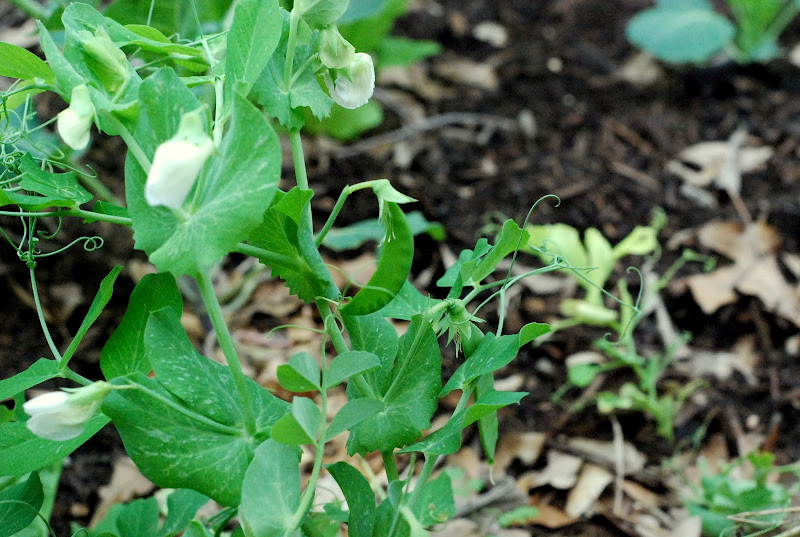
I hadn’t grown peas before this winter, and grew them more for the fact that I had received some seeds as a gift than because I was particularly interested in growing peas. Let’s just say my feelings on the matter have changed.

And of course, some things make perfect sense after you see them, but you never thought about them before that moment. I had wondered if peas grew from inside the flower cap, from behind it (holding the flower on the end of the pea), or some other way. I learned today just exactly how the pod emerges from the blossom.
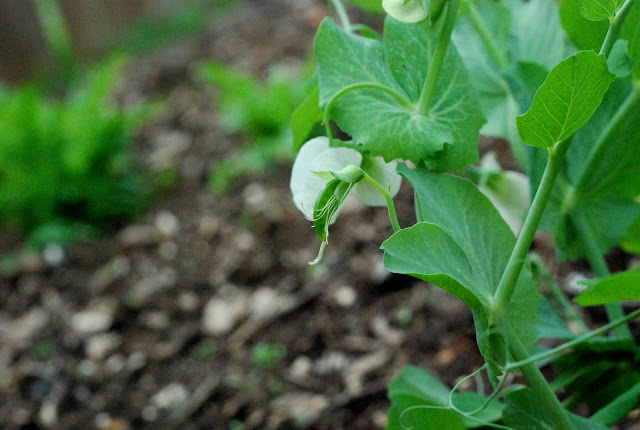
As you may be able to tell from these last two shots, the light was fading fast. It was time to duck inside for dinner. DH had prepared two of my earlier Farmer’s Market finds for a feast of Wild Hog patties from Countryside Farms‘ ground feral hog and baby Brussels Sprouts from Engel Farms sauteed in butter and sea salt, with a crack of pepper and hint of garlic. (Engel Farms is also where I purchased the “Rainbow” tomato basket that I saved seeds from.)

After speaking with my dad today, I’m tempted to find some of the younger dandelions, wash them off, and saute them in much the same manner. Apparently you can also make thistle tea? I am still searching for a tea I enjoy…
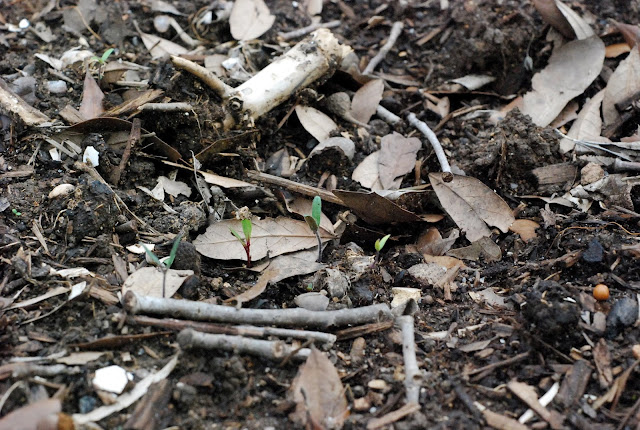
Identifying purposeful sprouts in a sea of volunteers.

I have yet to compost my compost entirely. Every year I think I’ll make multiple piles and finally let a compost pile fully “cook.” Every year the time rolls around to work more into the soil and the “more” is “not done cooking.”

Hopefully this isn’t hurting more than my weeding time allotment.

One thing this cycle has taught me, is what a lot of plants look like when they first emerge. This is super helpful when it comes to growing something I’ve never grown before. For instance, beets.

This is my first year trying to grow beets, and I had no idea what their sprouts would look like. I did remember to mark down how many I put per row, and how many rows. There are a whole lot of sprouts in that little corner of my garden right now, and before any get too crowded or too large, I thought to discern which were the beets, and which were volunteers.

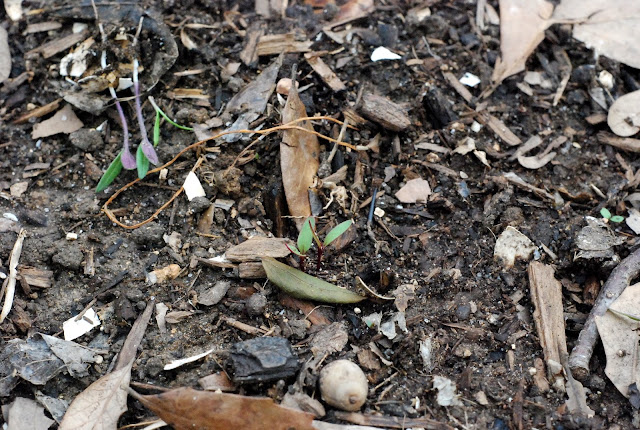
In this picture, my first thought was that the red stemmed little guy was either chard or marigolds (both have had red stems in my experience.) Then I notice the sprouts on either flank have soft purple stems. I know that means tomatoes (based on the options from what goes into my compost.) The wee one on the right of the other three is what is throwing me off. It isn’t for sure a tomato, or pepper, or squash. So it’s possible the beet sprout is either another red-stemmed one, or another purple-stemmed one. Either with brighter leaves or paler leaves than the similarly-stemmed counterparts.

How I know it’s not a squash?

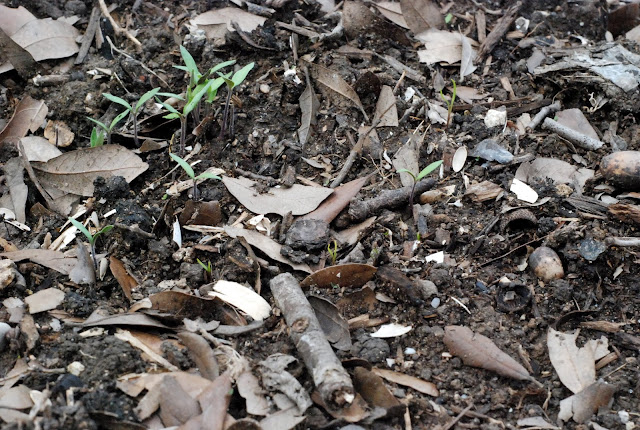
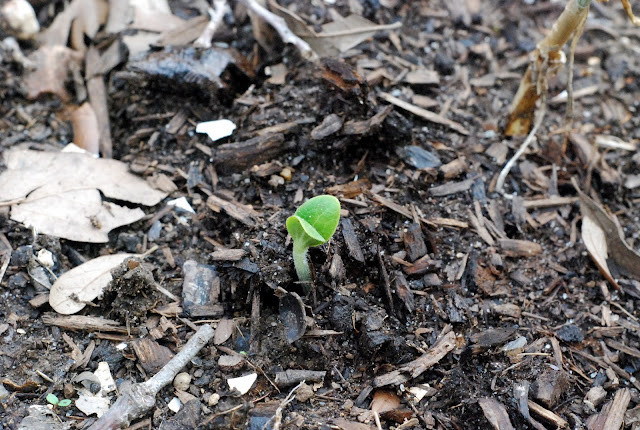
All squash so far in my garden volunteer looking like this:

Last spring I stopped counting after pulling 87 of these from the garden, transplanting 23 more into pots, and leaving 8 in the bed. I’m actually hoping this is the weird bowling-ball squash that volunteered last year (that I’d never seed before, or since, but tasted like savory butter with a hint of lemon.)

So I keep looking, puzzling over which sprout a beet sprout may be. And I come across this pair:

You can see that I’ve pulled some tomato sprouts already and laid them on the earth. I like to let them compost right back into the soil. The duo in the middle are more of those red-stemmed bright-leaved folk. Being as there are two, I think they may be a volunteer pair and am about to pull them. My eye traces up though, and there’s another pair. And another. And then there it is, the original red-stem. All in a row. All evenly spaced. I gaze to the left. Another one, splitting the center of the two in this row. Down that row, it continues. Eureka! Beet sprouts identified. Everything else (except the squash) comes out.

I’m hoping that squash will grow as quickly as last year and I’ll have some fresh squash by Mother’s Day again.

Depending on the type of sprout, I either learned what it was through elimination (like I did today with the beets), through growing it indoors in an isolated environment, or through coming across a dense patch of sprouts, digging, and finding the source.

For instance, I now know that these are tomatoes. If I didn’t, I could dig about an inch down and find a partially decomposed tomato – probably of a cherry variety, knowing this household.

And I think the sprouts at the end of the stick pointing up the middle are carrots, but I don’t honestly recall. There are supposed to be carrots in this area. These ones get to  keep their feet in the ground until either showing off some carrot leaves, or revealing a coat of a different color.

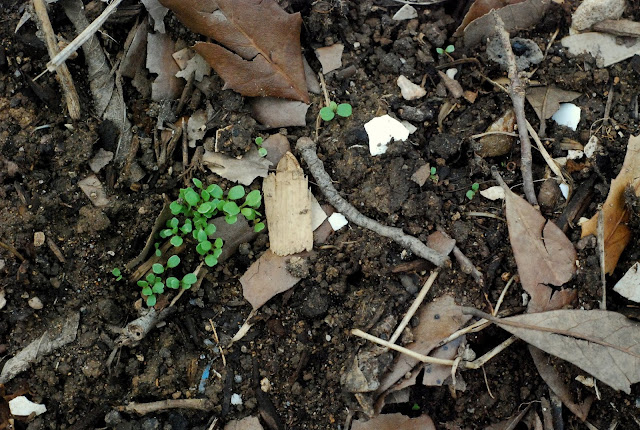
This patch however, is new to me. I haven’t gone digging yet. Any ideas?

Things I learned today:

  • Beet sprouts (at least Cylindra and Crosby Egyptian) have red stems, bright lime colored leaves, and may come up in pairs.)
  • I forgot what carrot sprouts look like
  • There is still hope for an all-volunteer veggie garden in my future
  • Possibly, the name of the sprouts in the last photo, with your help.

Farmer’s Market!

Today I rectified my months-long absence from the local Farmer’s Market. I headed out early, wanting some meat before all my favorite cuts were sold out.

My most frequented market here is actually held in a mall parking lot. Great use of unused space, if you ask me. Plenty of parking, no grass to get worn down week after week (or dust or mud.) Normally I am anti-concrete, but if.it’s already there then I am pro using it as often as possible.

I took our pooch this time. His second visit. My first time taking him without my dear other half (DH) there to tag team the balance of wrangling an excited 85 lbs while shopping. After a few laps around and no sign of chilling out, he went to the car so I could shop.

Aside from supporting local, organic, delicious food production and the folks that make it happen, the market helps my gardening in a few ways:

-I can see what will grow in my region. What the books say and what is possible exactly here, do not always match.
-I can save seeds! It’s a shot in the dark if they’ll be true to type or sprout at all, but it’s fun.
-I can tweak my timing. If I am buying cauliflower and kale now, I can calculate backwards to find a good sowing date. If a variety for sale now takes 100 days until harvest, next year I can sow it Sept 20th.
-I can ask questions about how my food was grown. If they are up to their ears in broccoli and mine is slowly plodding along, they may have some tips to learn from.

But now it’s time to grab some lunch and head out into the garden, more later!

Mysterious Volunteer – do you know who this is?

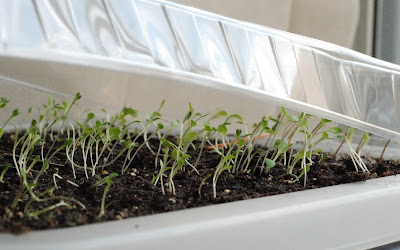
It sprouted in my veggie beds, from premature composting (a habit I can’t seem to kick.) The seed it sprouted from was large, and roughly resembling a squash seed. A sucker for a good mystery, I saved it from the spading and put it in a seed tray indoors. Let’s hope it grows large enough to solve the mystery!

Camo Bee! And surprises.

I didn’t use to plant flowers or other landscape plants. Last spring was my first venture into things that weren’t edible. I justified this change in two ways.

1) I had a lot more space than I ever had before. It is a smaller lot, so far as city lots go, and no where near having “land” in the sense I grew up with, but it was enough space to justify non-edible space-takers.

2) I was only going to grow things that were edible to other creatures – mostly bees. As much as I like birds, attracting birds to the same plot of earth that I use to grow food for us is asking for trouble. I already have to fight them for tomatoes as it is. As for the butterflies, I figure if the bees like the flowers, the butterflies may as well.

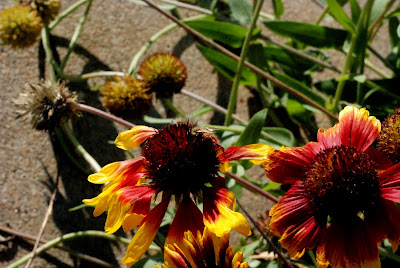
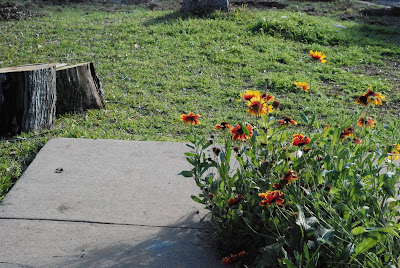
Aside from how cheerful Blanket Flowers are on their own, they make me even happier for their year-round supply of pollen for the bees that haven’t gone into hibernation.

And while we’re covering pleasant surprises, here are two more.

I had completely forgotten these pots had bulbs in them. I haven’t watered, fed, or otherwise cared for either of these in over a year. Nevertheless a few weeks ago, the tulips started to poke their heads above ground. Shortly thereafter, the ranunculuses popped through the soil. I’ll toss them a bone (in the form of bone meal) and some compost, keep their water up, and see if they won’t bloom this year.

Purple Weeds of the Unknown Kind.

I got off to a delayed start today. The animals conspired to awaken us earlier than we’d appreciated. We cooked our breakfasts side by side, and it was nearly time for some forced errands (work) followed by some elective ones (Pho Hoang and Home Depot.) By the time we’d returned and walked the dog, it was past two o’clock.

As much as the weather begged for an attempted hammock hanging and a good book, I’d told myself last night I would finish the front anchor plants today. So I donned my leather gloves, snatched up my shovel, and attempted to make quick yet thorough work of it.

I’m not positive the mulch gathering folk in our neighborhood will want sod, clover, and other assorted greenery mixed with earth, but perhaps they do?

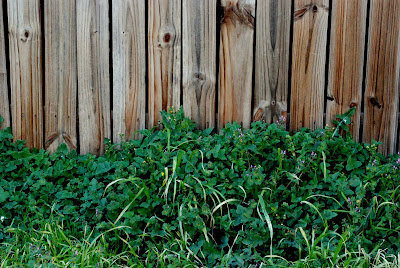
In the fading light, I thought to check in on my front flower bed. A year ago, there was a grass patch between our walkway and the garage wall. In a January drizzle, my mother and I ripped up a patch of sod from its roots and planted some nasturtiums. They bloomed awhile later and were joined by some borage, bachelor’s buttons, blanketflower, and others. The bed has had a few zealous varieties reseed many times already, others reseeded once and those seeds have been dormant, until now.

The monster in the middle is a re-seeded Borage. It will be awhile yet, but someday it will send up a stalk that will put out little bluish purple star-shaped blossoms. Borage has been used medicinally for a good long while, and the flowers can be added to salads or eaten straight from the stalk. I think they kind of taste like cucumbers.

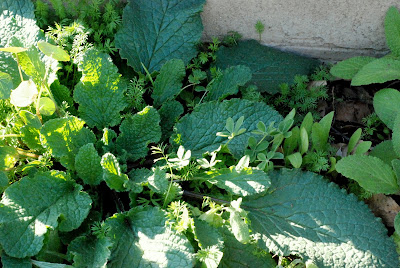
There’s a nasturtium glowing in the sun’s rays, and a whole lot of other bits of life vying for space. I say bits of life, because I don’t always (or even often, as the case may be) know what it is that has sprouted in my garden. As a fortune cookie once told me (and now the slip of paper magneted to my fridge reminds me) “Much more grows in a garden than that which is planted there.” So how to tell friend from foe? Beneficial from invasive?

Once again, for me, was a good bit of Trial and Error, this time combined with some observation and some online image searching. For instance, in the image above, I can see a weed. You may be able to spot many weeds, since there are also at least two plants I don’t recognize. The one I see? I still don’t know the name of. If you look at where the concrete makes a line with the Borage leaf, and let your eye travel straight down, there’s a little thing that doesn’t belong there.

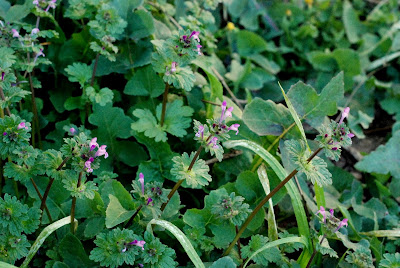
That little thing will grow into this:

Anyone know what it’s called?

I actually find these “weeds” kind of pretty. Delicate purple and white blossoms on long stems with tiered leaves…but it must go. If it stays, my flower bed will look more like this:

And that’s not what I’m shooting for. It would make a lovely ground cover for more wild landscape. Someplace where a meadow could turn dark green with purple flecks for the bees to feast upon. Until I have such a meadow, it must come up at the roots and go into the garbage bin.

The outside world.

The weather today was absolutely lovely! I couldn’t wait to get out into the air, the sun, and the earth.

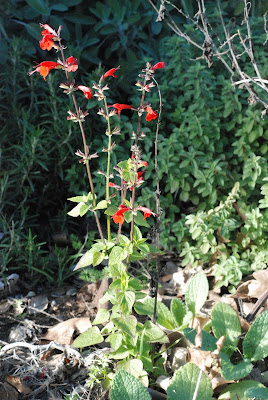
This little guy is doing his part to keep the bees fed in January. This is a self-sown Texas Hummingbird Sage. Last spring was my fourth attempt at growing Texas Hummingbird Sage from seed. (Trial & Error often requires multiple trials!) I managed to get four little seedlings to put out two sets of “real” leaves. I put two in the front bed, and two in the rear bed. The rear bed ones didn’t make a week, baking in the sun if I missed their morning water. The front bed was a little kinder, and both sprouts made it about four inches high. I couldn’t figure out why one died, but I suspect a bird or other creature thought it would make a tasty salad. That fourth stubborn sprout ended up surviving all summer long and into the fall before the first freeze took it. It topped out about 18″ tall and had bees on it every day! This little guy shown above is an offshoot from the base of the old plant.

Growing up in the Pacific Northwest, one of my all-time favorite seasons was a short one. In the Willamette Valley (and I’m sure elsewhere) farmers plant a cover crop of red clover. In May, the fields are abloom. Mile after mile, acre after acre, are afire with crimson blossoms on rich green stalks. They only last a week or three, but are one of the things I miss most about that corner of the world. This clover-looking mess is actually my own little patch of Crimson Clover. It’s my first year with it (second planting attempt, the first one died off due to inattention (oops!)) and I’m hoping to get a bloom or two. It’s a new bed that previously only held Horse Herb (a weed, in my estimation) and a Hackberry. I amended it a bit with manure, blood meal, and bone meal. We’ll see how it goes. I’m glad to see them hanging in there, as that is also where a lot of water from our gutter-less roof runs off.

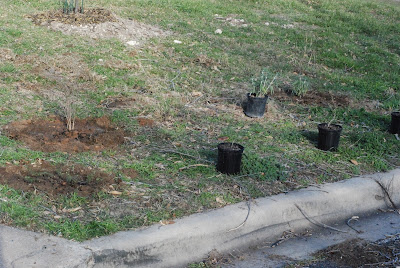
And finally, the front of the lawn. I decided a few months back that I wanted to absorb some of the scraggly lawn into a native bed for the bees and butterflies. My parents were kind and generous enough to send me some of my Wish List Plants for Christmas in order to get it started!

In the top left corner, you can see the dirt dam and mulch of the new Mexican White Oak. Down the left edge, you next come to a brown circle with a few sticks visible – that’s a Fragrant Mimosa. Unbeknownst to me, but quickly discovered by my other half – it has thorns. Be mindful if you choose one of where you plant it! Continuing down the lefthand side of the photo is another brown circle, this one contains a Prairie Verbena! Moving along the curb we have a few Black Daleas still in their pots, and behind them, one in one out, are two specimens of Mexican Bush Sage.

All of these plants my folks were able to order online from a local business (bonus points!) They’re called Landscape Mafia, and not only do they have a nice variety of natives, for very reasonable prices – they deliver! My parents live far away and ordered shipping. The folks at Landscape Mafia had the care for their plants, and the presence of mind, to realize that I lived a short drive away and some nice man from their staff delivered them directly to my front porch! Color me impressed.

Since these are natives, who all claim to not want super-rich soil, I worked a little manure into the soil of each spot, watered deeply, and that’s it for now. Tomorrow I’ll put the others in the ground and see how I feel. The ultimate goal for this spot? No grass, these big “anchor” natives, and a sprinkling of Black Foot Daisies, Henry Duelberg Sage, and maybe because they make me so very happy that I surely need more:

Blanketflowers!


Transplanting

I did some transplanting today!

It was time for the tomatoes and peppers to give up their stake in the seed tray for more root room.

Something I’ve forgotten to do before is keep track of varieties after I transplant. I did well enough this year documenting where I planted what in the seed tray. Now to attempt to do well enough tracking the varieties into their new cups.

Things you can use for transplant pots:

  • Cups! I dislike that our recycle service will take #6 plastic, but not #6 styrofoam. This year, I saved up our Sonic cups with the intention of driving them to Ecology Action. Lucky me that I kept forgetting and now had plenty of cups!
  • Bottles. Water bottles, soda bottles, other plastic bottles. Simply cut off the tops, poke holes in the bottom, and voila!
  • Actual pots. I save the little plastic nursery pots that plants come home in sometimes. Occasionally they break, and then they go in the recycle, but otherwise they’re saved and reused.
  • What else do you use for seedlings when you don’t have pots?

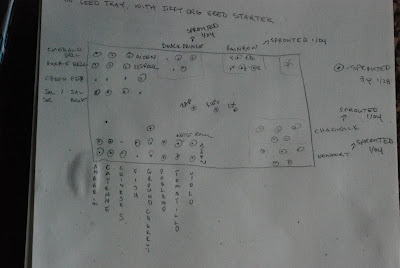
So, how to track the varieties through the move? Well, we need to start with the schematic of the seed tray:

Whatever little shorthand codes you come up with to suit your process is fine. I put a dot for each seed planted, and circle the dot if that seed sprouted. This helps me keep track of which seed varieties have a good germination rate. I use that info to either assess my seed-saving techniques to improve, or take my seed-buying-dollars to the best performing seed-saving companies. Interestingly, my Cherry Chadwick, “Newport” purple heirloom, and “Rainbow” tomatoes all had 100% germination rate from saved seeds. The “Rainbow” seedlings didn’t last. I’m trying them again in a new seed tray, one color per row (purple, red, orange, and yellow.) My saved Czechoslovakian Black Pepper Seeds? 25%. Trying those again as well.

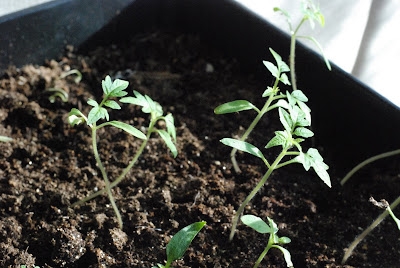
Cherry Chadwick as the main stars, “Newport” in the foreground, pre-transplant.

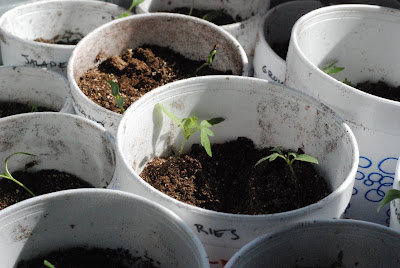
So I took my Sonic cups, counted up my seedlings, and began labeling each cup. I took over the shoe bucket in our foyer, filled it with the cups, and headed outside. Each cup was filled by thirds. The bottom third of each cup I filled with regular clay soil from the yard, the middle third I filled with manure, and the top third received a fresh topping of seed starter. Then, cup by cup, I looked at what was labeled on the side, and matched the seedling in the tray to the label on the cup.

A serendipitous factor of using Sonic cups? You can write on the side!

But how do you label things that you can’t write on easily?

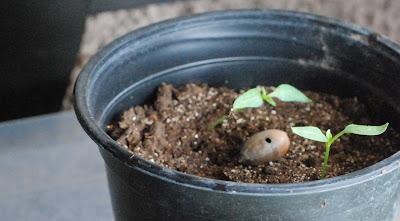
These peppers get an acorn label. I used three other pots just like this with labels of red rock, a white pumice stone, and the cap of this acorn. If you scroll back up, you can see that noted on my schematic. As adorable as I find the row labels, especially the metal ones, I find it a fun (and free!) challenge to find other ways to label pots.

So that’s it? All the seedlings are transplanted?

Well, no. I have a bunch of little lettuces, some marigolds, basil, cumin, and lemon balm. They’re hanging out in a too-shallow (Trial & Error will result in errors!) tray awaiting their turn. Now, to decide where to put them before they strangle one another…


Last weekend, the tree went down.

The sun is setting on the day. A sun shiny day with chilled crispy edges. The tree hadn’t leafed out in over a year. I’d never seen it leaf out completely. It was slowly shedding the bark from its truck near the earth. A large branch toward the street, and another toward the garage, were cracking along the length. Inch by inch, day by day.

The main truck was trying. It was sending out small little sprouts with single or double leaves. The branch near over the drive and along it were done for, we had to let them loose weeks ago. I did some recon for a replacement, at Green and Growing up the road, and with a final vote from my other half we picked up a Mexican White Oak (aka Monterray Oak.) We believed our previous tree to be a Silver Maple, and it was quite large for a younger neighborhood tree in Austin – possibly topping forty feet. We did water it this summer via the lawn during the 2011 Drought, but believe the damage had been done the previous year. This is a rental, after all, and not all tenants have the time, desire, or funds to water their landscapes.

Saturday, as the sun started to mosey down the sky, the chainsaw started up. With a rock captured in the end of the Gypsy Rope, lobbed over a high branch, and tension to pull the limb from the house, the chainsaw started work.

It was dull.

Off to the store for a new chain. Meanwhile, we kept progressing with the ax. There’s something satisfying about the heft of an ax. Slip. Swing. Thunk. Slip. Swing. Thunk.

“Get ready!”

We pulled on our ropes. Slip. Swing. Thunk…craaaack…CRASH. The branch near the house was down. The branch pointing to the streetlamp took longer, but came down into the road.

Sunday, new chain at the ready, it was time to bring down the tree. When firewood was made and loaded for family, the job was done. Any concern that I may have decided to remove a healthy tree was relieved when we had done so. The center of the trunk was hollowing out, the hole ascending up through the trunk.

I had dug a hole on Saturday. Three times the width of the pot, and as deep as the 12″ pot. We broke apart the edges of the hole. Loosening the soil allows the roots to make their way wider, faster, and survive droughts earlier in their lives. I added some manure left over from the garden, we righted the trunk of the new tree in its hole, and set to work replacing the earth. With a dam built around the lower edge, the original bamboo stakes in place, and leaf mulch making a ring, we were set.

Our new tree was home!

Notice the lack of bamboo stakes, and instead the tomato stakes?

We had a bit of a storm on Wednesday. Lightning like shotgun blasts and thunder for hours. Rain in the inches (plural!) and wind beyond wind. We awoke Thursday morning to find our new tree, still rooted, but laying nearly flat along the grass. The bamboo stakes had snapped at ground level!

We hurried to re-stake, re-tie, and otherwise prop up our poor beaten fellow and managed to not be late for work.

It could probably use with a wind-side anchor point to help it straighten a bit further, so perhaps a trip to the store is in order tomorrow. I was ever so grateful that we did take the tree down when we did, as I can’t say with any certainty it would have survived the storm intact, and may have caused damage to house, vehicle, or streetlamp.

Things I learned that day:

  • Branches, tied near the top, will not swing back at the base enough to harm. (I had imagined pulling at the top would cause the just-severed-base to whip back and cause issue.)
  • Stake trees. Even if you only see small trees with stakes bent at odd angles. Simply unstake them after a month or so.
  • Stacking firewood is still satisfying, after all of these years.
  • Chainsaws get dull.

Promenade Plantings

I’ve been looking for some gardening blogs to follow. One that I’ve found is Promenade Plantings.

The post I linked is a really good one for different seed resources and other organizations around the world.

Thanks to them, I’ve been reminded to check out Seed Savers Exchange and see if it’s something I may want to join.

Anyone out there have any favorite gardening blogs they’d like to share? I’d be super appreciative!