Digging in the dirt!

Digging in the dirt doesn’t make for the most exciting of posts, or the prettiest of pictures.

I spent a few hours in our afternoon sunshine working on the Right Bed.
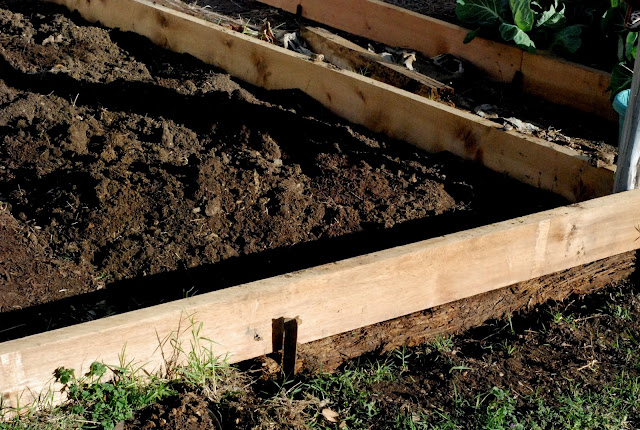
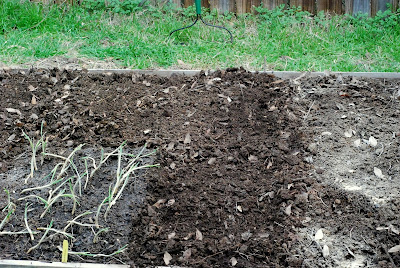
I started the initial double-digging of this fallow bed today. The intense web of grass roots made this slow going.

Slide the spade into the earth.

Pry.

Turn.

Squat.

Sift.

Pick.

Bucket.

Repeat.

Thankfully, the soil in this bed feels lively! It’s loose, crumbly, a little sandy, and full of some healthy earthworms! I haven’t met soil like this before in Texas. It’s exciting to not have to start from scratch with the cloying, airless clay that is all so common in this area. During my digging, I unearthed an old 4″x4″. Pocked and soft with decay, I thought to give it one more task before the earth reclaimed it. The builders of the garden beds used some really nice cedar planks around the edges of the beds. Unfortunately, they left them floating just above the surface. This means that no matter how diligently I remove weed roots now, or weed later, the weeds will wriggle right under the walls and invade the garden. In an attempt to block (or at least dissuade) their wiley ways, I nestled the found board under the edging plank (you can just see it in the picture above.) Hopefully that works at least until next year.

So, what else is going on in this lovely weather?

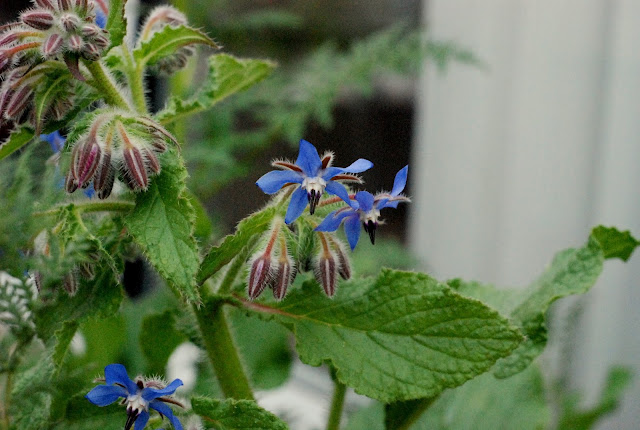
The Borage has blossomed! If you’ve never grown Borage, I find it pretty, but it’s also pokey, and tends to spread, so be careful. Borage flowers taste a little like cucumber and can add a dollop of periwinkle to your salad, or I hear you can even make a medicinal tea.
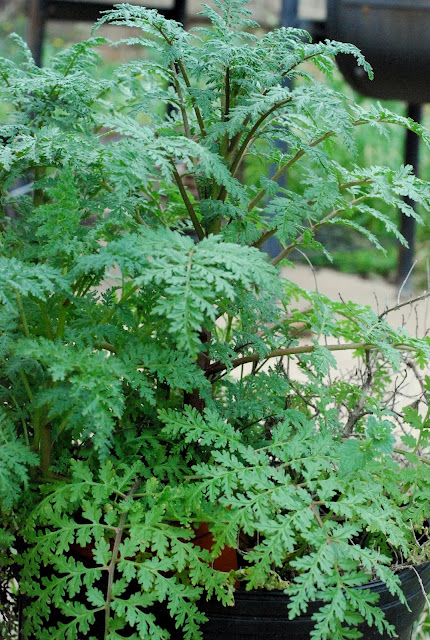
My volunteer fern is also throwing out some food for the bees.
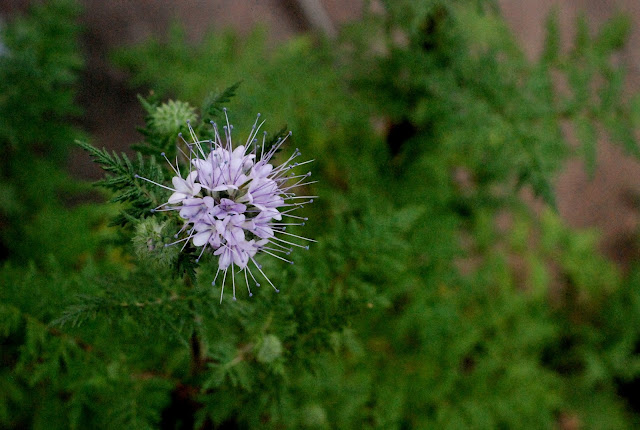
Isn’t that delicate and lovely? Last year was my first fern attempt (Ferns, in Texas? Yep. I’m a rebel.) I sowed them about this time last year, and not many of them came up. Then, early November, with the rain came the flower sprouts. I rather like having a little experimental bed for the flowers to reseed and see what does what. I’m doing just that with the little strip of earth in the back yard between the sidewalk to the patio and the back door. The builders thought to leave 12″ of green space between the foundation and the sidewalk. It’s also only about 4″-8″ deep, depending on where you dig.

There are many fun things (for me) about gardening, and one of them is to push myself to try new foods – or to have them available to me for the first time. Most recently, I’d only had peas in their frozen or canned form. I managed to right that wrong just yesterday. My first garden peas! (First for me as a gardener, and for eating.)
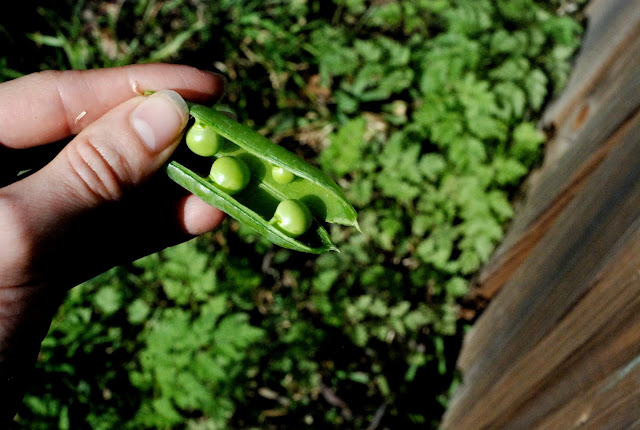
I thought they tasted great – like if peas and freshly cut grass popped in your mouth. These were simply labeled “English Peas” on their seed packet.
The weather outside is weather…

It was 88 degrees on Thursday. Today was a high of 63. It’s supposed to be 40 tonight.

Seasonal changes where I grew up in the Pacific Northwest of the United States were gradual. Days slowly got drier and warmer as they got longer in the spring. In the fall, they slowly lost daylight hours to night hours as the temperatures mosied down the thermometer until winter. Texas is different. Central Texas is a fan of a 40 degree temperature drop in a matter of hours. A cold front comes in and that’s that. The humidity is pushed out, the sky clears, and the temperatures plummet.

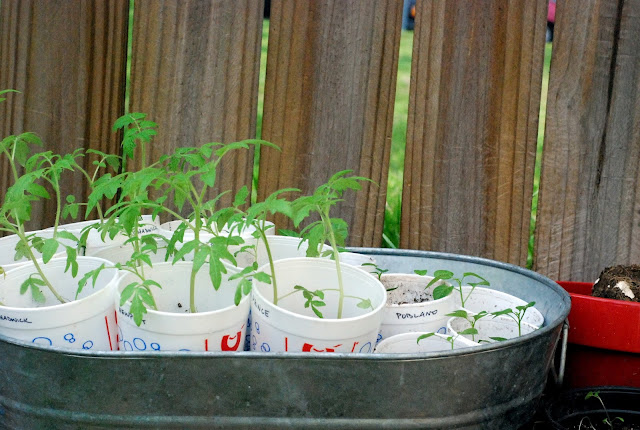
Thursday, I took my tomato and pepper sprouts outside for the first time and worked in shorts and a tank top and was warm. Today, I was in jeans and a tanktop while shoveling a cubic yard with DH. Tonight, I’ll be bundled in pants, long sleeves, a jacket, hat, scarf, and gloves. Oh, how the winds change things.

Each year so far I’ve forgotten how the peppers stay small for so much longer than the tomatoes do. These tomatoes were the usual little leggy sprouts in a tray, that got planted up to their necks about a month ago. Here they are, ready to be buried once again.

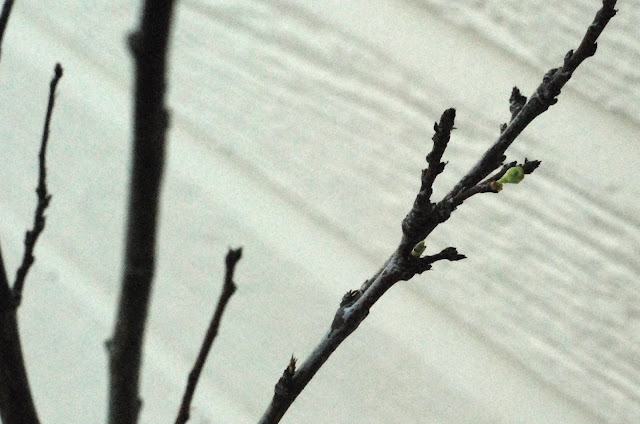
What else is the weather doing? It’s bringing things to life. This is June. (We name things in our household. Not all things, but more things than I think most households name.) June is a grafted plum tree. She houses four varieties on her delicate limbs. She came from Raintree Nursery late last spring.

June thinks it’s time to bud, and it very well may be.

Speaking of things that it’s time for…

Each year for the last few years DH and I have gone camping for our anniversary. It gives us a chance to be out in the quiet wild of the world, spend time with each other away from the laundry (but not the dishes), away from the world of now-now-now, away from cell phones, laptops, work, and people, and just be. We had planned to go this weekend, and oddly both of us, as we were set to start packing the car, looked at one another.

I didn’t really want to go. He spoke up. “Do you really want to go? You don’t seem that excited.” I wasn’t. It turns out he wasn’t either. So instead we’re doing some homesteading/nesting for our anniversary weekend. Part of that is putting in some serious labor on the new garden plots.

Yesterday, DH spent a couple of hours turning the rest of the Left Bed to aerate the beaten down, lifeless soil. I followed behind on a beam of wood that distributed my weight evenly so as to not re-compress the soil, pulling out bucketful after bucketful of weeds. We even found a potato and a beet the previous gardener had left behind! For some reason, our dog, T, thought that potato was the most fun that could be had at that moment and spent the next twenty minutes tossing it into the air to himself, chasing it down, and tossing it again.

Today, DH drove us in his little truck to Whittlesey’s for a cubic yard of soil. We ended up getting their Austin Soil Amendment. 66% organic compost, sand, and other nutrients to help feed the earth and break apart our dense clay. The mix sparkles ever so slightly in the sunlight. We spent the afternoon with two shovels, a wheelbarrow, and a lot of back muscles. With a little final work with a hoe and a rake, the mix was spread evenly across the 200 square feet.

Tomorrow will be a trip to the lumber yard for enough 2″x6″ beams to make two foot-wide paths twenty feet long. When those are in place, I’ll turn the amendment into the soil, sow a couple hundred drying beans, water, and move on.

Move on? Well, yes. There’s a-whole-nother 200 square feet that needs to be weeded, turned, amended, and structured.  That bed needs to be finished next weekend so the tomato and pepper plants can settle into it before the heat really comes to stay for good.

Spacing thoughts.

It’s about three weeks earlier than I normally would put out the beans, but with the weather we’ve been having…I’ll take my chances.

This year, one of my goals is to better manage my space through timing. I spent a fair bit of this past fall and winter with more bare ground than I would have liked. I didn’t plan well enough, but it was my first year-round garden attempt. Learn, adapt, grow.

Early beans will help with this. If I sow them now, they’ll be little plants by the time I pick the greens in their space.

This is my backyard 100. Last year about this time I was busy each evening working foot by foot, inch by inch, to turn the sod installed and left alone since ’85 into a fertile plot of loose, lively, vibrant soil. The soil in these parts is usually one of two types – nutrient-void clay or limestone bedrock. I’ll leave a history of that transformation for another day. Today, it’s beans.

Part of my plan for this bed is to get these beans in, done, and ready to go when my After Frost Round needs the room to stretch out. These three varieties are from Southern Exposure Seed Exchange:

Kebarika is in the foreground. They’ll make their way into soup and such as dried beans.

– In the middle is Selma Zesta. It’s a new attempt at a green bean variety.

– In the back we have Potomac. These beans felt magical when they touched my hands. Like they carried their hundreds of years of ancestry inside each one. I was glad to’ve selected these.

I tend toward a dense-planting style, but not Square Foot Gardening (unless entirely by accident.) I learned a lot on spacing from The Sustainable Vegetable Garden. So far, I’ve had good success with most of their spacing guidelines. I did have a spacing issue with some zucchini on 15″ centers last year (they got about 24″ in diameter) but really like the spacing they recommend for beans – six inch centers.

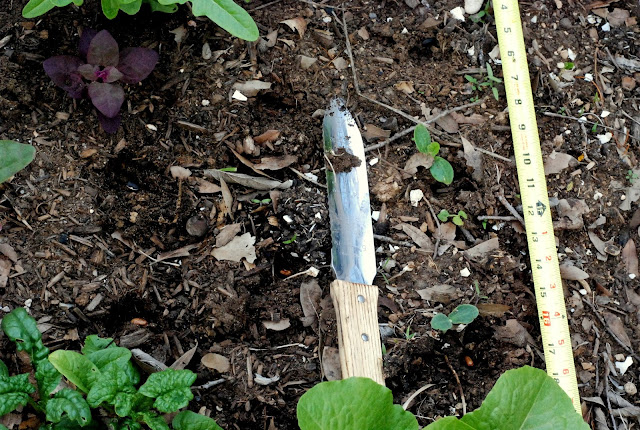
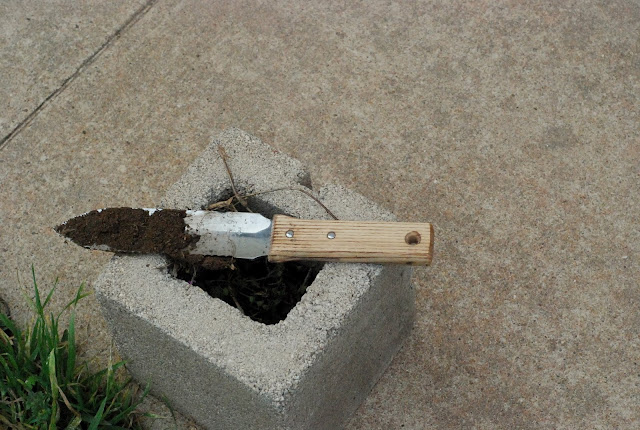
I like using my Hori Hori to sow seeds. It easily measures both planting depth, and spacing, by the marks along the blade.

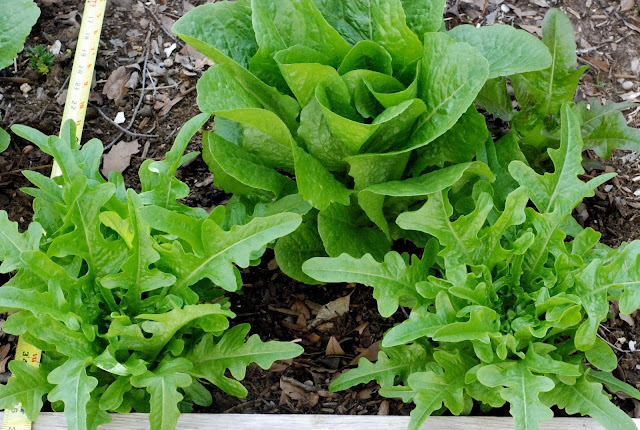
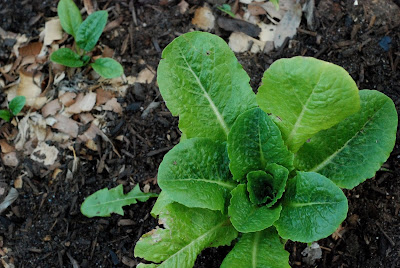
And then sometimes, I just get lucky. These lettuces were some of the ones that volunteered in my lawn after I pulled the bolted plants from the spring beds. I moved them into the bed months ago, and now they’re huge! We had some of the romaine with dinner the other night – delicious!

Friend, or foe?

Work has been taking up all of my daylight hours, some of my hours of darkness, and nearly every ounce of energy these past two weeks. I haven’t been in the garden at all in over a week, and miss it. I’ll be taking a wander around the bed at home to pull volunteers this afternoon. I have some serious Garden Time planned for this weekend. Hopefully the planets align.


In the meantime, a quicky:

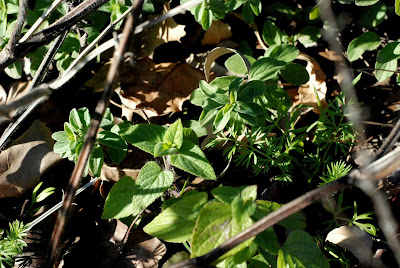
Those two main sprouts in the middle? The lower left one looks a little like the Mysterious Purple Flowering Weed (Henbit), unless I look more carefully. The leaves are pointed, instead of scalloped. The leaves don’t grow in a strict tier pattern, but instead sprout in an every-other-tier habit. Hmm…

Oh, wait! I looks like the larger pointed-leaf specimen in the foreground, which looks more like…yep! Another two Texas Hummingbird Sages!

Of the two in the middle, the one toward the top right is a different fellow. His leaves are smaller and more frequent. I touch them and bring my fingers to my nose. I inhale the sweet tangy aroma of Oregano, and know that the prolific seed production of this past fall wasn’t for naught. Depending on how many of each of these herbs end up sprouting where they are, I may end up transplanting a few into pots for the patio to add hunger-inducing smells, handy herbs for grilling, and pest deterrents for the yard.

Clover and Horseherb – Friends and Foes.

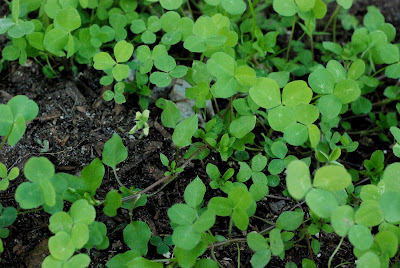
Can you spot the weed in this picture?

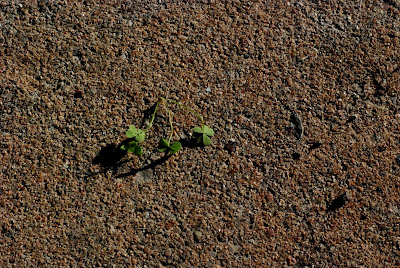
I’ll give you a hint, it’s not the clover. The clover, as a weed, looks like this:

This type of clover will send up quite lovely little yellow blossoms later in the spring. Unfortunately, it will take over if given the chance and therefore must be pulled. It doesn’t like being pulled up, and will usually snap off at the surface. Depending upon your level of tenacity, you may let it go until it sprouts again, or may go digging for the roots – it’s up to you.

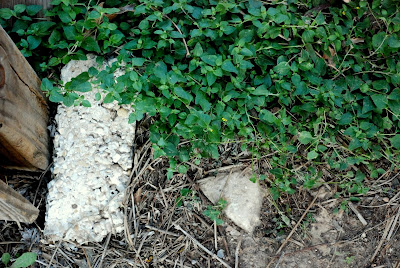
The weed in the first photo is actually a native called Horse Herb. People apparently buy this plant on purpose. Nevermind that the first result when searching for “Horse Herb” is for a post entitled “I Hate Horse Herb” by Zanthan Gardens. I sympathize with their sentiment. Please don’t buy this plant on purpose. You’ll regret it unless you don’t want any other plants on your entire property. Really.

Here it is attempting to take over the gate’s space in the fence. I’ve ripped this bunch out twice already.

Things I learned from this:

  • “Native” doesn’t not necessarily equal “Good.” Just because the plant has been around these parts for ages, and is well-suited to local conditions, does not mean it’s a good idea to bring into your space.
  • If you see a weed when it’s small, don’t come back to get it when it’s bigger – pull it small! The smaller the weed, the smaller the root. The smaller the root, the closer to the surface. The closer to the surface, the easier to pull.
  • Bed prep really is worth it once again. I re-learn this lesson every few months in a new way. When I ripped out 100 sq ft of lawn last February to put in a garden bed, I did more than just remove the grass, build a bed, and fill it with soil. I dug that sucker 24″-30″ deep, removing every grass, clover, horse herb, henbit, and other bit of not-vegetable-life root system I could find. The result? I rarely have to weed my vegetable bed. Rarely meaning…every three months or so I go through and pull out about five weeds. Two of which are stinking Lizard Nut Grass, which I pull every time to no avail. They seem to stay dormant when the bed is empty and I would be able to go digging for the nut. Instead they sprout up when surrounded by food-plants I don’t want to disturb. Wiley little things.

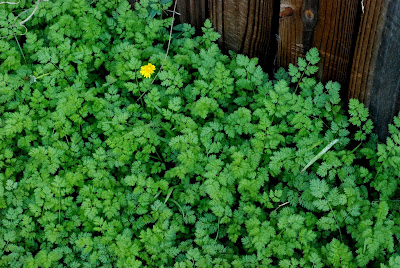
The other weed I commonly battle in this yard? I think it’s wild carrot. I could be wrong.

Nevermind the dandelion. I find those fun to dig up. These weeds grow like a blanket and will send up a shoot for a bunch of teeny tiny little white flowers to bloom upon. Those flowers will turn into cockle burs. They behave not unlike Queen Anne’s Lace, but are not nearly as majestic as that childhood favorite of mine.

Brain-free days.

Some days, it would seem that my brain takes the day off. I’m sure most folks have these days. Days where you almost lock your keys in the car after almost forgetting to lock the front door. Days where you walk into a screen door? Days where you just aren’t functioning at your usual level. Maybe you had a sleepless child keep you up the night before. Maybe you have the flu. For whatever reason, on days like these, I do my best to limit my exposure to mistake-making situations.

Today was one of those days for me, so instead of planning how to rearrange my planting plans to accommodate the extra 400 sq ft of garden space I recently acquired (community garden plots are a FANTASTIC use of under-power-line space!) I did simple maintenance tasks outdoors.

I watered our newly planted Mexican White Oak, and my potted things including this fern that volunteered itself in the pot of a rosemary that didn’t survive the summer.

These have been volunteering for months now along the sidewalk as well. I sowed them late last spring, a few tried their might against the heat, but it came on too soon and too strong and they were no match for the sweltering Texas sun. Apparently the more cautious among them remained dormant through the summer and our unexpected November showers brought them out of hiding.

I hear they’re edible – is that true? If they are from my seeds, they’re Fiddleneck ferns. I only hesitate to say they are, because so far they have not behaved like any Fiddleneck I saw in the forests of my childhood. And if it is true, do you saute them? Steam them? Put them in salads? All of the above?

I gazed about the space to find something simple to do. The dandelions smiled up at me. My eyes moved from the unmade bed where the chainlink had come down, the vines had come out, but the short wall had yet to be built. There was no way I was up for building a wall today. I let my gaze wander to the patio. DH has been wanting to build troughs along the perimeter for more herbs and peppers to have nearby while he grills. I measured the patio edges. That was easy. It was also too quick.

Oh, right! Dandelions!

I retrieved my Hori Hori and quickly had it strangled in clay.

It proved to be the simplest of tools for removing dandelions. Easier than a trowel, spade, or hoe (all previously used dandelion-removal-tools by yours truly.) Simply slide into the earth, tilt, hear the root pop, and lift. Dandelions (and thistles) will let loose at ground level if you try to pull them up by their greens. They send down a deep tap root that, if left untouched, will simply sprout another fan of leaves in a matter of days. It’s messier and takes a bit more effort (and tool clean-up) but in the end is less work to get them from underneath.

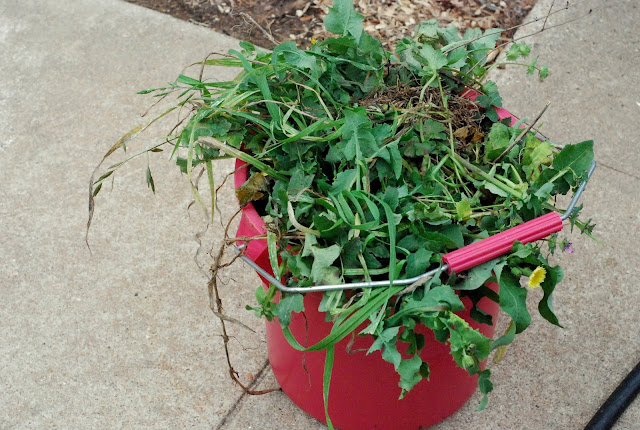
After filling the bucket twice and emptying it into the trash bin for the weekly collection, I had made a dent in the dandelion population as well as my outdoor time.

I have never been one to mind not having a perfect lawn. Perfect lawns are how some people find their peace. I find my peace in other gardening endeavors. I do, however, notice the weed population in my lawn, and will diligently remove weeds from my lawn before they go to seed. Keeping the lawn at least tidy helps prevent weed seeds from drifting into my vegetable bed. Anything I can do to keep my weeding time down is something that can bump my other gardening time higher, and that makes more time for peace.

Not by any means out of dandelions (I may very well have four more buckets left to remove), my back was done with that business for the day and I set about for something else to do.

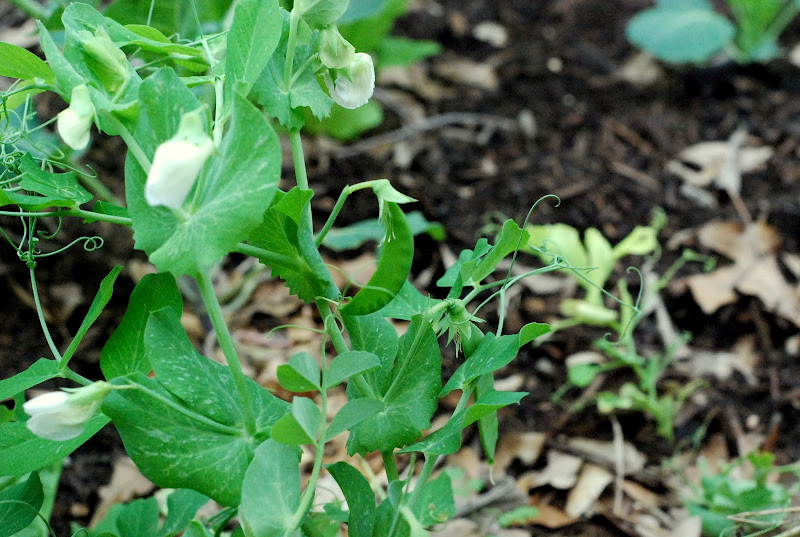
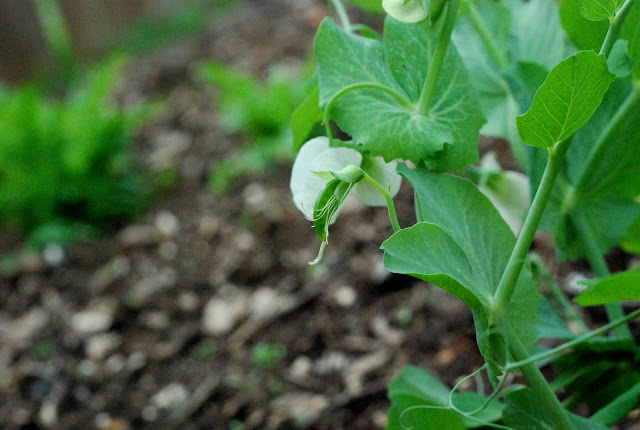
That’s when I saw them. Perfect, cheerful, and for no known reason – seeming childlike – my first peas!

I hadn’t grown peas before this winter, and grew them more for the fact that I had received some seeds as a gift than because I was particularly interested in growing peas. Let’s just say my feelings on the matter have changed.

And of course, some things make perfect sense after you see them, but you never thought about them before that moment. I had wondered if peas grew from inside the flower cap, from behind it (holding the flower on the end of the pea), or some other way. I learned today just exactly how the pod emerges from the blossom.

As you may be able to tell from these last two shots, the light was fading fast. It was time to duck inside for dinner. DH had prepared two of my earlier Farmer’s Market finds for a feast of Wild Hog patties from Countryside Farms‘ ground feral hog and baby Brussels Sprouts from Engel Farms sauteed in butter and sea salt, with a crack of pepper and hint of garlic. (Engel Farms is also where I purchased the “Rainbow” tomato basket that I saved seeds from.)

After speaking with my dad today, I’m tempted to find some of the younger dandelions, wash them off, and saute them in much the same manner. Apparently you can also make thistle tea? I am still searching for a tea I enjoy…

Camo Bee! And surprises.

I didn’t use to plant flowers or other landscape plants. Last spring was my first venture into things that weren’t edible. I justified this change in two ways.

1) I had a lot more space than I ever had before. It is a smaller lot, so far as city lots go, and no where near having “land” in the sense I grew up with, but it was enough space to justify non-edible space-takers.

2) I was only going to grow things that were edible to other creatures – mostly bees. As much as I like birds, attracting birds to the same plot of earth that I use to grow food for us is asking for trouble. I already have to fight them for tomatoes as it is. As for the butterflies, I figure if the bees like the flowers, the butterflies may as well.

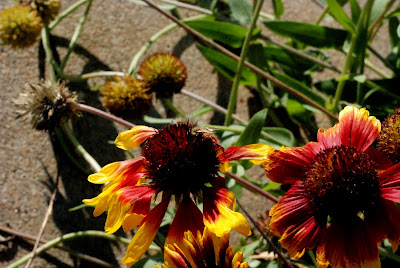
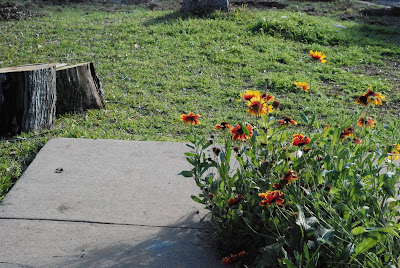
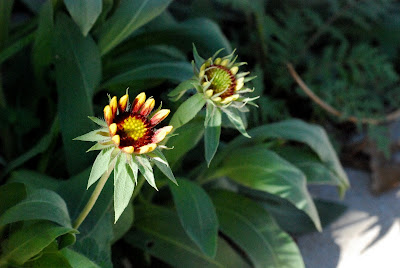
Aside from how cheerful Blanket Flowers are on their own, they make me even happier for their year-round supply of pollen for the bees that haven’t gone into hibernation.

And while we’re covering pleasant surprises, here are two more.

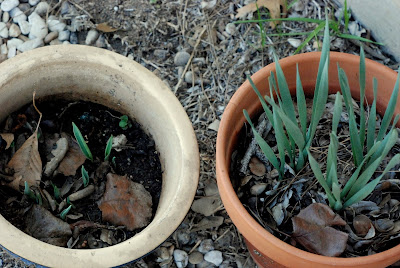
I had completely forgotten these pots had bulbs in them. I haven’t watered, fed, or otherwise cared for either of these in over a year. Nevertheless a few weeks ago, the tulips started to poke their heads above ground. Shortly thereafter, the ranunculuses popped through the soil. I’ll toss them a bone (in the form of bone meal) and some compost, keep their water up, and see if they won’t bloom this year.

The outside world.

The weather today was absolutely lovely! I couldn’t wait to get out into the air, the sun, and the earth.

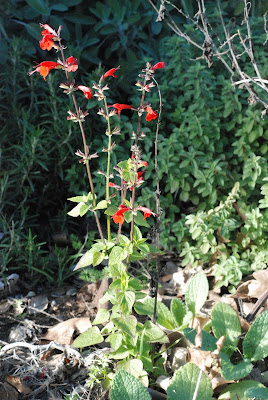
This little guy is doing his part to keep the bees fed in January. This is a self-sown Texas Hummingbird Sage. Last spring was my fourth attempt at growing Texas Hummingbird Sage from seed. (Trial & Error often requires multiple trials!) I managed to get four little seedlings to put out two sets of “real” leaves. I put two in the front bed, and two in the rear bed. The rear bed ones didn’t make a week, baking in the sun if I missed their morning water. The front bed was a little kinder, and both sprouts made it about four inches high. I couldn’t figure out why one died, but I suspect a bird or other creature thought it would make a tasty salad. That fourth stubborn sprout ended up surviving all summer long and into the fall before the first freeze took it. It topped out about 18″ tall and had bees on it every day! This little guy shown above is an offshoot from the base of the old plant.

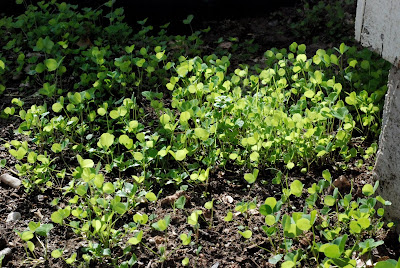
Growing up in the Pacific Northwest, one of my all-time favorite seasons was a short one. In the Willamette Valley (and I’m sure elsewhere) farmers plant a cover crop of red clover. In May, the fields are abloom. Mile after mile, acre after acre, are afire with crimson blossoms on rich green stalks. They only last a week or three, but are one of the things I miss most about that corner of the world. This clover-looking mess is actually my own little patch of Crimson Clover. It’s my first year with it (second planting attempt, the first one died off due to inattention (oops!)) and I’m hoping to get a bloom or two. It’s a new bed that previously only held Horse Herb (a weed, in my estimation) and a Hackberry. I amended it a bit with manure, blood meal, and bone meal. We’ll see how it goes. I’m glad to see them hanging in there, as that is also where a lot of water from our gutter-less roof runs off.

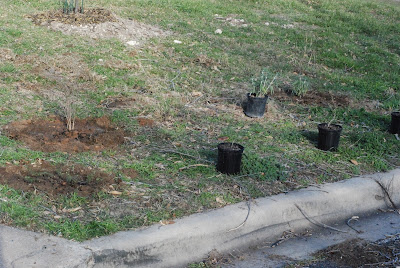
And finally, the front of the lawn. I decided a few months back that I wanted to absorb some of the scraggly lawn into a native bed for the bees and butterflies. My parents were kind and generous enough to send me some of my Wish List Plants for Christmas in order to get it started!

In the top left corner, you can see the dirt dam and mulch of the new Mexican White Oak. Down the left edge, you next come to a brown circle with a few sticks visible – that’s a Fragrant Mimosa. Unbeknownst to me, but quickly discovered by my other half – it has thorns. Be mindful if you choose one of where you plant it! Continuing down the lefthand side of the photo is another brown circle, this one contains a Prairie Verbena! Moving along the curb we have a few Black Daleas still in their pots, and behind them, one in one out, are two specimens of Mexican Bush Sage.

All of these plants my folks were able to order online from a local business (bonus points!) They’re called Landscape Mafia, and not only do they have a nice variety of natives, for very reasonable prices – they deliver! My parents live far away and ordered shipping. The folks at Landscape Mafia had the care for their plants, and the presence of mind, to realize that I lived a short drive away and some nice man from their staff delivered them directly to my front porch! Color me impressed.

Since these are natives, who all claim to not want super-rich soil, I worked a little manure into the soil of each spot, watered deeply, and that’s it for now. Tomorrow I’ll put the others in the ground and see how I feel. The ultimate goal for this spot? No grass, these big “anchor” natives, and a sprinkling of Black Foot Daisies, Henry Duelberg Sage, and maybe because they make me so very happy that I surely need more:

Blanketflowers!


Well, hello there!

It’s been a little while, eh?

Apologies for that. Lengthy work hours eat up the few hours of daylight this time of year. I cannot imagine managing with the even shorter days farther north.

Lack of daylight leads to lack of photos.

There hasn’t been a lack of life sprouting up and work to be done, though.

I’m still catching up on the picture-taking, but did manage a few shots when the sun was still up.

Roodnerf Brussels Sprout.

Of course, one must work in soil supplements most times. For powders, I like using a rake.

This is my first time using rock phosphate. I’m hoping it helps. My soil tends toward too much nitrogen (user error through trial and error) and alkaline pH. I haven’t found a supplement that added enough of the others to get my little $3 Burpee Soil Test Kit even into the mid-range. Fingers crossed that this does that trick. I picked it up for a reasonable price at The Natural Gardener.

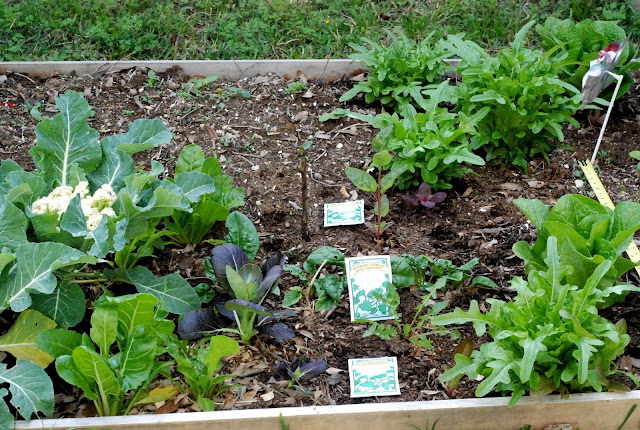
A volunteer romaine from the lawn that I brought into the fold, with some seed sown Bloomsdale Spinach in the background.

The Blanket Flowers in the rear side patch have been trying with all their might to push a bloom (or two!) to the tops of their stalks. They have succeeded.

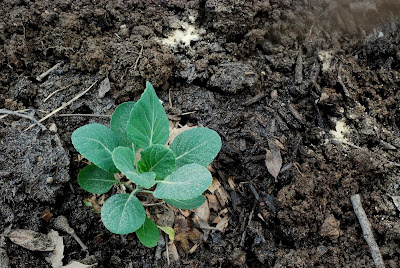
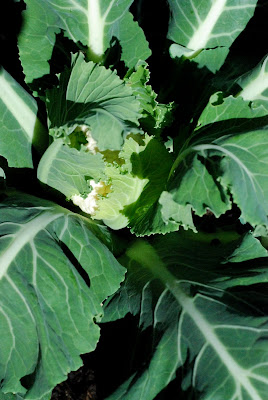
And finally, I’ll leave you with a peak at a secret! I cannot wait for it to enlarge into something for dinner!

This one’s called Amazing Cauliflower.

Seed Varieties Sown Spring 2012.

This post will be updated throughout the year.

Group

  • Variety Name – Source (if known)

Tomatoes

  • Chadwick Cherry – Self-saved
  • Black Prince – Southern Exposure Seed Exchange
  • Riesentraube – Baker Creek Heirloom Seeds
  • Zapotec Pleated – Seeds of Change (12/10)
  • Oxheart – Self-saved
  • “Mini rainbow assortment” – Saved from Austin, TX Farmer’s Market
  • “Newport Purple Heirloom” – Saved from Newport, OR Farmer’s Market

Onions

  • Violet de Galmi – Baker Creek Heirloom Seeds
  • Australian Brown – Baker Creek Heirloom Seeds

Peppers

  • Yolo Wonder, Sweet Pepper – Maffin Family
  • Ancho/Poblano Chile Pepper – Seeds of Change (sell by 12/10)
  • Jalapeno Chile – Seeds of Change (sell by 12/10)
  • Jalapeno – unknown/gift
  • Czechoslovakian Black Pepper (hot) – Southern Exposure Seed Exchange (10/10)
  • Anaheim Pepper – Baker Creek Heirloom Seeds
  • Long Red Cayenne Pepper – Southern Exposure Seed Exchange (11/10)
  • Chinese Five Color Pepper – Baker Creek Heirloom Seeds
  • Fish Pepper – Baker Creek Heirloom Seeds
  • Purple Beauty Pepper – Baker Creek Heirloom Seeds
  • Emerald Giant Pepper – Baker Creek Heirloom Seeds
Lettuce
  • Chadwick’s Rodan – Baker Creek Heirloom Seeds
  • Rouge Grenobloise – Baker Creek Heirloom Seeds
  • Mignonette Bronze – Baker Creek Heirloom Seeds
  • Little Gem – Baker Creek Heirloom Seeds
  • Gentilina – Baker Creek Heirloom Seeds
  • Cimmaron – Baker Creek Heirloom Seeds
  • Amish Deer Tongue – Baker Creek Heirloom Seeds
Brasica Family
  • Early Purple Sprouting Broccoli – Baker Creek Heirloom Seeds
  • Amazing Cauliflower – Territorial Seed Company
  • Roodnerf Brussels Sprouts – Territorial Seed Company
Greens
  • Even’ Star Land Race Collards – Southern Exposure Seed Exchange
  • Lark’s Tongue Kale – Southern Exposure Seed Exhange
  • Perpetual Swiss Chard – Territorial Seed Company
  • Italian Chard – Unknown/gift
  • Bloomsdale Spinach – Unknown/gift
  • Double Purple Orach – Territorial Seed Company
  • Violetta Pac Choi Hybrid – Territorial Seed Company
Herbs
  • Lemon Basil – Baker Creek Heirloom Seeds
  • Cumin – Baker Creek Heirloom Seeds
  • Dark Green Italian Plain Leaf Parsley – Southern Exposure Seed Exchange
  • Genovese Basil – Unknown/gift
  • Bouquet Dill – Seeds of Change (12/10)
  • Cilantro – Ferry Morse (sell by 2006)
  • Red Rubin Basil – Seeds of Change (12/10)
Others
  • Ground Cherries / Strawberry Husk Tomato – Baker Creek Heirloom Seeds
  • Tomatillo – unknown/gift
  • Golden Amaranth – Southern Exposure Seed Exchange

Flowers

  • Red Cherry Marigolds – Baker Creek Heirloom Seeds
  • Marigold Cracker Jack Mix – Baker Creek Heirloom Seeds


Want to trade? There’s a page for that – Trade Box.