Crawly critters

I am grateful for my lack of furry critters making use of my garden as their market. We have rabbits and deer in our neighborhood, but they haven’t found my garden to be worth the fence-hop. As for the community gardens, I can only assume they don’t like the busy roads on two sides.

I do get quite the surprise sometimes when it comes to the crawly critters. Awhile back, it was the caterpillar bigger than my middle finger. This time, it’s a few things.

Like this thing. A cicada shell. They’re currently peppering tree branches and leaf piles throughout the neighborhood.
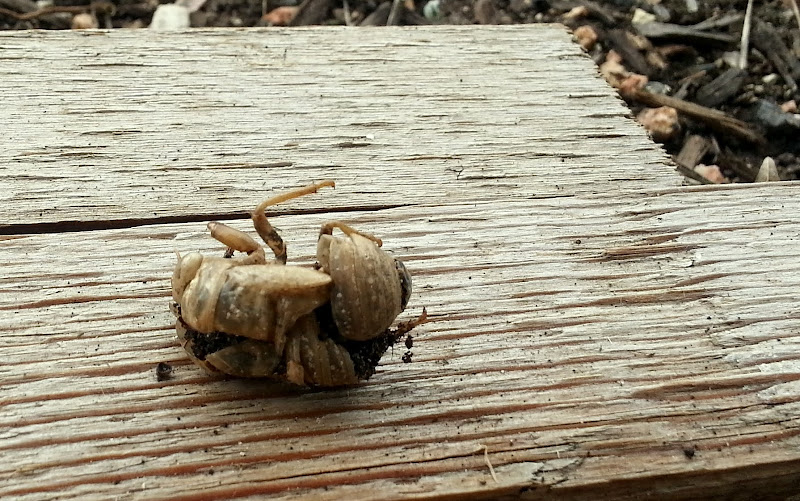
Each board is two inches wide. It’s head is to the left, bent under. That horizonal line moving from left to right was the middle of its back, before it split the shell to escape in it’s new, bigger, shell. (Cue flashbacks to the movie Alien if you’ve seen it, I have not.)

I found this shell when chasing down a tree roach that leapt from the earth I was digging, just fast enough to make me jump before I saw what it was, and race off.

(Backstory: I grew up a tomboy. I liked lizards and spiders. Grasshoppers were fun. I claimed a daddy-long-legs in my bedroom corner as my pet when I was five. I went searching for earthworms and snakes to discover under boards in the pasture. I woke up once with a mouse on my shoulder, staring me down from four inches away, and was fine with it. And then I moved to Texas. The grasshoppers here make me jump. (They’re HUGE!) The lizards are more colorful (and plentiful) and I finally encountered a bug that just *got* to me. I finally understood the visceral reaction so many have in response to spiders, or snakes, or any other oft-feared creatures. I had encountered my first tree roach.)

I’m not sure of their actual name, but imagine a cockroach, that gets about three inches long, and FLIES. Then imagine it hosts a demeanor of an attack missile. Sometimes when you come upon one and startle it, it will actually run away. Other times, it will come AT you. It’ll get stuck in your hair, hang onto your shirt, and otherwise make you dance around hitting yourself like a maniac only to leave you with the creepy-crawlies for the rest of the day.

I mean…

Not familiar with a tree roach? This was the best photo I could snag of the fellow.

Or, for easier viewing, I found a funny post by another Texas-transplant here – with much better visual aids.

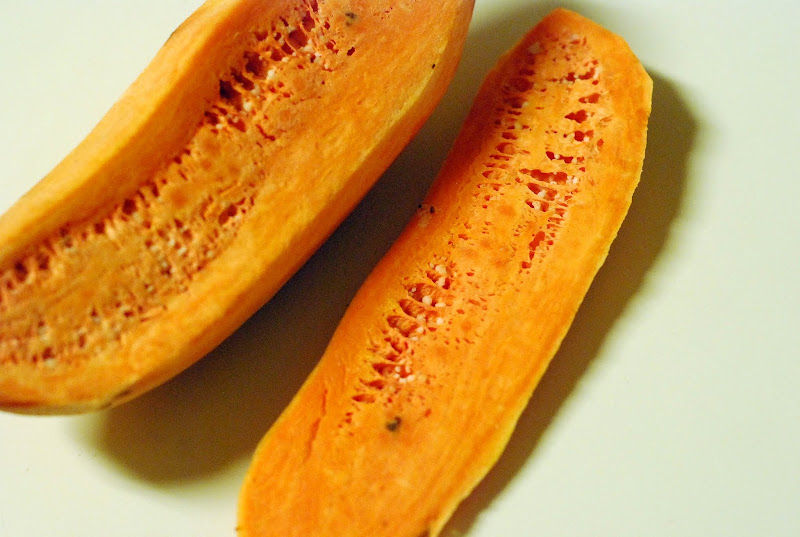
And then there’s the Case of the Creepy Sweet Potato. Fiber issues? Drought issues? Bug issues? What’s your guess?
We’ll finish this Creature Feature with a wonderfully ancient-looking caterpillar. It reminds me of both The Neverending Story, Chinese dragons, and Alice in Wonderland. Have you guessed yet?

It’s the happy-looking Giant Swallowtail Caterpillar.
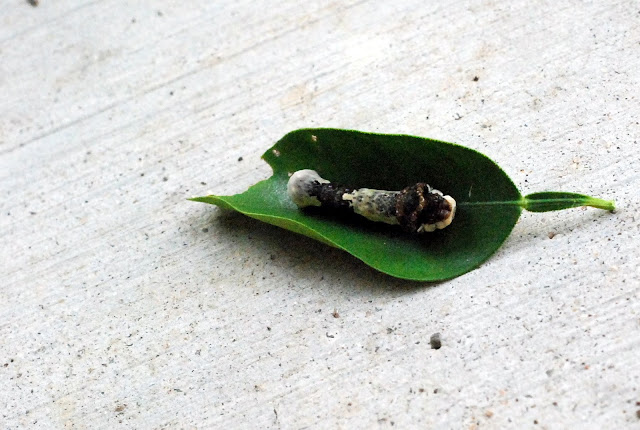
See that charming smile?
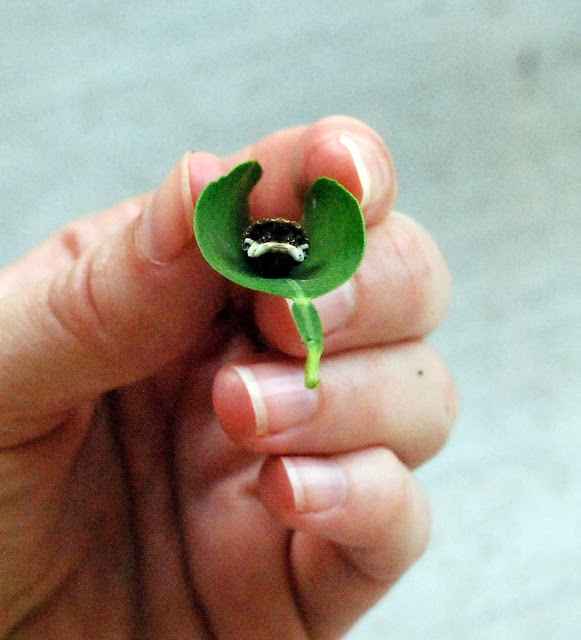
I put him back on the potted orange tree where I’d found him. DH says he’ll be evicted if he takes more than his fair share. I went to check on him a few days later to discover that he had a new little friend of the same kind, and he himself had more than doubled in size.
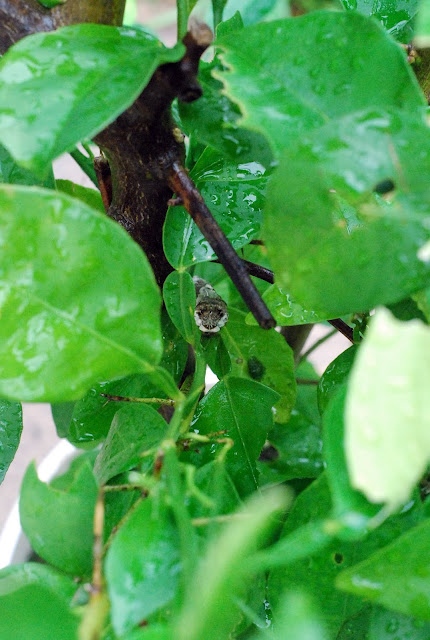
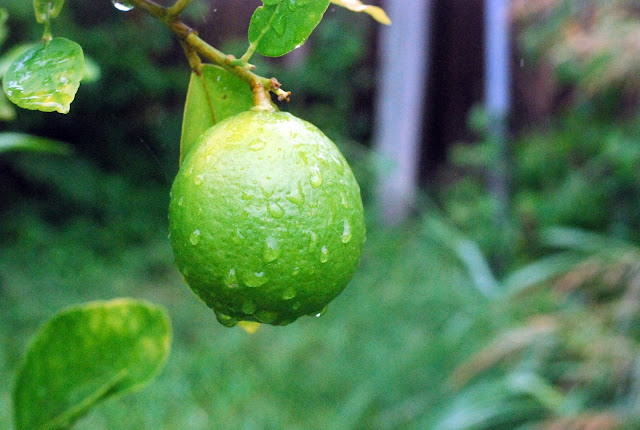
In my brief reading to research this caterpillar, it became obvious that they like citrus trees. Why he and his brother selected the orange over the lime, I couldn’t say. Mimosas over margaritas, perhaps?
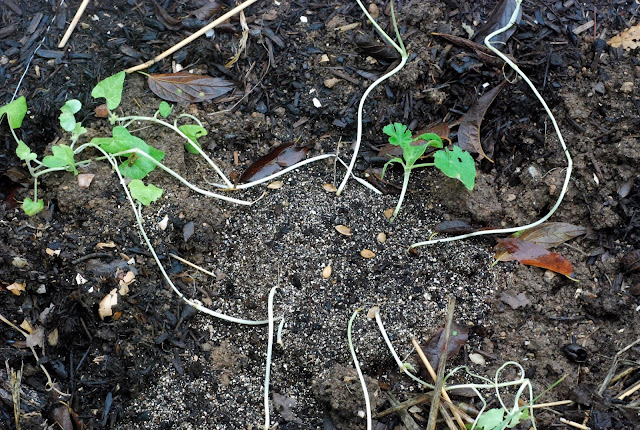
Umm…oops?
This summer I tried to start my fall veggies indoors in June and July so I could get a headstart on the fall garden even with temperatures still much too hot. With mixed results, it’s something I’ll definitely do again next year with some new information and more experience under my belt.

One of the veggies I did this with was squash. Various varieties of mostly summer squash went into my seed trays, came up, and reached for the window. They even bloomed a bit before I had a chance to get them outside.

I put eight in the ground.

Two were gone the next day. Completely wilted into the surface of the soil.

Two were gone the second day. Completely demolished by some tiny hungry belly.

The other four went the way of the first four sometime that week.

Not wanting to turn the other seedlings out for such a certain fate, I kept them alive in their seed tray on the porch. A previously unsprouted seed burst forth. They didn’t mind the heat so long as they got their water each morning. I knew this wasn’t going to be a permanent solution, so I went in search of one. Books. Articles. Blogposts. More books. Finally I went back to the seed packets. Generic instructions on all the seed packets save for the ones from Baker Creek which read: “…start a couple of weeks earlier indoors, but never let squash transplants become rootbound, and do not distrub the roots in transplanting.”

Oops.

These transplants had definitely become rootbound, and as a results, their roots were definitely disturbed during transplanting. Lesson learned for next year.

In the meantime, I still needed an attempt at saving the transplants I still had. The very-rootbound transplants. So rootbound that the seed tray had become more of a 2″x9″x13″ soilmat held together by roots. (I already said, “oops” twice, but I’ll say it again – oops!) DH had the lightbulb moment I was looking for. Plant the mat!

So I carefully loosened the mat from the pan, laid it in a shallow hole, and let it soak in. Let the survival of the fittest begin!

Update: They’re all dead. All nine of them chomped to the ground in the night.

Fall is here.

Fall has started early this year here in Central Texas. Last year we didn’t see temperatures stay below 100 until October. We didn’t see rain until November. This year, the rain has already come. Today’s rain is a steady drizzle soaking the earth, enabling the oaks to soak up their thousands of gallons, the summer stresses to be washed from the shrubs, and the winter growth to start off strong. The rain earlier in the week came light and quick – just enough to wet the streets, muddy the gutters, and dust off the heat.

Fall in Texas is different from the Pacific Northwest of my childhood in many ways. One of the ways that I still am not used to, is the behavior of the trees.

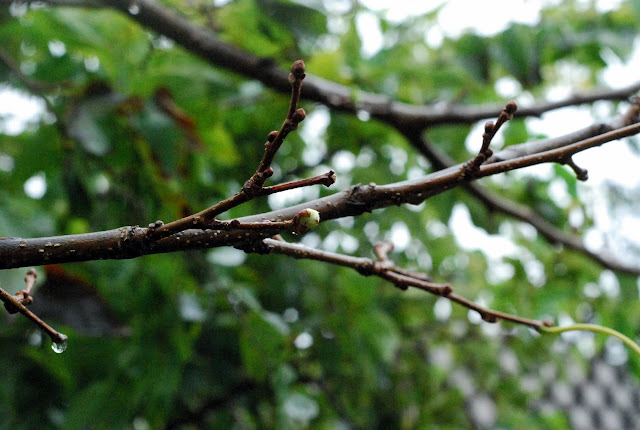
Depending on variety, some trees behave as expected. They have bud break in spring, turn itchy green before summer, find their golden hues in the fall, and drop leaves to the floor with the frost. Others, behave as above with a second bud break. This tree already had its leaves, most of which were lost in the heat of the summer, but it is still driven by the need to put forth its progeny. This bud will break into a few itchy-green leaves, and one bunch of powdery seeds.

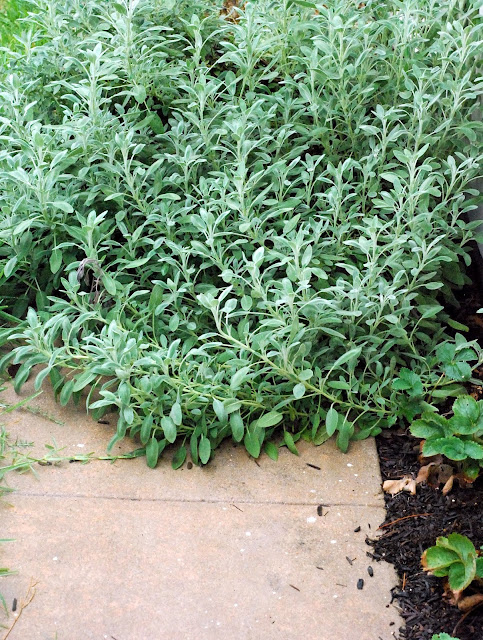
Speaking of fall, does anyone know of the best way and time to prune an overgrown sage?

This is a hybrid variety that is growing in maybe six inches of soil depth, with neglectful watering, and still managed to take over the sidewalk in its entirety. I had its twin in the front bed, pruned it back months ago, and it has since died for my efforts.

Also noted in this photo: the strawberries survived and I’m overdue on edging the lawn.

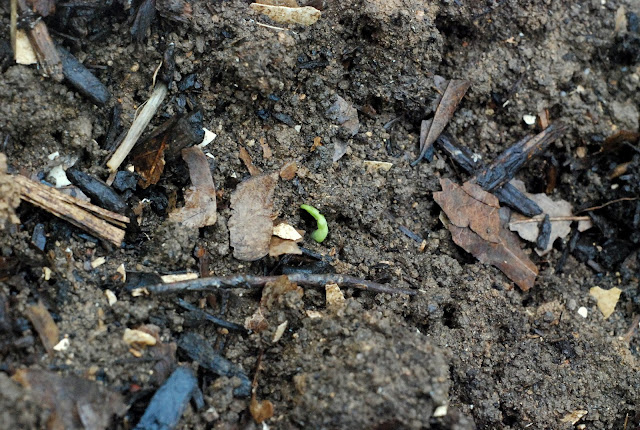
This earlier arrival of fall has helped make up my mind on sowing some cooler weather varieties. Earlier this week I made it into the backyard bed to sow some peas – Golden Sweet and Sugar Ann. The Golden Sweet claims to grow 6′ tall and have purple flowers. I’m looking forward to the little paintbrushes of color in the future. Sugar Ann claims to not need any structure, and I’m going to believe it. It took a few days longer to sprout than the Golden Sweet. Both were up within the week. Now to use the giant bamboo pole DH brought home for me to construct a climbing structure for the Golden Sweet…

Sown yesterday:

  • Garlic – Cheyenn Purple, Silver white, and California Select
  • Onions – Austrialian Brown and Violet de Gamme
  • Cucumbers – third year saved Marketmore 76
  • Beets – Detroit
  • Broccoli – Early Green Heirloom (I’m not sure this is the actual name…) both sown and transplanted
  • Kale – Lark’s tongue
  • Chard – Perpetual
  • Collards – Even’ Star Land Race
  • Lettuce – transplanted a few mysteries. They could be any of about eight varieties.

I was set to also transplant some Amazing Cauliflower…until I started working their bed and dug straight down into a giant fire ant nest. Escaping with a single bite (and no sting) I called it done for the day.

Peppers!

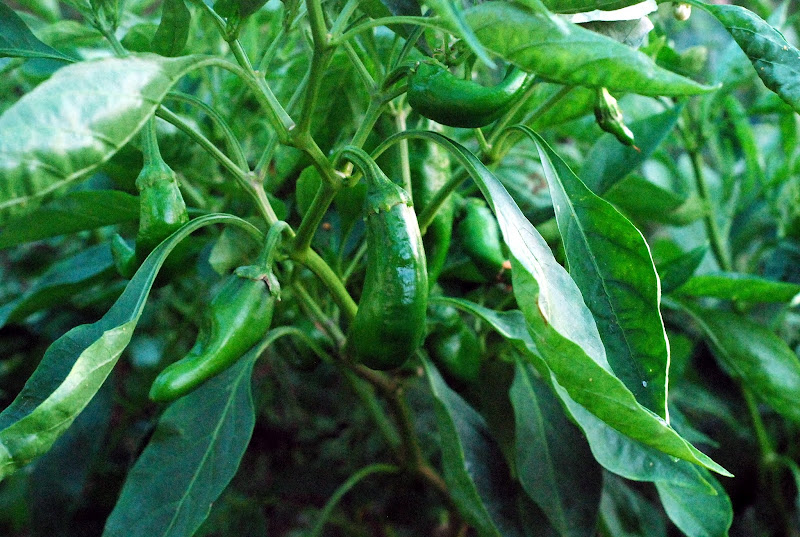
The peppers haven’t minded the heat, or the cool front, and are churning out their fruit like the good little food-producers they are.

What I learned about peppers recently:

  • Anaheim peppers will turn brownish, and then bright red. They are less bitter the longer they ripen.
  • They don’t need tomato cages like I thought. They do fall over when they get laden with fruit, but that’s ok with me.
  • Planting them at 15″ instead of 18″-24″ will let their canopies shade the ground so they don’t get so hot and dry so quickly (even when I forget to mulch for the third time come July…)
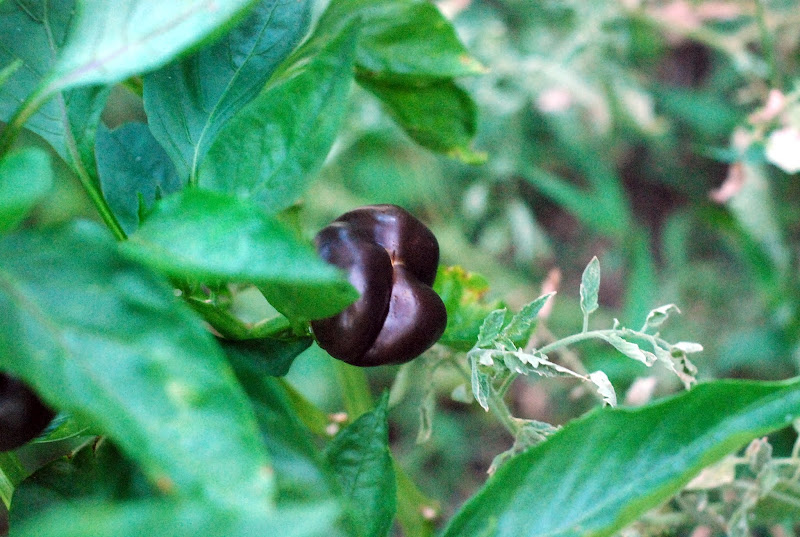
  • Bell peppers that start out purple just might turn orange on you.
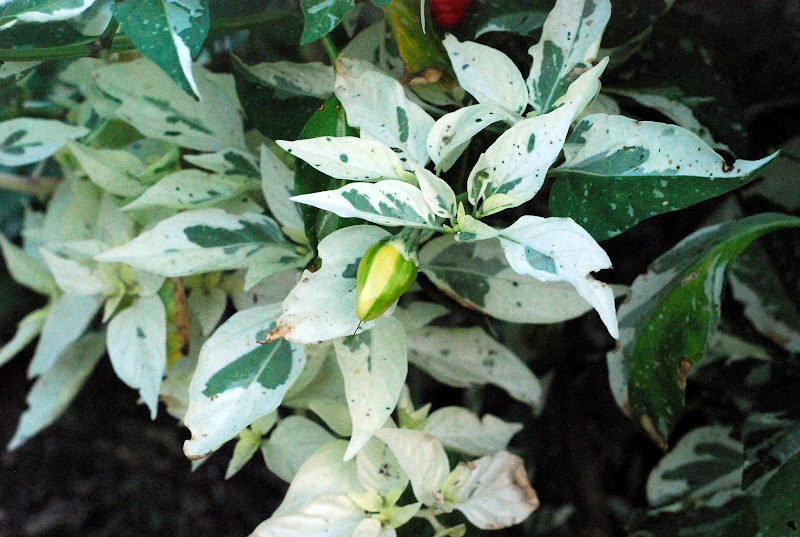
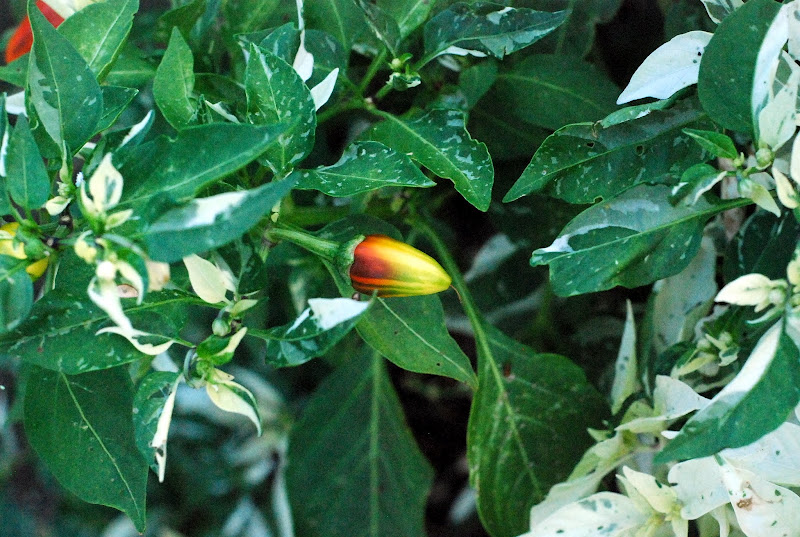
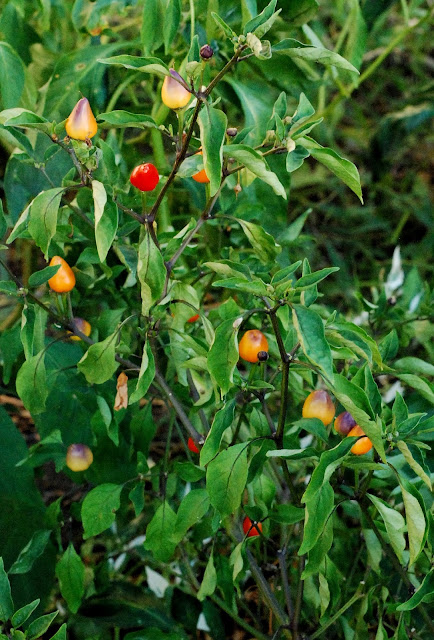
  • Fish peppers are the most interesting looking peppers I’ve ever seen, and grow on the prettiest of plants. It’ll be a walk-way lining plant next year instead.

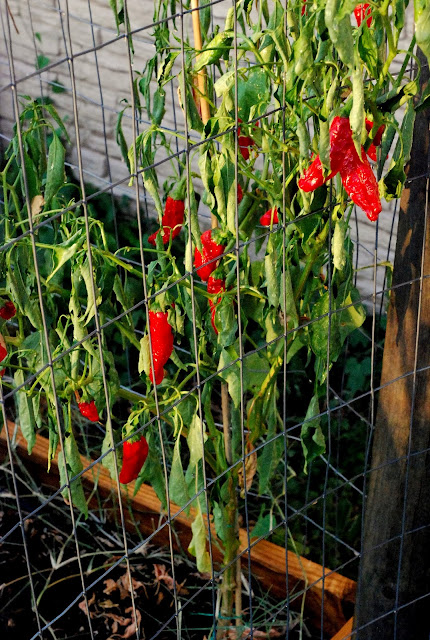
Think there are enough Anaheim peppers on this branch?

Fish pepper plant looking lovely…

And the peppers themselves just get cooler looking!

I call these “button bells” – they don’t really get much bigger than this. I’m guessing it’s my water restrictions.

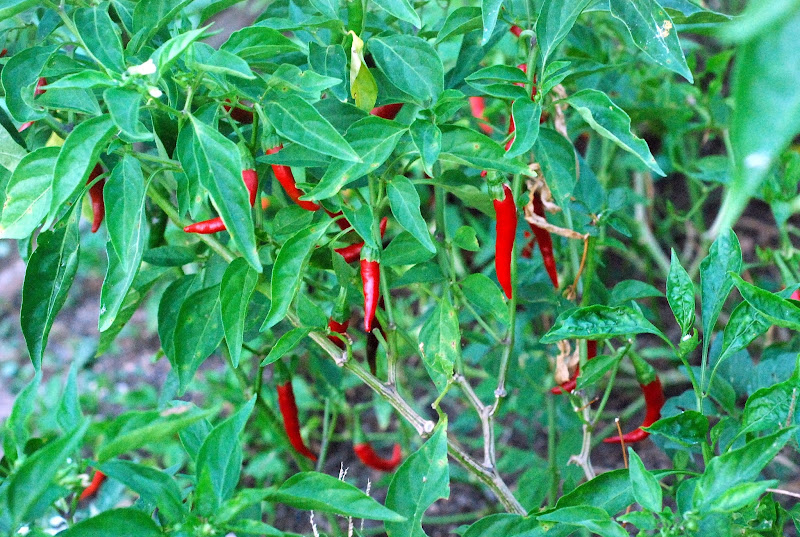
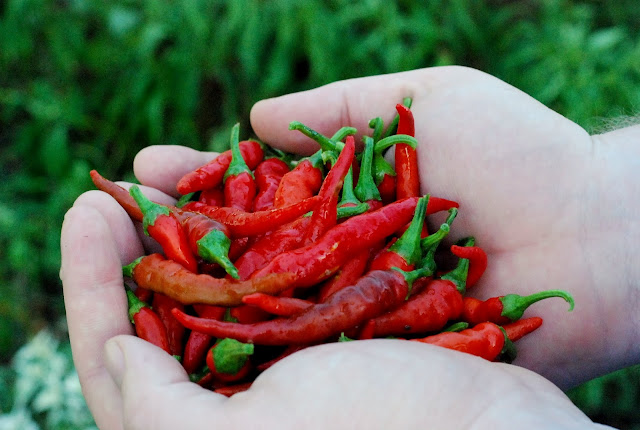
As for the cayenne…they just won’t quit! I have a Ristra, and a bowlful, and am about to try my hand at drying them for grinding.

Nervous…

I sowed squash indoors weeks ago. They bloomed the other day. The Books say it’s ok to plant squash now. The Books are often wrong.

The Books reference zones based on frost dates. Based on frost dates, I should be able to grow anything grown along the valley of the West Coast of the United States. This is not actual truth.

What The Books fail to account for in their Zone System is temperature, and daylight, and precipitation. I can grow many things all winter that would not survive in other areas of the same zone. Why?

Well, for starters, it’s still hitting 100 degrees fahrenheit regularly here in my version of Zone 8a/b. In other areas of Zone 8a/b there are highs in the 70s. They are also dropping into the 49ers at night. Me? Maybe as low as 75 if I’m lucky. My tomatoes are barely alive (mostly due to my frugal watering) while theirs are done (due to their chilly nights.)

Next we have the concept of chill hours. Peaches grow beautifully and plentifully 90 minutes west of here, having just enough chill to fruit. Citrus grow outdoors three hours southeast of here, with the lightest of frosts being the rarest of things. Neither would be happy here.

As for daylight, the fluctuation is just as wide. Summer in Seattle as a child taught me how greatly the curve of the globe changes the daylight in rotation to the sun. The sun sets in June at nearly 11pm. We top out at just after 9pm. Winters in Olympia were miserable for me with the sun setting at 4:30pm. We don’t really set before 6pm.

Never mind the other oh-so-important water. Days with rain here? Maybe a third of the number of days up there. There are irrigation options, but that costs money and doesn’t change the surrounding soil so much.

And not that the Zones claim to say anything about soil, but clay is not clay is not clay. I’ll save that for another day.

So today, I put eight seedlings of squash out. I’m nervous. I held eight back. The Books also say I can sow beets and put out my cauliflower and broccoli starts. I won’t be listening to them on those counts just yet.

And just for fun, some pretty clouds.

image

August harvests

In my little speck of earth, there aren’t many harvests in August. Some of my gardening neighbors down at the Gardens have given up, cleared out, and are waiting for fall.

Others have given up, and are waiting to clear up until later – leaving any possible harvest to the birds and bugs.

But I’m a little too stubborn for that.

Peppers are still going. The bell peppers are thirsty ladies, and have slowed down, but the hotter, smaller, and drier the pepper, the happier they seem to be.

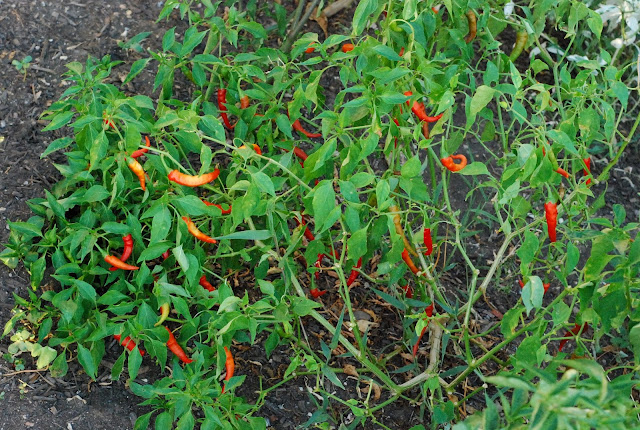
This cayenne, for example, had out done itself – literally. It made so many peppers it fell over.

That one plant  just gave us a heaping double handful.

I actually planted two this year. I’ve learned that a household really only needs one cayenne plant.

One of the prettiest peppers I’ve ever grown has made a comeback. Don’t these just make you think of the Christmas lights from the 50s?
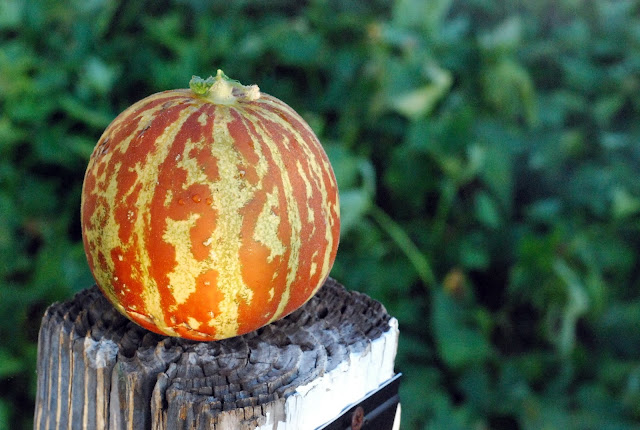
And how about this? I grew a melon! I still feel like it should be bigger, but I’ll taste it all the same. It’s also possible I’m mis-remembering the qualities of the variety and really does only get this big. I have only had melons set fruit this year (third year trying) so perhaps next year I’ll have learned just that extra bit that helps them grow larger.

Some surprises from the backyard garden as well!

A walkabout the neighborhood…

We walk our dog every evening. (DH also walks him each morning.) I often wish I had my camera handy on our walks, but most often I don’t (and quite often, it’s dark by the time we go on the prowl.)

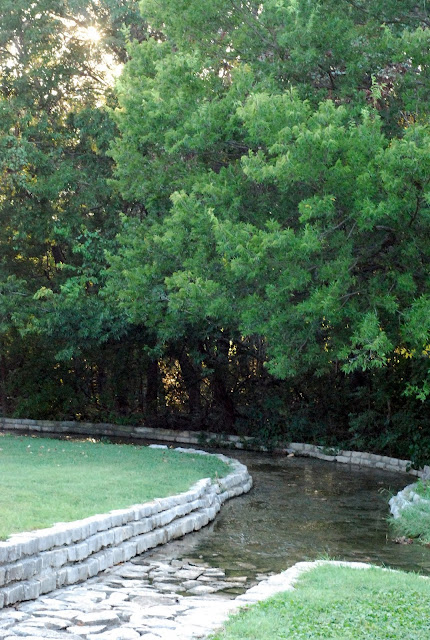
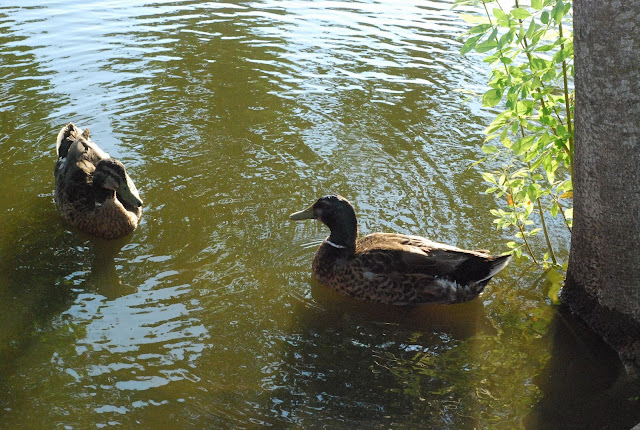
Not tonight! After feeding the ducks the snails and caterpillar, we wandered down the greenbelt that follows the creek. It had rained yesterday and again last night, and the pond had again swelled to its tippy toes and started the creek up again.

When it’s still raining, runoff flows down the left branch as well.

We were quickly losing the light, and the glow through the thickets were magical.

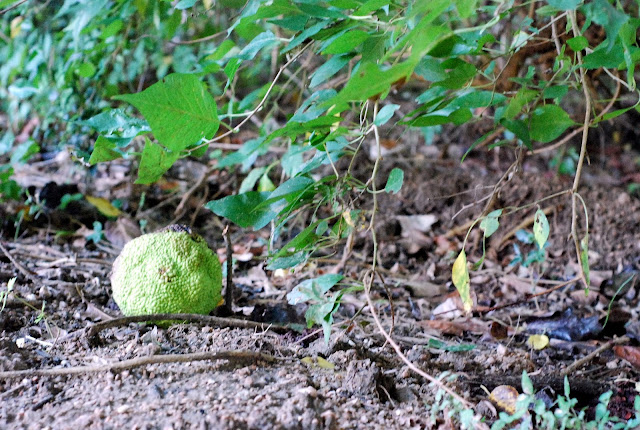
The flood a few weeks back made some changes to the landscape around the pond and creek, one of the smaller of which was relocating many a’ horse apple to a new location.

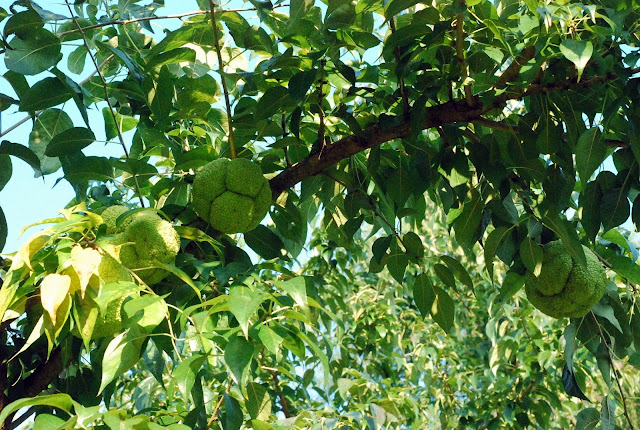
(If you’re saying, “umm…what’s a horse apple?” I didn’t know either until we first encountered them in this neighborhood and went a’Googling. They have quite a neat history in the USA.)

They’re really interesting to look at by themselves, and they grow like pull-a-part rolls!

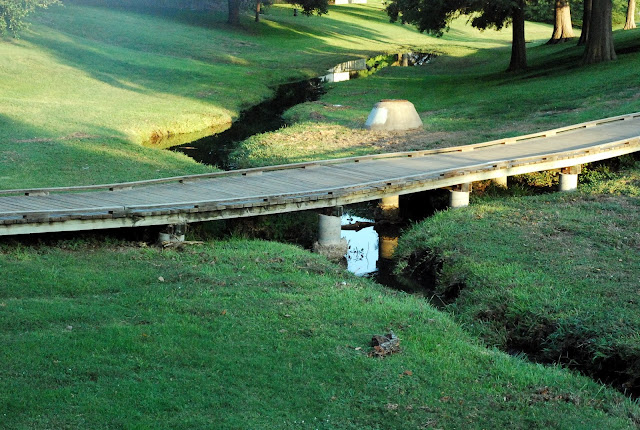
Oh! Remember that bridge I showed you during the flash flood that I was worried would float away? Here’s how small that creek is supposed to be (with the bridge still in tact.)

We left the greenbelt at this point, and wandered up the neighborhood toward home. A few strides up the hill and suddenly DH exclaimed, “Watch out!”

I froze.

“What?”

He pointed.

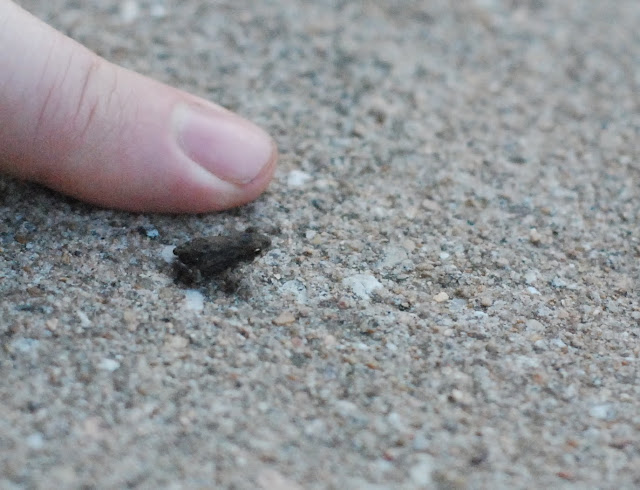
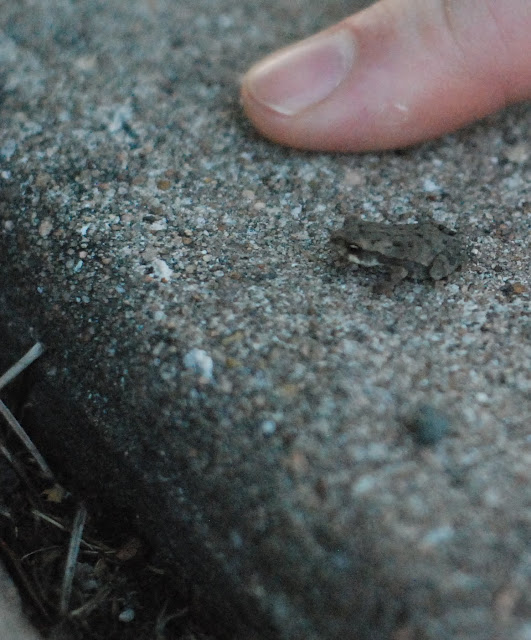
How adorable is that? He even had a “big” brother.

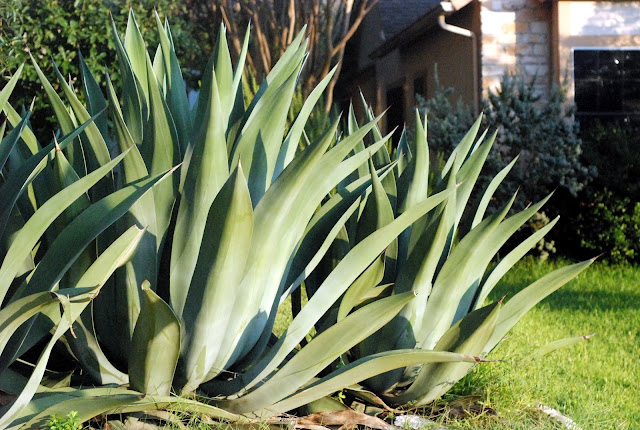
Up the hill a little further are some of the happiest looking (and healthiest looking) agave I’ve seen in a neighborhood.

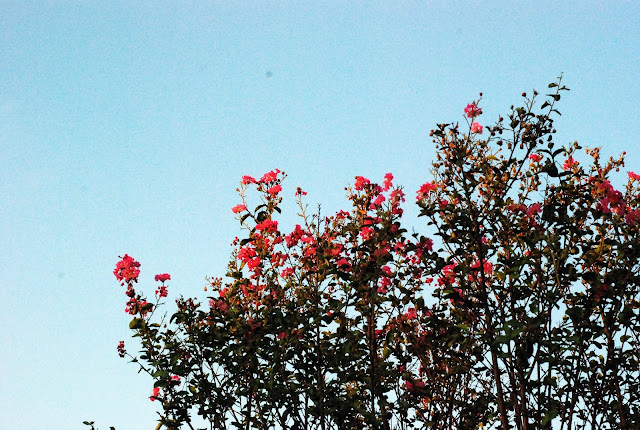
With the light fading, I’ll leave you with the pink blossoms ablaze in the setting rays…

Brrr…

At 10:30 this morning, I decided to head to the Gardens and do some loooooong overdue clean-up on my tomatoes.

  • Floppy hat: Check.
  • Old socks and play shoes: Check.
  • Green bag for possible harvest: Check.
  • Camera: Check.
  • Molasses, clippers, and gloves? In the garage…

I opened the front door. Fully expecting the wash of moist heat to crash against my skin…nothing. I took a few steps off the front porch toward the garage. I stopped.

I thought, “What day is it?” (August 19th) and then “Am I awake?”

I went back inside.

Me: Hey! It’s almost chilly out!

DH: *laughs* It’s not exactly chilly out.

Me: It is! I almost need a jacket. And my phone says it’s only…

DH: 85?

Me: 74!

In a race to beat the cloud cover’s inevitable break (which would let the heat come pouring in) I threw together the rest of my accoutrements, called the dog, and headed to the Gardens.

I was met with a lot of pruning. Little leaflets that mostly drop in your hand with a light grasp…

To entire plants that are ready to come out…

You can even see that it’s cloudy.

Two hours passed quickly, and while I nearly filled a garbage bin, the visual proof of progress was less impressive.

I did make a few discoveries during my work.

  • What you don’t prune in the spring, you will prune before fall.
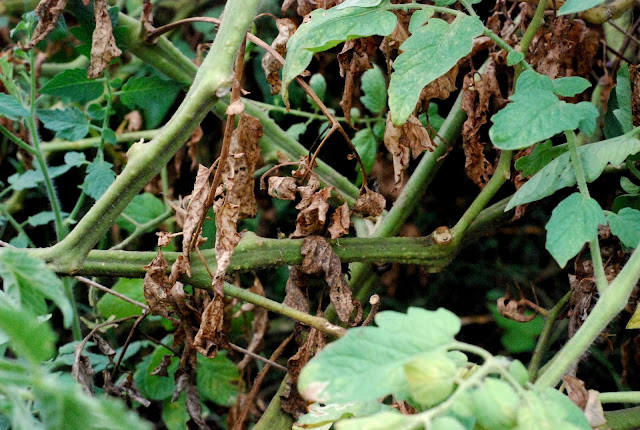
  • If at first grasp the brown tomato “twigs” don’t fall off, don’t pull. The healthy vines will suffer. Let go, snake the pruners into the shadows, and snip the elbow.
  • Always follow a vine all the way up to the tip, and all the way back to a joint, before making a decision. You don’t want to accidentally lop off your best chances at a fall harvest, nor do you want to end up making four cuts when you only needed to make one back at the joint.
  • If your staking is preventing a vine from coming loose, then do cut it four times into manageable pieces.

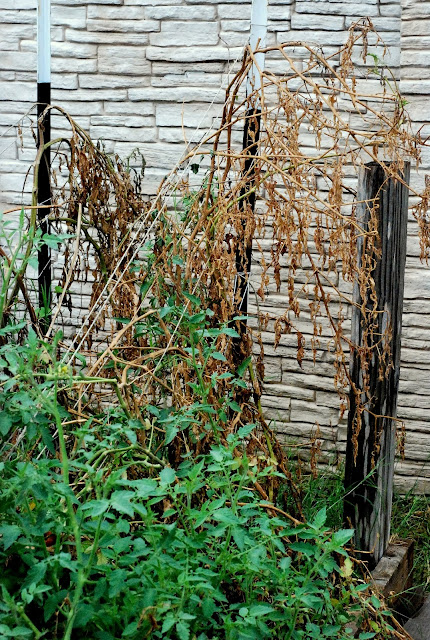
I learned last year that fall fruit only comes from new growth. Once fruit has set and dropped, that vein won’t fruit again. As with most pruning, tomato pruning encourages the plant to redirect energy to the new growth. So as slow as this process is, it works for me. I’ve seen others who demolish all of their tomatoes except for about 12″ of the trunk, mound up the mulch, and wait until fall. I’ve seen yet others cut an 18″ length of new growth from the top of a plant, bury it 12″ under, water, mulch, and wait until fall. I’ve never attempted either of those methods, but last year pruning all of the spent vines off the living branches resulted in more tomatoes than a salad could hold for weeks before the first frost took them all.

Keep in mind! Not all varieties will like this method. (Also good to always keep in mind – not all varieties will like you.) Cherry Chadwicks love this method. Black Princes will give one more round with this method. You may get a Zapotec or an Oxheart.

What won’t you get?

Well, I won’t get any of these:

Or these:

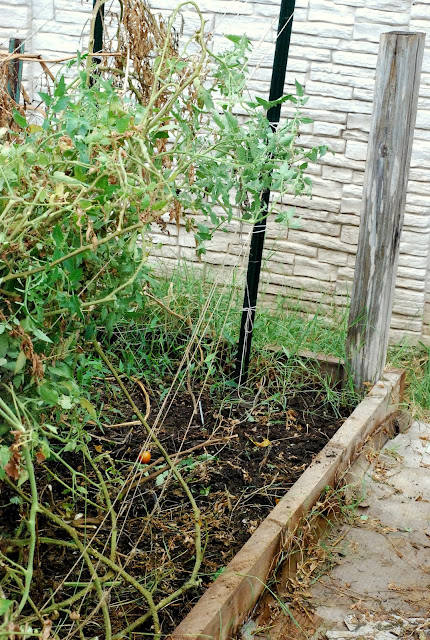
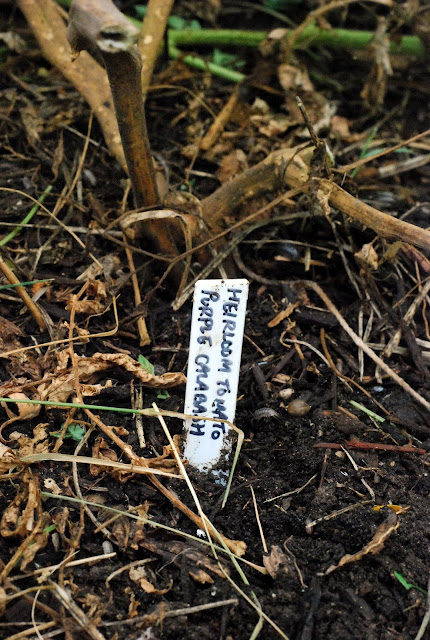
As much as the Purple Calabash grew into a vigorous plant, and as much as the Green Zebra hardly grew at all, neither gave up a single fruit this year. (They were also the only two tomatoes in the plot that I didn’t sow myself.)

Next year, I may really make the time to stake and prune the tomatoes like I’d like to. (I always make this vow. I’ve yet to keep it!) But why? Why worry about staking and pruning when this year’s harvest was epic, and the pruning can happen now?

It has to do with air.

The jungle that grew this year didn’t let air circulate. This is part of why there were bunches upon bunches of brown “twigs” throughout the tomatoes. When the air doesn’t circulate, the soil doesn’t dry out. This can be a good thing, in that the soil stays cooler even when the mercury passes 105. Like with most things, a balance is important. This year, my soil was a little more damp than ideal. How do I know?

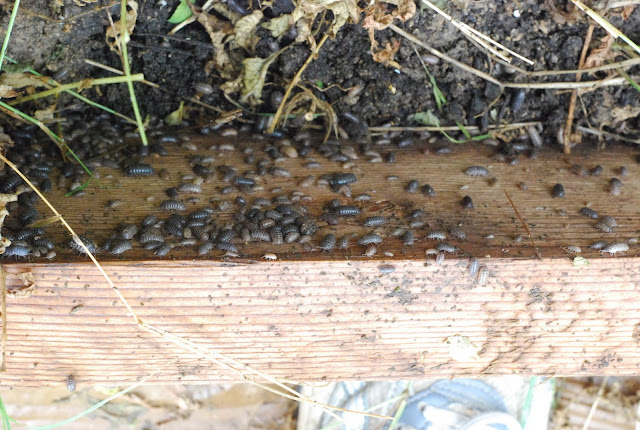
These guys. They like the moist. They like the dark. They like the rotting. They’re not “bad bugs” when they’re just here and there. When they reach these levels? They can take out a small transplant in a night. With the area cleared up a bit, pruned a lot, and re-trellised a smidge, they’ll be moving along to some place less airy and full of light (and more damp and dark) …like the rest of my tomato patch is still.

Guess who else I found hiding under the lush vegetation?

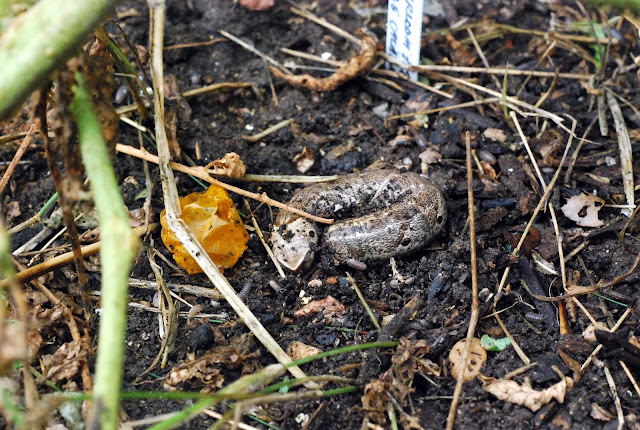
I don’t squick easily. I like most bugs. This thing…well, I thought it was dead. It didn’t mind the potato bugs crawling on it. It didn’t mind the spiders scampering across it. I couldn’t quite tell what it was, and decided to poke it with a “stick” (really, a length of tomato trunk.)

Lordy did that thing move! I managed to catch it. There was one other gardener working a plot this morning, and I walked over to her side of the allotments. She jumped back when she peered into the tub.

And that’s when I saw the horn.

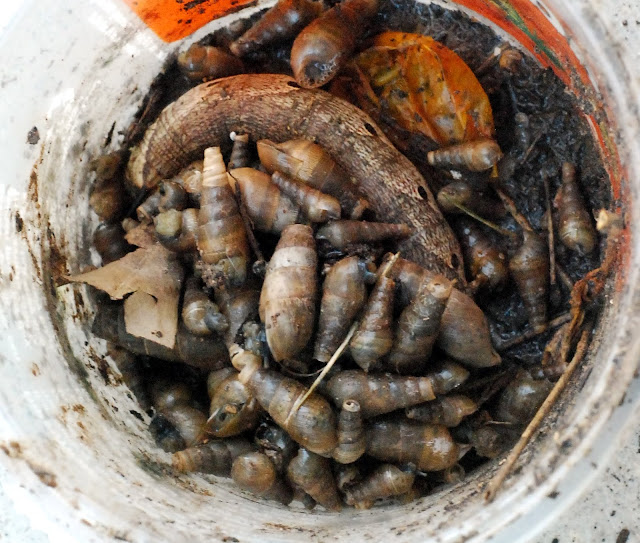
This one made the one on the pecan look like a miniature caterpillar. I couldn’t squish it, it was too big and that would be actually disgusting to me. I found myself wondering if I knew anyone with a large pet bird or reptile. Instead, I left it in the tub on the porch until it was time to go snail hunting.

And the tub came along on our evening walk, which tonight had a detour to the pond.

I do so enjoy how gardening challenges me. It challenges me to let things go, it challenges me to let things be “good enough” when they’re not perfect, and it challenges me to allow for (and occasionally enable) the natural state my dad tried to explain to me as a child when I was sad about a lamb lost to a coyote: “They have stomachs, too.”

I didn’t stay to see whether or not the ducks (or the geese they ended up chasing around a tree, amusingly) found the snails and the caterpillar, or whether they’ll all just make their way into the bacterial stomachs on the pond floor.

Some people find their practice in yoga, or running, or painting, or baking. Something where the purpose isn’t achievement. The purpose is practice. Mine, for now, comes from the soil.


Something’s missing…

One could philosophize as to whether the leaf is missing, or the caterpillar that ate it is. I would simply argue that both are long gone. DH was upset enough that as soon as I found the perpetrator, the perpetrator was no more. No chance for a photo op for the hungriest caterpillar.

Not only was it the hungriest I’ve seen (our poor small pecan lost nearly every leaf in such a short span of time) it was (likely as a direct result of its voracious eating) also the largest caterpillar I’ve ever seen.

If you haven’t seen the caterpillar for a Sphinx Moth before, I hope you get to some day (outside of your own gardens, that is!)

It was easily more than two inches long, and bigger around than my thumb. Not unlike this photo I found:

I am grateful, however, that I didn’t come upon it when it had reached this stage:

As that guy actually creeps me out a bit.

The one in our yard had unfortunately nearly finished off every leaf by the time I found it.

But thankfully, a few short weeks later, the tree looks to be making a solid come-back.

Lesson learned: Don’t leave your trees to fend for themselves.

I’d never really considered checking trees for caterpillars or other pests before. Growing up in the Pacific Northwest, there are so many trees that to do so would be a full-time job that never ended. Here though, where our trees are more sparse, it would be easy to simply do a quick walk-by and make sure that I found the smooth criminal (or fuzzy!) long before an entire tree was in danger of being eaten.