Friend, or foe?

Work has been taking up all of my daylight hours, some of my hours of darkness, and nearly every ounce of energy these past two weeks. I haven’t been in the garden at all in over a week, and miss it. I’ll be taking a wander around the bed at home to pull volunteers this afternoon. I have some serious Garden Time planned for this weekend. Hopefully the planets align.


In the meantime, a quicky:

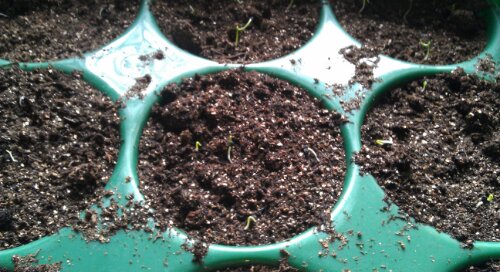
Those two main sprouts in the middle? The lower left one looks a little like the Mysterious Purple Flowering Weed (Henbit), unless I look more carefully. The leaves are pointed, instead of scalloped. The leaves don’t grow in a strict tier pattern, but instead sprout in an every-other-tier habit. Hmm…

Oh, wait! I looks like the larger pointed-leaf specimen in the foreground, which looks more like…yep! Another two Texas Hummingbird Sages!

Of the two in the middle, the one toward the top right is a different fellow. His leaves are smaller and more frequent. I touch them and bring my fingers to my nose. I inhale the sweet tangy aroma of Oregano, and know that the prolific seed production of this past fall wasn’t for naught. Depending on how many of each of these herbs end up sprouting where they are, I may end up transplanting a few into pots for the patio to add hunger-inducing smells, handy herbs for grilling, and pest deterrents for the yard.

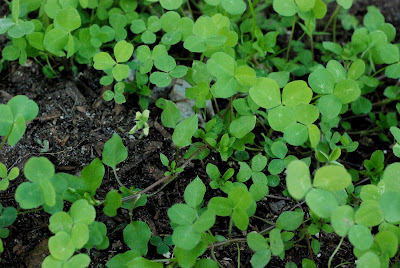
Clover and Horseherb – Friends and Foes.

Can you spot the weed in this picture?

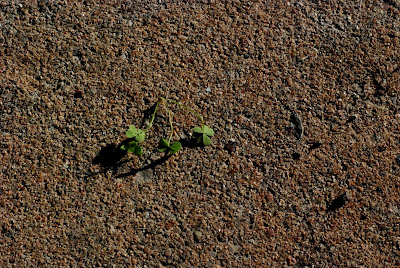
I’ll give you a hint, it’s not the clover. The clover, as a weed, looks like this:

This type of clover will send up quite lovely little yellow blossoms later in the spring. Unfortunately, it will take over if given the chance and therefore must be pulled. It doesn’t like being pulled up, and will usually snap off at the surface. Depending upon your level of tenacity, you may let it go until it sprouts again, or may go digging for the roots – it’s up to you.

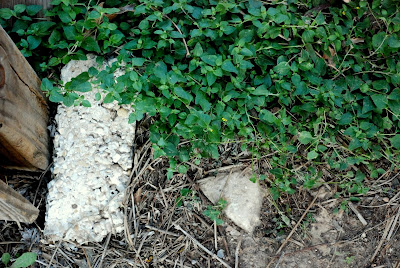
The weed in the first photo is actually a native called Horse Herb. People apparently buy this plant on purpose. Nevermind that the first result when searching for “Horse Herb” is for a post entitled “I Hate Horse Herb” by Zanthan Gardens. I sympathize with their sentiment. Please don’t buy this plant on purpose. You’ll regret it unless you don’t want any other plants on your entire property. Really.

Here it is attempting to take over the gate’s space in the fence. I’ve ripped this bunch out twice already.

Things I learned from this:

  • “Native” doesn’t not necessarily equal “Good.” Just because the plant has been around these parts for ages, and is well-suited to local conditions, does not mean it’s a good idea to bring into your space.
  • If you see a weed when it’s small, don’t come back to get it when it’s bigger – pull it small! The smaller the weed, the smaller the root. The smaller the root, the closer to the surface. The closer to the surface, the easier to pull.
  • Bed prep really is worth it once again. I re-learn this lesson every few months in a new way. When I ripped out 100 sq ft of lawn last February to put in a garden bed, I did more than just remove the grass, build a bed, and fill it with soil. I dug that sucker 24″-30″ deep, removing every grass, clover, horse herb, henbit, and other bit of not-vegetable-life root system I could find. The result? I rarely have to weed my vegetable bed. Rarely meaning…every three months or so I go through and pull out about five weeds. Two of which are stinking Lizard Nut Grass, which I pull every time to no avail. They seem to stay dormant when the bed is empty and I would be able to go digging for the nut. Instead they sprout up when surrounded by food-plants I don’t want to disturb. Wiley little things.

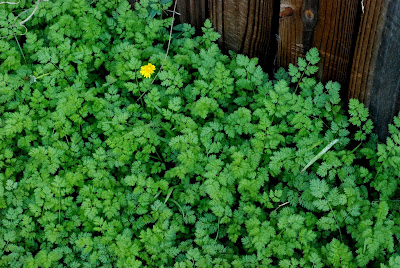
The other weed I commonly battle in this yard? I think it’s wild carrot. I could be wrong.

Nevermind the dandelion. I find those fun to dig up. These weeds grow like a blanket and will send up a shoot for a bunch of teeny tiny little white flowers to bloom upon. Those flowers will turn into cockle burs. They behave not unlike Queen Anne’s Lace, but are not nearly as majestic as that childhood favorite of mine.

Identifying purposeful sprouts in a sea of volunteers.

I have yet to compost my compost entirely. Every year I think I’ll make multiple piles and finally let a compost pile fully “cook.” Every year the time rolls around to work more into the soil and the “more” is “not done cooking.”

Hopefully this isn’t hurting more than my weeding time allotment.

One thing this cycle has taught me, is what a lot of plants look like when they first emerge. This is super helpful when it comes to growing something I’ve never grown before. For instance, beets.

This is my first year trying to grow beets, and I had no idea what their sprouts would look like. I did remember to mark down how many I put per row, and how many rows. There are a whole lot of sprouts in that little corner of my garden right now, and before any get too crowded or too large, I thought to discern which were the beets, and which were volunteers.
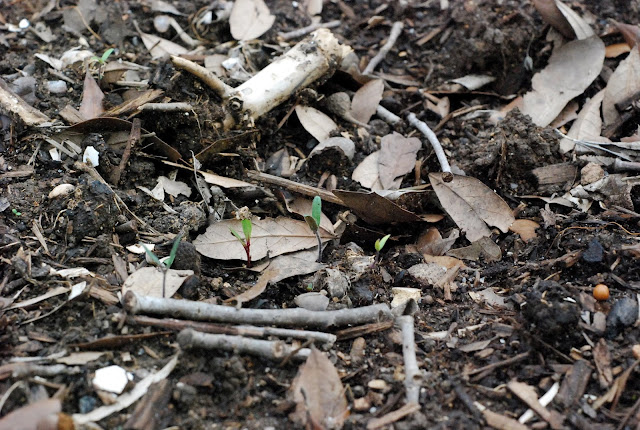
In this picture, my first thought was that the red stemmed little guy was either chard or marigolds (both have had red stems in my experience.) Then I notice the sprouts on either flank have soft purple stems. I know that means tomatoes (based on the options from what goes into my compost.) The wee one on the right of the other three is what is throwing me off. It isn’t for sure a tomato, or pepper, or squash. So it’s possible the beet sprout is either another red-stemmed one, or another purple-stemmed one. Either with brighter leaves or paler leaves than the similarly-stemmed counterparts.

How I know it’s not a squash?

All squash so far in my garden volunteer looking like this:
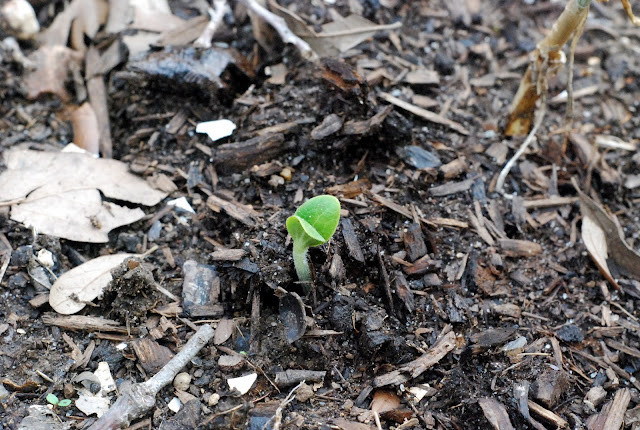
Last spring I stopped counting after pulling 87 of these from the garden, transplanting 23 more into pots, and leaving 8 in the bed. I’m actually hoping this is the weird bowling-ball squash that volunteered last year (that I’d never seed before, or since, but tasted like savory butter with a hint of lemon.)

So I keep looking, puzzling over which sprout a beet sprout may be. And I come across this pair:
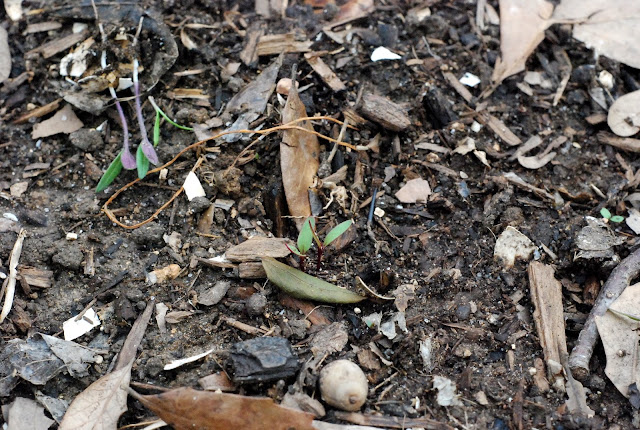
You can see that I’ve pulled some tomato sprouts already and laid them on the earth. I like to let them compost right back into the soil. The duo in the middle are more of those red-stemmed bright-leaved folk. Being as there are two, I think they may be a volunteer pair and am about to pull them. My eye traces up though, and there’s another pair. And another. And then there it is, the original red-stem. All in a row. All evenly spaced. I gaze to the left. Another one, splitting the center of the two in this row. Down that row, it continues. Eureka! Beet sprouts identified. Everything else (except the squash) comes out.

I’m hoping that squash will grow as quickly as last year and I’ll have some fresh squash by Mother’s Day again.

Depending on the type of sprout, I either learned what it was through elimination (like I did today with the beets), through growing it indoors in an isolated environment, or through coming across a dense patch of sprouts, digging, and finding the source.

For instance, I now know that these are tomatoes. If I didn’t, I could dig about an inch down and find a partially decomposed tomato – probably of a cherry variety, knowing this household.
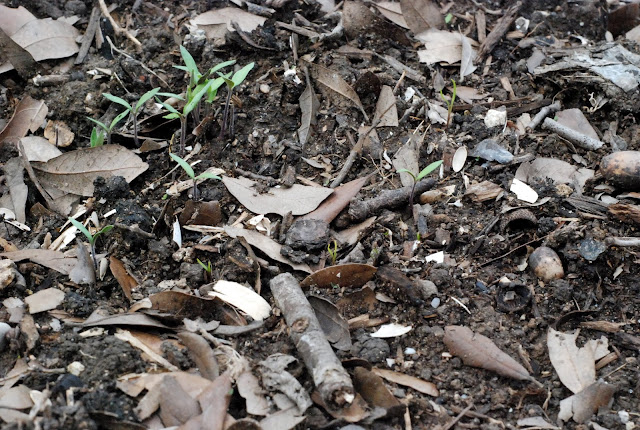
And I think the sprouts at the end of the stick pointing up the middle are carrots, but I don’t honestly recall. There are supposed to be carrots in this area. These ones get to  keep their feet in the ground until either showing off some carrot leaves, or revealing a coat of a different color.

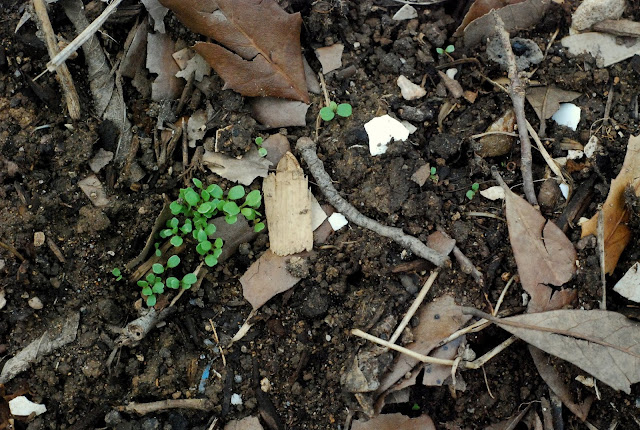
This patch however, is new to me. I haven’t gone digging yet. Any ideas?
Things I learned today:

  • Beet sprouts (at least Cylindra and Crosby Egyptian) have red stems, bright lime colored leaves, and may come up in pairs.)
  • I forgot what carrot sprouts look like
  • There is still hope for an all-volunteer veggie garden in my future
  • Possibly, the name of the sprouts in the last photo, with your help.
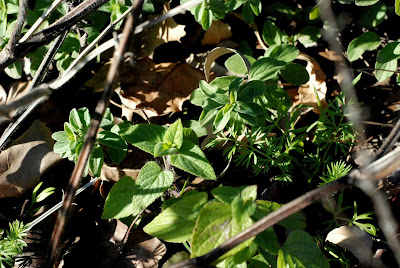
Farmer’s Market!

Today I rectified my months-long absence from the local Farmer’s Market. I headed out early, wanting some meat before all my favorite cuts were sold out.

My most frequented market here is actually held in a mall parking lot. Great use of unused space, if you ask me. Plenty of parking, no grass to get worn down week after week (or dust or mud.) Normally I am anti-concrete, but if.it’s already there then I am pro using it as often as possible.

I took our pooch this time. His second visit. My first time taking him without my dear other half (DH) there to tag team the balance of wrangling an excited 85 lbs while shopping. After a few laps around and no sign of chilling out, he went to the car so I could shop.

Aside from supporting local, organic, delicious food production and the folks that make it happen, the market helps my gardening in a few ways:

-I can see what will grow in my region. What the books say and what is possible exactly here, do not always match.
-I can save seeds! It’s a shot in the dark if they’ll be true to type or sprout at all, but it’s fun.
-I can tweak my timing. If I am buying cauliflower and kale now, I can calculate backwards to find a good sowing date. If a variety for sale now takes 100 days until harvest, next year I can sow it Sept 20th.
-I can ask questions about how my food was grown. If they are up to their ears in broccoli and mine is slowly plodding along, they may have some tips to learn from.

But now it’s time to grab some lunch and head out into the garden, more later!

Last weekend, the tree went down.

The sun is setting on the day. A sun shiny day with chilled crispy edges. The tree hadn’t leafed out in over a year. I’d never seen it leaf out completely. It was slowly shedding the bark from its truck near the earth. A large branch toward the street, and another toward the garage, were cracking along the length. Inch by inch, day by day.

The main truck was trying. It was sending out small little sprouts with single or double leaves. The branch near over the drive and along it were done for, we had to let them loose weeks ago. I did some recon for a replacement, at Green and Growing up the road, and with a final vote from my other half we picked up a Mexican White Oak (aka Monterray Oak.) We believed our previous tree to be a Silver Maple, and it was quite large for a younger neighborhood tree in Austin – possibly topping forty feet. We did water it this summer via the lawn during the 2011 Drought, but believe the damage had been done the previous year. This is a rental, after all, and not all tenants have the time, desire, or funds to water their landscapes.

Saturday, as the sun started to mosey down the sky, the chainsaw started up. With a rock captured in the end of the Gypsy Rope, lobbed over a high branch, and tension to pull the limb from the house, the chainsaw started work.

It was dull.

Off to the store for a new chain. Meanwhile, we kept progressing with the ax. There’s something satisfying about the heft of an ax. Slip. Swing. Thunk. Slip. Swing. Thunk.

“Get ready!”

We pulled on our ropes. Slip. Swing. Thunk…craaaack…CRASH. The branch near the house was down. The branch pointing to the streetlamp took longer, but came down into the road.

Sunday, new chain at the ready, it was time to bring down the tree. When firewood was made and loaded for family, the job was done. Any concern that I may have decided to remove a healthy tree was relieved when we had done so. The center of the trunk was hollowing out, the hole ascending up through the trunk.

I had dug a hole on Saturday. Three times the width of the pot, and as deep as the 12″ pot. We broke apart the edges of the hole. Loosening the soil allows the roots to make their way wider, faster, and survive droughts earlier in their lives. I added some manure left over from the garden, we righted the trunk of the new tree in its hole, and set to work replacing the earth. With a dam built around the lower edge, the original bamboo stakes in place, and leaf mulch making a ring, we were set.

Our new tree was home!

Notice the lack of bamboo stakes, and instead the tomato stakes?

We had a bit of a storm on Wednesday. Lightning like shotgun blasts and thunder for hours. Rain in the inches (plural!) and wind beyond wind. We awoke Thursday morning to find our new tree, still rooted, but laying nearly flat along the grass. The bamboo stakes had snapped at ground level!

We hurried to re-stake, re-tie, and otherwise prop up our poor beaten fellow and managed to not be late for work.

It could probably use with a wind-side anchor point to help it straighten a bit further, so perhaps a trip to the store is in order tomorrow. I was ever so grateful that we did take the tree down when we did, as I can’t say with any certainty it would have survived the storm intact, and may have caused damage to house, vehicle, or streetlamp.

Things I learned that day:

  • Branches, tied near the top, will not swing back at the base enough to harm. (I had imagined pulling at the top would cause the just-severed-base to whip back and cause issue.)
  • Stake trees. Even if you only see small trees with stakes bent at odd angles. Simply unstake them after a month or so.
  • Stacking firewood is still satisfying, after all of these years.
  • Chainsaws get dull.

Caring for the wee ones.

When sprouting indoors from seed, quite often the light comes from one direction. My tomato sprouts shall demonstrate:

image

I rotated them last night when they were facing the other way. They’ll get rotated 90 degrees tomorrow.

Nearly all of the tomato sprouts are up now. They usually appear one to three at a time until the ones that are going to germinate at all have done so. The ground cherries have yet to make an appearance.

The peppers, absent last night entirely, have almost all risen in unison today. Here are two emerging from their seed casings.

image

The leaves will open more, discarding the seed’s exterior to the soil.

Onions don’t have two seed leaves like many veggies do, and end up hanging onto their seeds for quite awhile.

Onion sprouts start like little wriggly, white, worms.

image

There’s one in the middle there, blending in nonchalantly, and another along the top edge.

The root end takes a few days to take hold, and as it’s working on that, the sprout elongates.

image

With the root end more firmly gripping the earth, the sprout musters its wee strength and starts to stretch for the sun.

image

At this stage, they are kind of comical. Bending this way, twisting around, seed ends getting stuck on other sprouts nearby…they amuse me a fair bit with their antics.

The air is dry here lately. A few weeks without rain, little humidity, and clear nights has the static up and the soil gasping quickly between waterings. I’m watering now by gently pouring small amounts near the sprouts. I don’t want to drown them, or soak the soil, but misting with my spray bottle won’t last 12 hours in these conditions.

I am getting antsy to put the seeds in the garden next weekend. Today was intended as a soil amendment day, but both Plan A and Plan B for adding compost and manure were a bust. Hopefully it comes together tomorrow so I can have it piled and ready as a weekday evening project this week.

Thing I learned today? 

– Beets aren’t something to start inside, but should be direct sown like other root veggies. So sayeth the package.

Any activity in your growth this week? Any prep work to be done or planting you’re (im)patiently waiting to do?

Seed Tray Labeling

When I first started gardening, I wanted row labels. I fell in love with the polished brash signs on sticks. They were out of my price range.

Channeling my inner child, I looked into Popsicle sticks. While researching types, sizes, pricing, and local sources, my mind wandered. Did I have some Popsicle sticks in my craft shoebox? I went to look…nope. What did I have that might work?

Colored toothpicks!

Things I (re)learned (that)day:

  1. Things that are on hand are often better than specially made things that cost money and take up extra space. (I like relearning this in new areas of my life.)
  2. Reusable is important. When I’m done with this tray, I’ll simply brush off the toothpicks and put them back in their (designated garden usage only) jar.
  3. Color is fun, but not necessary.
  4. Save the gardening budget for things that actually grow, or directly feed things that grow, when at all possible.

But wait a minute, you say, how do you remember what’s in each row?

The answer is simple: Magic.

Or a camera phone (or other digital camera, or pen and scratch paper)

It’s important, I’ve found, to do nothing else with my brain in between placing the seeds, laying out the packets, and taking the pictures. I can’t move the tray (I might rotate it and if it’s just rows, or quadrants, I may not remember which way is “up.”) That sort of thing.

If you notice, the toothpick layout does not exactly match the seed packets. That is what happens when you want to make sure you take the picture before going for your nightly walk…and forget to lay the last two seed packets down.

So even though I laid out my rough “grid,” laid out my seed packets to “match,” and took my pictures, I could have still had an “oops surprise” later on trying to remember what those last two spots on the right with the orange toothpick were.

Mystery solved!

Now you may be saying, that picture is small, from a cell phone, I can’t read the fine print – what’d you plant?

Pictured above (left to right, top to bottom as you move left to right):

  • Lark’s Tongue Kale
  • Even’ Star Land Race Collards
  • Dark Green Italian Parsley
  • Lemon Basil
  • Cumin
  • Amish Deer Tongue Lettuce
  • Cimmaron Lettuce
  • Gentilina Lettuce
  • Little Gem Lettuce
  • Mignonette Rouge Lettuce
  • Rodan (Chadwick’s) Lettuce
  • Rouge Grenobloise Lettuce
  • Cracker Jack Mix Marigold
  • Red Cherry Marigold

I liked the romaine I grew last year in flavor, but not in production, and the other varieties of lettuce I grew I didn’t want to eat. That makes this season a Try Again one when it comes to greens. From this myriad of choices, I’m hoping a few stand out as delicious, productive, and happy plants. If I luck into a few such species, they’ll be rewarded in my Fall 2012 garden with more space. Whereas some of the underperformers will have joined other packets in my Trade Box.

Sprouts!

A few days ago, the first little white wriggles of onion life appeared…in half of the tray.

Things I learned:
1) Seed trays with high side edges need to be rotated to allow for even sun exposure.

image

Now is a vital time in the little sprouts’ lives. They don’t yet have a root system to sustain themselves through drier times, so it’s even more important for me to remember to mist them every day than it was before they sprouted. An unsprouted seed may still sprout, but a dead sprout is mere compost.

Last night I was still without any tomato or pepper sprouts. That was ok. It was still early. I almost made it to bed without watering them, though. The heated soil dries out more quickly than the room-temperature onion soil, so I skipped the spray bottle and gently poored water over the surface.

This morning:

image

The odd looking fellow in the corner is an unhappy Donkey Ear offshoot. I need to move him to the succulent pot.

Most exciting about these first tomato sprouts is that they are saved seeds! The ones on the left are from a local farmer’s market, where you can purchase a pint of mixed miniature rainbow tomatoes. The ones near the top of the photo are from a farmer’s market in Newport, Oregon.

And while there’s all this excitement already, the mailman delivered even more excitement:

image

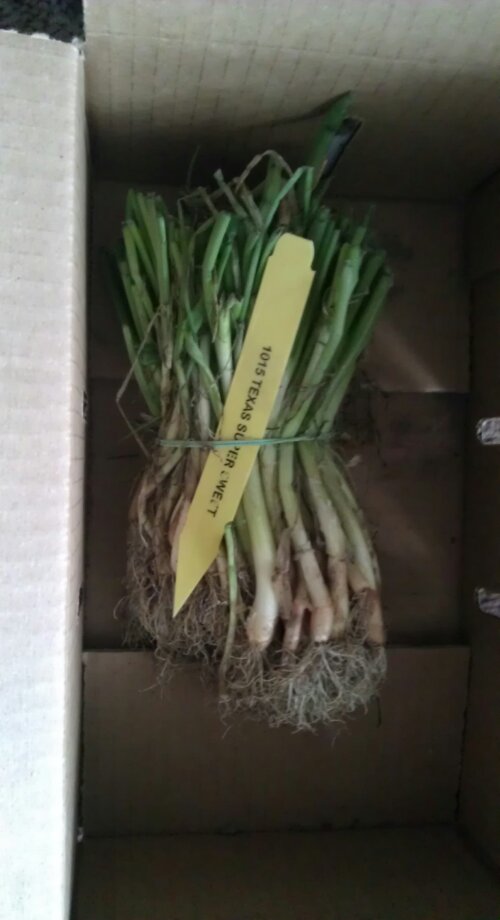
These will come in handy in two ways.
1) I can plant these in the garden in a few days or a couple of weeks, depending on my taste for risk taking.
2) If my onion sprouts from seed turn to compost again this year, I have these for Plan B.

Ordering starts like this is also handy because I don’t have to plant them right away. They can hang out just like they are for a few weeks, feeding off their little bulb.

Being the cautious adventurer that I am, I’ll put some of these out this weekend, some out in two weeks, and the rest the first weekend of February.

Also this weekend:
– Starting seeds for beets, kale, collards, and other pre-FFD greens.
– Hopefully a road trip east for some cheap organic manure
– Continue addition to garden bed
– Soil testing and amending as needed
– Research soil desires of blackberries, melons, and ground cherries.

What is going on in your neck o’ th’ woods?

Acorns

I had a lazier garden day, today. I found a free manure source on Craigslist whom I need to call. I checked on the lettuce transplants (most appeared happy, a few weaker ones may not recover.) I assembled the latest weed eater, edged both front yard sections, the walk, and whacked around the garden boards.

I spent a spell sitting on a crossbeam spanning the turned earth, munching almonds, and watching the soil. Overturning a spot of leaves with a twig revealed an acorn. Setting down my stick, I cracked the acorn. Carefully prying it apart, I could see hundreds of tiny insect eggs.

Uh oh.

I laid both sides egg-side up on my beam in the sunlight. I set about to find more acorns, disturb the eggs, and hopefully reduce spring infestations of detrimental life.

Things I learned today:
1) Acorns do not belong in garden mulch.
2) Weed eaters are an art form to utilize well. I require more practice, for following a concrete drive in a straight manner was never required in my country childhood.

Seeds ordered!

I ordered seeds last night for my next garden. Among the new varieties include melons, winter squash, and strawberries which are all new to me and my garden.

Today I broke ground on adding another 50 square feet to my 5′ x 20′ bed. It’s wet and muddy work this time of year. The grass and weeds dislodge easily in the damp soil with my spading fork. The heavy clay clings to the prongs. Every few pries requires clearing the tool with the side of the sole of my shoe. After about 10 square feet. I’m ready for a different task.

Digging a new bed is hard labor, and it’s been nearly a year since I last did the work. It will be nice to get back into “gardening shape” but it will take time, so 10 square feet at a time is it for now.

I moved back to the rear fence to continue removing the vines that had taken deep root there. There had been a two foot span of earth, between a chain link fence and a privacy fence. It had come to fill with vines, leaves, and other debris over the last decade, I assume. My lovely other half had removed the chain link two weeks ago and begun removal of the hackberries and more intertwined vines. He was busy wrestling, literally, with a toilet repair project so I thought to lend a hand.

I finished by using my new Hori Hori to uproot a handful of volunteer Red Romaine, Green Oakleaf, and Black Simpson heads to move the out of harm’s way (in the path of the garden plot expansion) and into the garden.

After cleaning my spade, spading fork, and hori hori, it was time to go indoors for a snack of diced strawberries and yogurt.

Things I learned today, thanks to The Heirloom Life Gardener:

  1. Do not compost tomato plants (oops!) Apparently the diseases that afflict tomato plants build up in the garden over time. Best to burn or toss.
  2. Only mist carrot seeds for germination. A full watering will prevent sprouting. (This explains my 2% germination rate across five varieties from three seed companies this fall.)
  3. Squash bugs are as hard to kill organically as I’d come to discover. Well, poo.