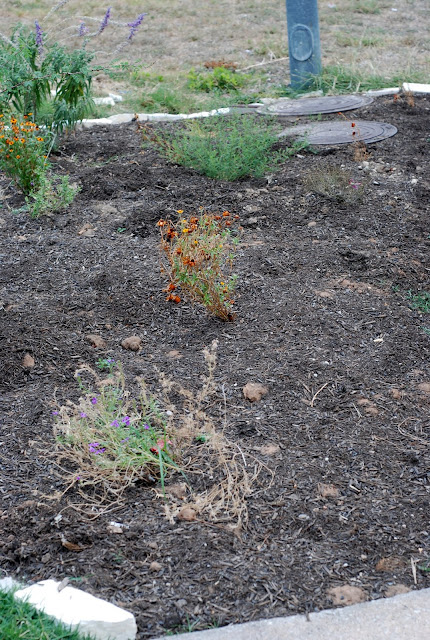
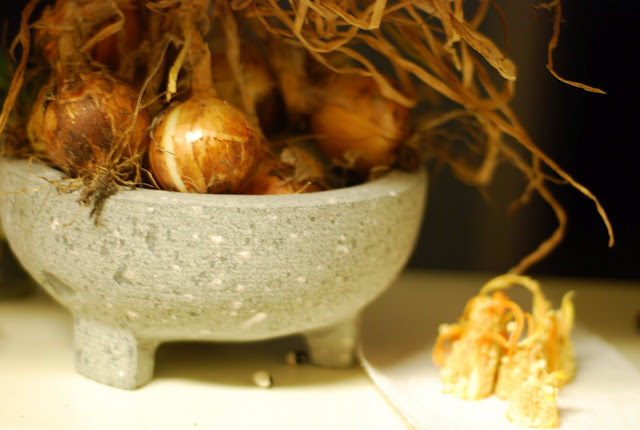
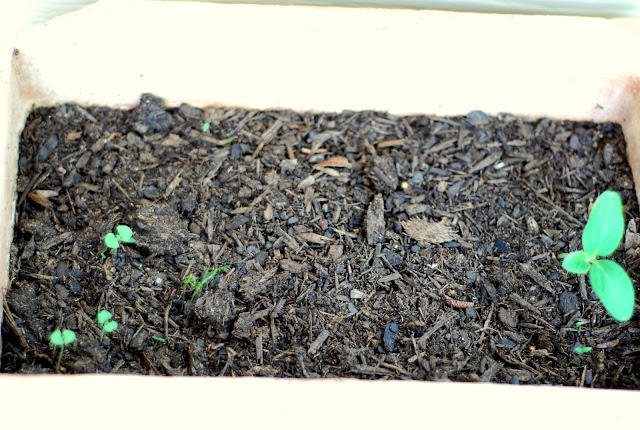
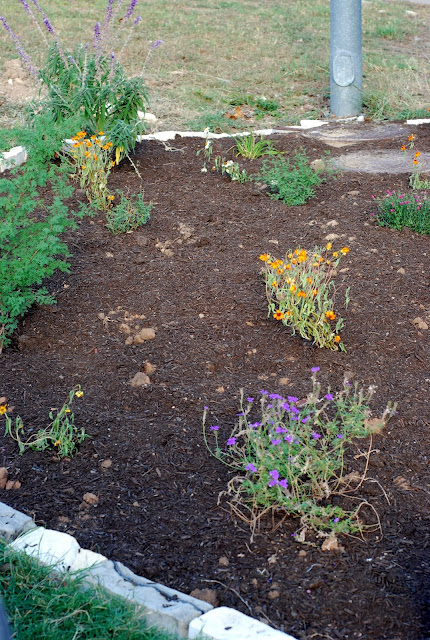
The landscape these days.

The Thai basil from the front bed that froze to the ground last December and showed no signs of returning?

Yeah. It hasn’t returned.

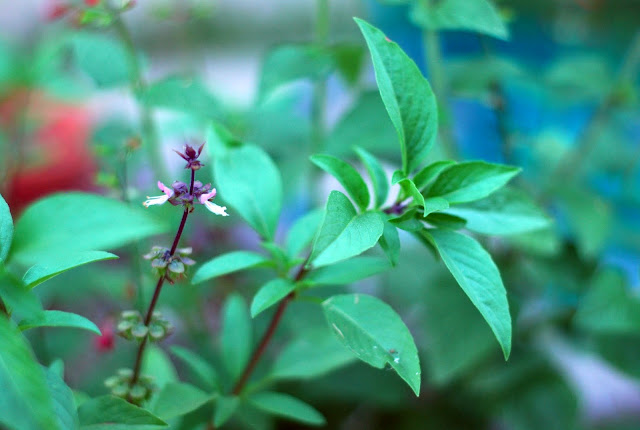
It has finally had some self-seeded sprouts reach maturity though! The bees around here must love licorice, because they cannot get enough of the blossoms on these ones.
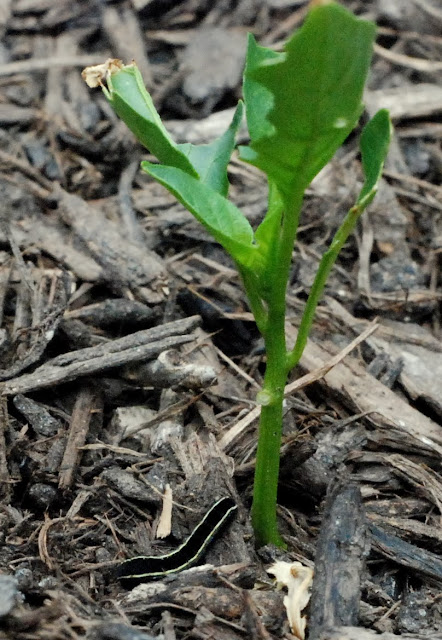
Speaking of self-seeding herbs, it took me two years of trying to get my Texas Hummingbird Sage seeds to sow, another year after that to get them to put on their first real leaves before kicking the pot, and finally last year, in my fourth year, with the last of the seeds in the packet, four seedlings reached transplant strength…only to lose three their first night out in the world. You had better believe that that fourth transplant last year received some serious babysitting and careful attention!

Lessons learned?

  • Don’t try and start herb seeds indoors like veggie seeds.
  • If you do, double your efforts. They are much less forgiving.
  • Get them into pots before they look like plants. Once those first real leaves appear, I think it’s a matter of days before it needs a pot or keels over. (This could just be me!)
  • Don’t over nourish the soil with compost or seaweed.
  • Put them outside in their pots. I think they hate AC.

All of that effort finally paid off when it survived the summer, flowered, and went to seed. Then came the next test – would I have to order another seed packet? Or would it really prove it was “Texas” Hummingbird Sage and successfully self-sow?
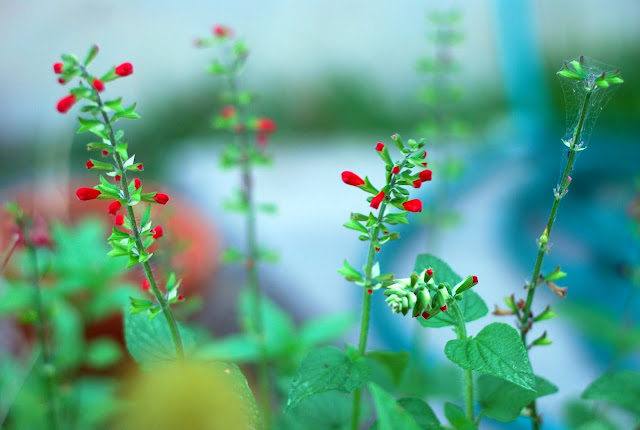
We don’t eat this herb (yet.) It has a curious flavor profile to DH, and I downright don’t like it. What I do like? Those beautiful scarlet blossoms that emerge from the Japanese-Temple-style buds.

July around here was lovely. We stopped with the triple digits for a few weeks. It rained (yay!) multiple times. It was actually a summer I could call “lovely” by Texas standards and was such a mental relief to so many local residents after the built up anxiety of having another year like last year.

That loveliness translated into a resurgence of growth in my Heat Bed! Totally unexpected, and such a pleasant surprise.
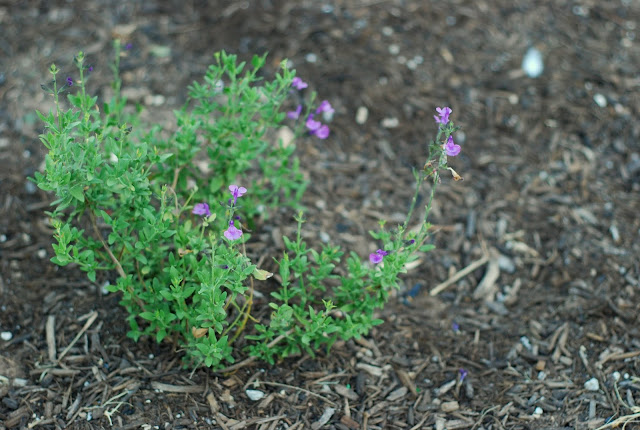
This little gentleman tried to die in his pot on the porch. Then he nearly died his first week in the ground. Again he looked like a thicket of dead twigs nearing the end of June. He’s even happier now than he looks here.

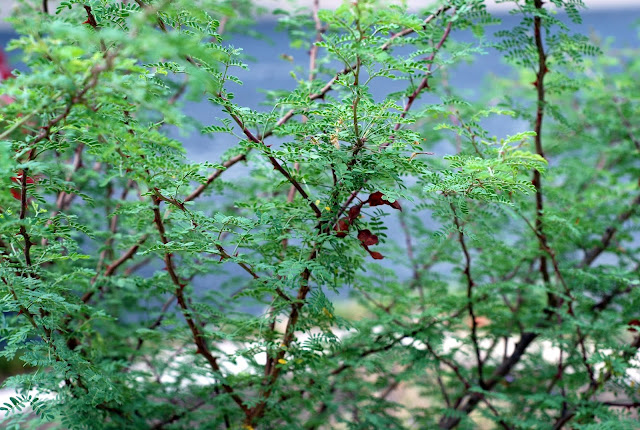
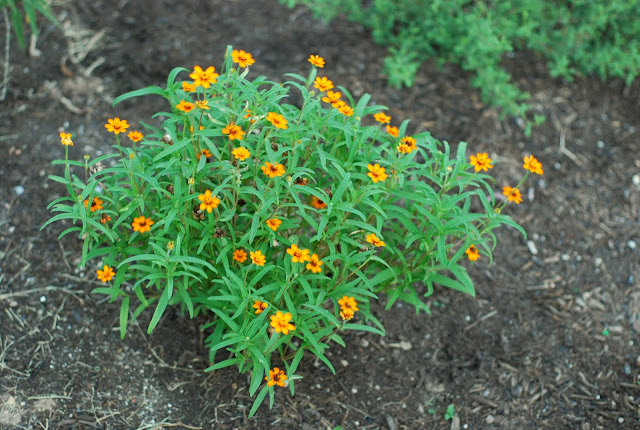
And this one has managed to bloom and re-bloom, grow and grow some more, and barely blinks when it hits 100. (Shh…it secretly gets to hide in the late afternoon shade of the Fragrant Mimosa.)
If it works, why change it?

Sometimes I want to keep trying different things. “Optionizing” as DH calls it. I can optionize any decision into the dirt if left to my own devices without any constraints. When I first started planning my Heat Bed, I made use of a handy local annual publication Native and Adapted Landscape Plants. Each year a new version is put together thanks to Grow Green and I find it calling to me from the counters of the garden shops I tend to frequent in the first quarter of each year. And – it’s free!

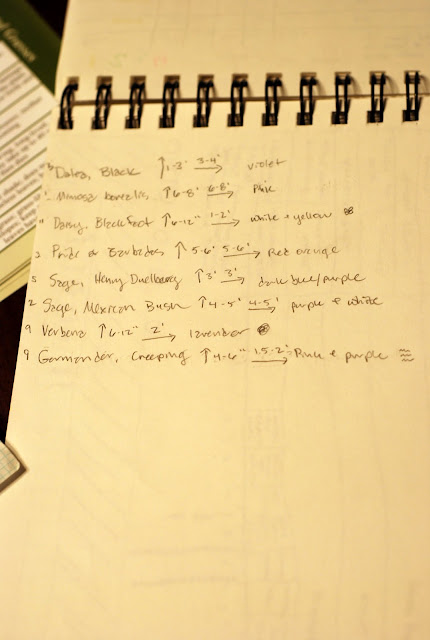
I started the plans for the Heat Bed last fall. I pulled out my free guide and quickly filtered the options down to any plant that was listed as both “Sun” and “VL” for “Full Sun” and “Very Low Water Requirements.” From there, I narrowed the field to any plant whose maintenance was listed as either “No maintenance required” or “Cut back in January.” After all, this landscape will someday be a rental again and I wanted this bed to last.

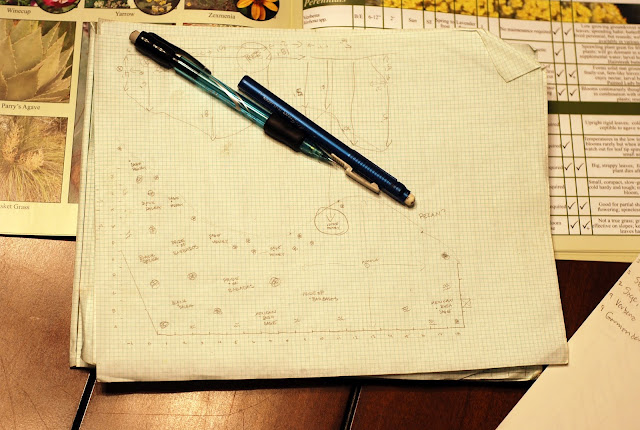
With a narrowed list (of eight options) I took my measuring tape, graph paper, pencil, straight edge, and eraser into the front yard. Quickly abandoning the straight edge, I came up with Plan A.

My eight options took me around the Land of Internet Nurseries to check pricing, availability, and any possible conflicting information. I arrived at Landscape Mafia. A wish list was made, and thanks to my thoughtful parents – plants arrived just in time for Christmas! When I had found Landscape Mafia, I had no idea how very local they were. I had wondered how plants such as the Fragrant Mimosa would handle shipping. Then one day, arriving home from work, there they were! Apparently shipping had been avoided in favor of the more reliable (and faster) delivery method of one of the nice fellows from Landscape Mafia delivering the plants himself! That’s right. I had apparently just missed him, but he had pulled up in his small SUV and unloaded the pots onto the porch. You can believe that walking up to a porch decorated in new foliage lead to grins of delight and exclamations of joy!

And just like how this post has gotten a smidge side-tracked, so did my plans for filling the Head Bed. The tree in Plan A had to come down in January. I luckily and gratefully discovered the community gardens and suddenly had five times the space to plan for edibles before the heat came. Work geared up more than expected for the first quarter (and the second, and now the third…) and the Heat Bed was left for another day.

I finally installed the plants from Christmas, only to them slowly lost to random mishaps. I was down to four plants from seven (when Plan A had included 43.) So I went into old habits and concocted Plan B. Nurseries had plenty of shade options, but unless I wanted agave, succulents, or manfriedas, I was out of luck. Home Depot claimed “sun-loving” and I took the bait. Thankfully, it was cheap bait, because most of those are now gasping in the heat. I could keep them alive with daily watering, but that defeats my desired journey with the bed.

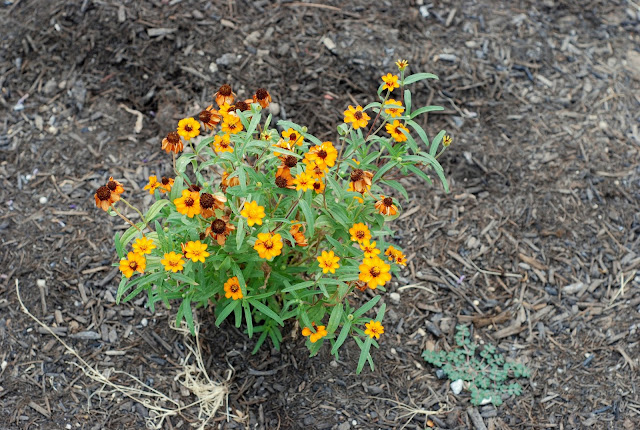
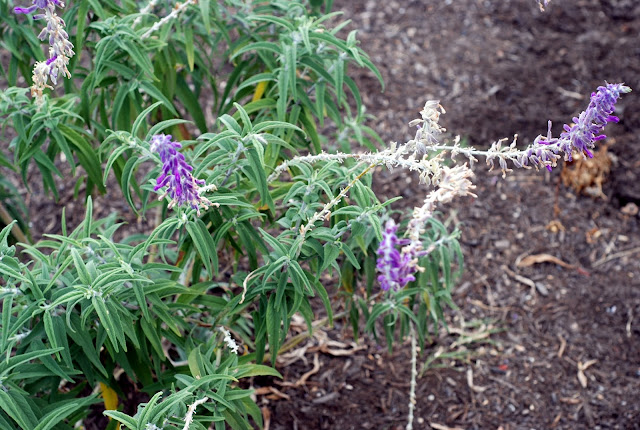
I’m going to leave the Heat Bed for now. Anything I plant now won’t have a strong chance of survival with the days only getting hotter, and drier, until October. Plan C will look more like Plan A. Sure, the 40′ Silver Maple is gone. But the Fragrant Mimosa gained a foot these last six weeks, the Mexican Bush Sage is still blooming it’s purple velvet plumes, and at least one of the little orange daisy bunches is hanging in there.

Plan C may have one of these:

And I’m still dreaming of a gathering of these:

I may’ve accidentally taken my spade through a main root line of my Moss Verbena, but am hoping it makes it through the summer to recover this winter and look more like this again:

Known and unknown – another bug mystery!

I saw a sleek and stylish caterpillar in the garden the other day munch on, of all things, a pepper plant! It was time to see what I was in for. Would it eat every plant for the next two weeks? Was it likely to have an entire herd of chic caterpillar friends? I was determined to find out.

Thankfully, the outfit was easily described and as easily lead to proper identification – a yellow-striped armyworm.

See him there at the base of the pepper plant? This little pepper was a late volunteer, and likely wouldn’t have gotten to set fruit this year anyway. Seeing as this caterpillar is new to me, and all by his lonesome, I left him to enjoy his spicy salad in peace. The stripes are a little more yellow in person. The fading light washed out the hue.

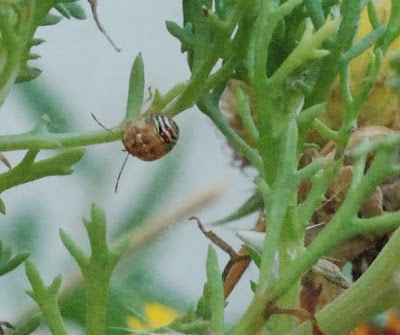
This next fellow has a style all his own. He thought to match his brown overcoat with black and white striped socks! I was unlucky in my scouring of the internet for his name. Any one out there have a guess? In the photo below, he’s crawling about on a Painted Daisy. Just this morning I saw another one (perhaps the same one? although I doubt it) crawling along the top of a blade of Johnson Grass.

Apologies for the photo quality, I didn’t have the camera properly set for such a zoom! This bug’s about pea-sized, maybe slightly larger.

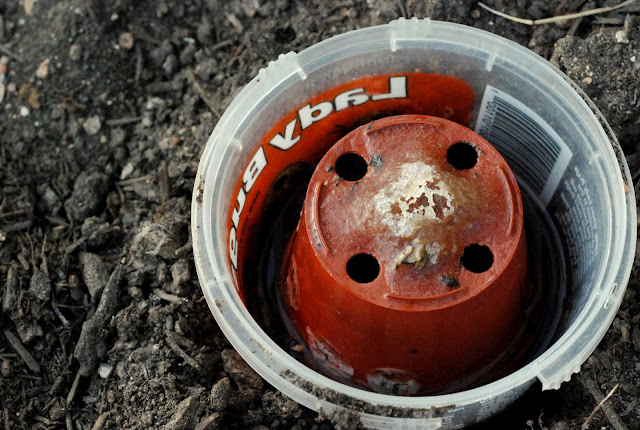
And for anyone who was wondering how the Great Ant Trap Experiment of June 2012 was going?

Aside from being impressed that it was hot enough to caramelize the sugar, I think I  may have assembled it incorrectly. In the soap water in the bottom one could find two dead gnats, one dead hover fly, and some random debris. Nary an ant to be found. I’ll be in my wellies in the garden until further notice, and seeing as they’re not intended for garden use, what with their blue/grey plaid/argyle pattern on a cream background…when combined with gardening shorts, wide-brimmed white straw hats, and leather gloves, I sometimes end up looking quite the character myself! (Perhaps I should ask the round fellow above where he buys his socks.)

Delicious homecoming!

Coming home is always so nice. Aside from DH and the boys being here, it has so many reasons that I love coming back. It smells like DH’s cooking. It has the right pillow. I have gardens to walk through.

More reasons?

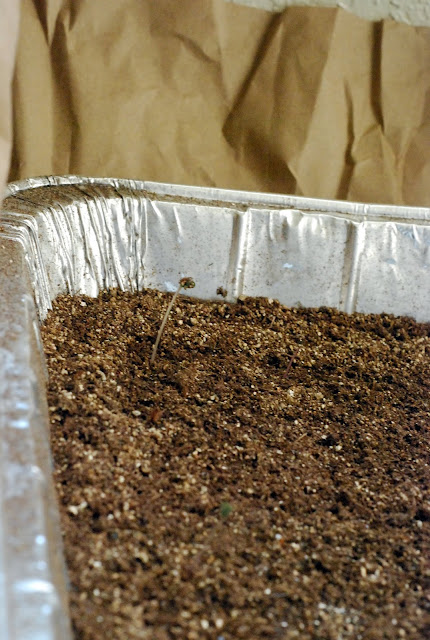
Sprouts!

This is the cauliflower pan. As many varieties as I like to grow of peppers and tomatoes, so far I’ve only grown one variety of cauliflower – Amazing.

And the delicious part of coming home?

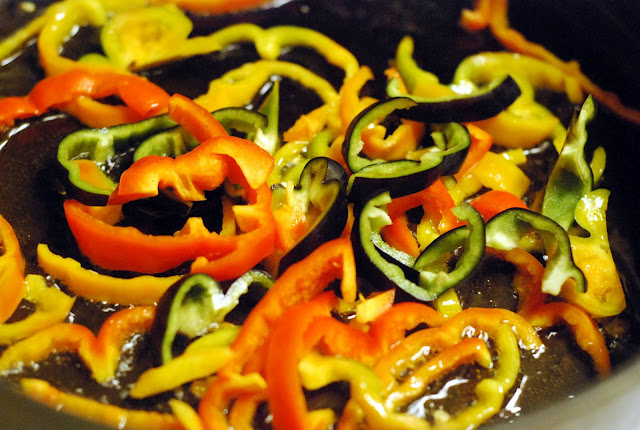
Bell peppers from the garden! Orange and purple, even.

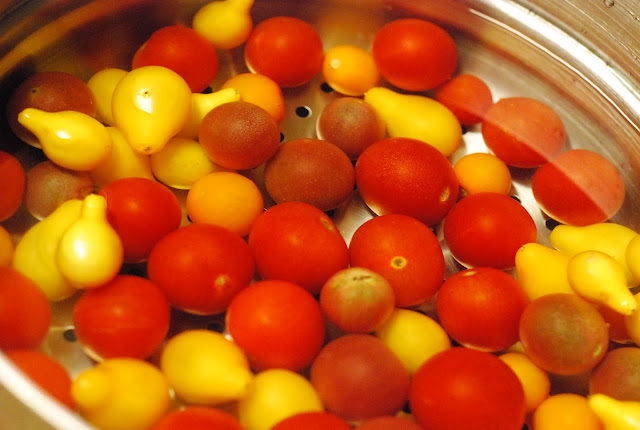
And those tomatoes? Still going strong. We broke the 40 lb mark and still can’t keep up. I’m taking more to work tomorrow to give away, and still have too many. What to do? The internet says you can freeze cherry tomatoes, which is about all I have time for currently. So as much as I’d like to try my hand at canning tomatoes for the first time, I didn’t grow any typical canning varieties and honestly don’t feel like blowing up the kitchen with my canning shenanigans. (If anyone knows how to keep the kitchen moderately clean while canning, I am all ears.)

So, I removed the stems, and put them in a strainer for a quick bath.

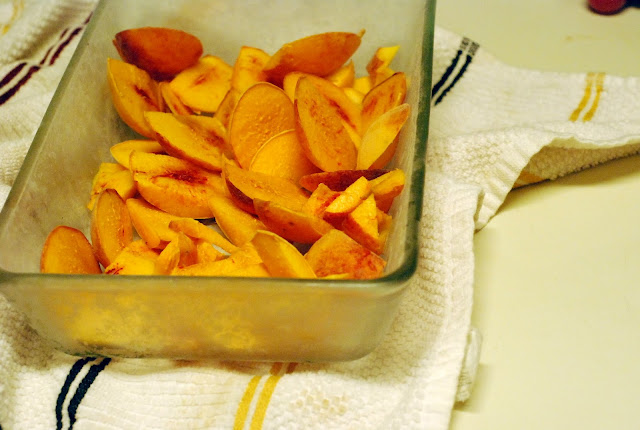
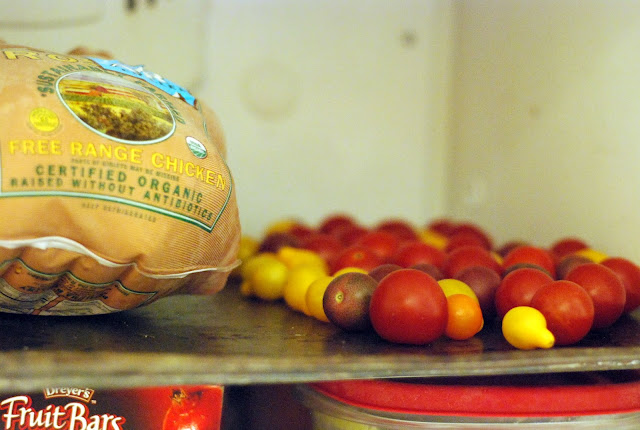
I gently rolled them on a tea towel to dry, placed them on a cookie sheet, and started to put them in the freezer…ooops! No room! So I made room by taking out the peaches I just froze and putting them in a ziplock for longer storage.

Oh, and making sure your cookie sheet actually fits in the freezer? Good idea BEFORE  you put the rolly-polly tomatoes all over it. Also, because you don’t own a cookie sheet with edges, right? Right. (I don’t.)

So carefully tuck the cookie sheet into the freezer…and then! The chicken doesn’t fit. Luckily those tomatoes are rolly-polly! So I rolled them over, and the chicken made friends.

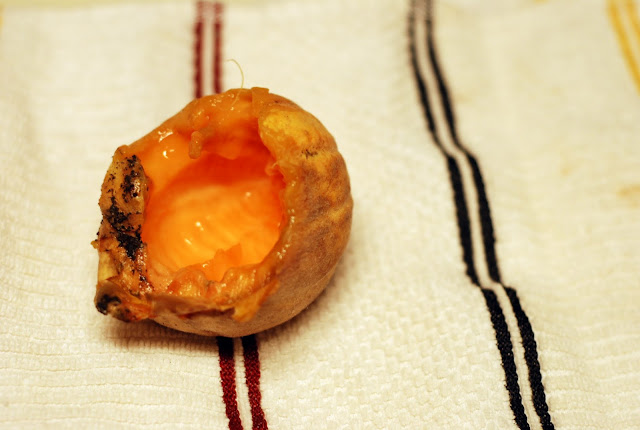
But not all the food is a success. This was my second year attempting melons, and my first year with melons setting on the vines. I think I may have planted them out too late though. They’re ripening while still tiny-sized. One Tigger Melon ripened and went bad in a day. The other? Ripened at the size of a golf ball. And this poor guy, a Kansas Melon, was growing nicely and we hit 102 this weekend. Boom. Ripe and bug-infested. But doesn’t the flesh look lovely?

The Farmer’s Market here is a good gauge for me as to when things should be ripe. I try and work backwards from when things at the Farmer’s Market are available to when I should be sowing similarly plants. The melons were ripe here about a month ago. I direct sowed these melons…where are the notes…that I didn’t make on the melons! Ha! My timeline shows that I intended to sow them March 15th. With how this year has gone, I probably sowed them about March 30th. So next year I’ll start them indoors Feb 1st and see how that goes. We have gotten a freeze in March once in the last nine years (for a few hours) but this year we didn’t have a freeze after…December?

And today we hit 106.

Home, hot, sweet, delicious, home!


P.S. If anyone remembers to remind me, I do not care for Jiffy Organic Seed Sowing Mix. It’s like powdered dirt it’s SO light and fluffy. I couldn’t recall if I liked Jiffy and didn’t like MiracleGro’s Organic, or vice versa. I’ve just re-learned my preference, but that doesn’t mean I’ll remember it.

Pepper lessons, basil confusion, and a landscape raspberry.

I spent a four-day weekend on a business trip and arrived home just in time to do some more work before ordering some take-out and hitting the gardens. The light was fading fast, and the insects were emerging with even greater speed. The fire ants had once again relocated, and I had once again been too stubborn to don real shoes and received two more bites for my troubles. I had remembered to leave the bug spray in the car though, and escaped with nary a mosquito bite. DH managed only one fire ant bite, no mosquito bites, but took the cake with a mean mystery bite on his back.

We were once again rewarded with pound after pound of fresh heirloom tomatoes! DH struck up an easy conversation with a neighboring gardener, and we managed to send her home with a few of his heaping double handfuls of the smaller varieties. She’s raking in buckets of apple-sized tomatoes herself (we politely declined any.)

What about non-tomato news?

Things I’ve learned about peppers this year:

  • Two cayenne plants is more than enough to make an attempt at a ristra for the first time
  • Two jalapeno plants is not enough for DH’s appetite.
  • One fish pepper plant will make more fish peppers than you know what to do with (assuming you know what to do with a fish pepper, which…I don’t yet.)
  • Two Anaheim pepper plants is perfect.
  • Two poblano plants is half as much as necessary for prepping portions to make chili with in the winter.
  • One Chinese Five Pepper is one too many (apparently something likes to devour every last bit of leaf on the poor thing as soon as the peppers are close to ripe! That, and I’m not sure if they’re ripe when they’re purple (their first color), white (their second color), or if I’m supposed to wait until they’re dried and shriveled and orange…)
  • We both miss the magic of the Czechoslovakian Black Pepper.
  • Purple and orange bell peppers are magical when combined in a dish. One of each is not nearly enough!

Things I still don’t know enough about to help thrive? Basil tops the list. I can get it to germinate. I can get it about two inches tall. I can keep it alive if I buy it…until it gets mealy bugs, gets woody, keeps over, or bolts immediately.

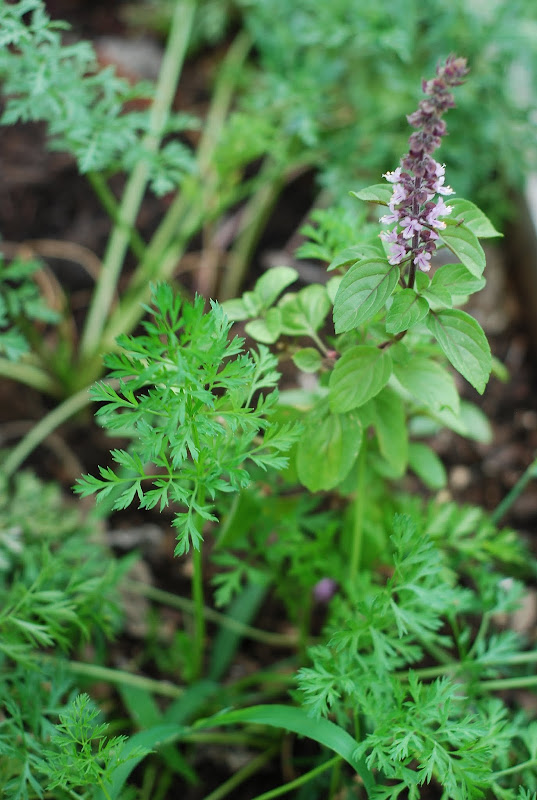
In the “bolts immediately” category is this lovely African Blue Basil. Not a week after planting it in the backyard bed (under a shade cloth!) it flowers. It’s lovely to look at, and perhaps I should reconsider basil as a landscape plant for the bees instead of a seasoning for us.

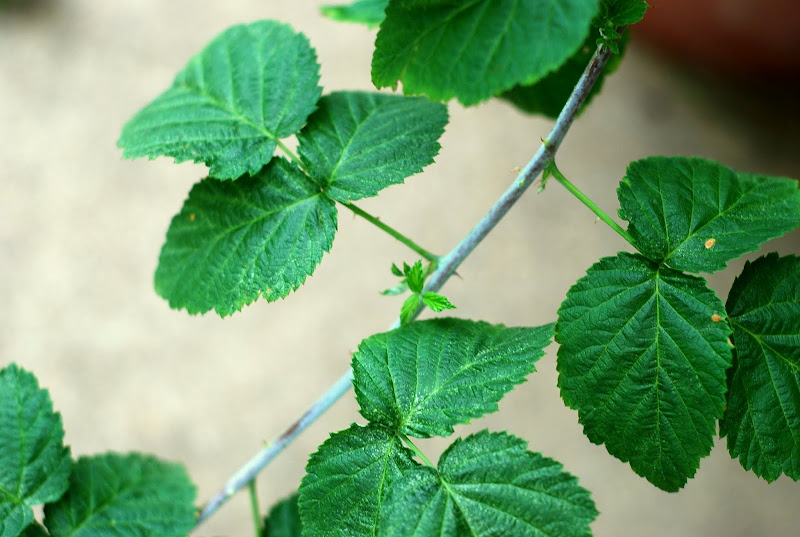
Speaking of landscape-plants-that-I-would-like-to-some-day-eat-from, my raspberry is happier this year (it’s third year) than last!

What looks like a squash bug, but maybe isn’t?

Imagine a squash bug. Or a giant stink bug. Or a huge box elder.

Paint it mostly brown.

Give its rear legs some leaf-shaped bits.

Stretch its antennae really long and make them light yellowish for the ends, with two thin dark bands further back along the brown lengths.

And a light stripe short-ways across its shoulders.

Any ideas?

(I wish I’d had my camera!)

A leaf-footed bug (leave it to me to complicate things by thinking it would have a less-obvious name!) I really don’t have the stomach for crunching bugs still. I wonder if I should just start carrying soapy water in a jar every time I visit the garden? Like Bob’s goldfish Gill, in a jar around my neck? But then I’d end up with dead bugs in a jar around my neck…and that’s a little weirder than even I need to get.

I’ve lately found the perfect time of day to go snail-hunting in the garden. It’s about two hours after that side of the house goes into the shade that the snails move out for their dinner, but it’s not yet too dark to see them. I have a giant old honey jar full of soapy water and pick them up and drop them in. They particularly like the section of garden with my beets and carrots. This last trip out snail-hunting, I noticed something new – on the far side of the bed the snails had forgone a tasty meal of carrot tops and beet bottoms in favor of an old dried up squash vine. Those snails, I left alone. Sure, they may move over to my carrots and beets tomorrow, and if they do, into the soap they’ll go, but until then I’m happy to let them turn dried up vine into snail poop.

What else I learned? Be sure to empty the snail soapy water when you’re done. Rotting snails smell something awful after boiling in the afternoon heat the next day!

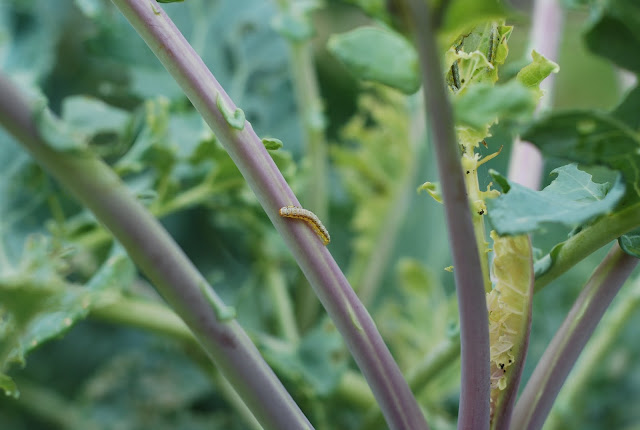
Another battle I’ve decided not to wage? The caterpillars on the broccoli.

I sowed some Early Purple Sprouting Broccoli late last September. It’s been about four feet tall since January. It didn’t beat the cauliflower in the race to make heads to eat. Even though it was called “Early” I gave it the benefit of the doubt and waited. And waited. And here we are nearly in July and still – no broccoli. (I did notice the seed catalog I purchased it from has since renamed it “Purple Sprouting Broccoli.”) So I figured that if I wasn’t going to get to eat any broccoli, the least I could do was let the moths have at it.

There are probably a hundred caterpillars on it at the moment, and while it may make more sense to pull the whole thing and throw it in the compost bin that’s baking away, it’s made a miraculous improvement in my chard leaving it there as fodder for their hungry little mouths. So I thought I planted broccoli. Early broccoli at that. What I actually planted was some architecturally interesting, purple stemmed caterpillar food. I’m at peace with that.

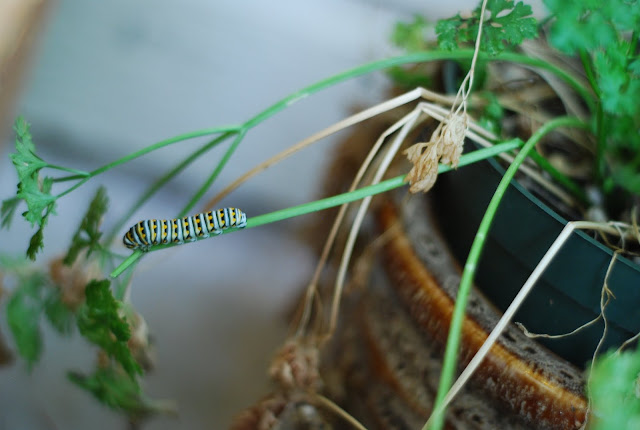
Just like I’m at peace with the fact that each year a monarch caterpillar (or three) feast upon my potted parsley. It grows back, and I’m not eating it right now, so why shouldn’t they? And isn’t it just amazing how of all the plants in the yard, in the neighborhood, in the world, that there are some insects that only eat one plant – and that they find enough of that one plant to survive? It’s impressive and fascinating.

Beginnings and ends.

I think I’m still getting used to cycles in this part of the globe. As a child, the pensive hours, the long days indoors, and the ends came in the winter months before the beginnings of spring. The holidays were there to keep you company. With family, with baking, with decorating, with giggling cousins or parents’ friends’ stories, the long grey days seemed warm (and the wood stove helped!) There was candlelight and cookie icing to brighten the end of the year and hold everyone over until the daffodils broke ground. Until the green shone through the drizzle. Until the beginnings began again.

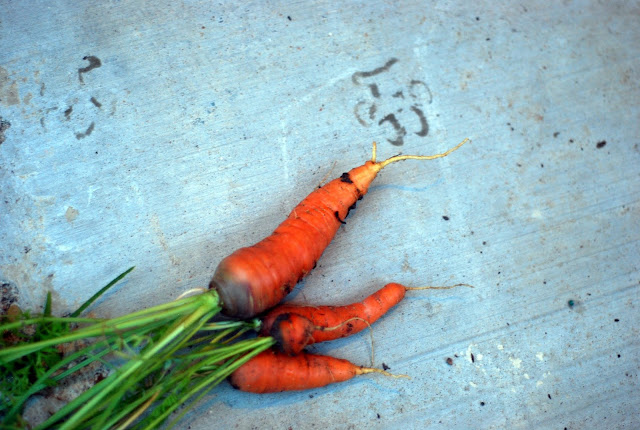
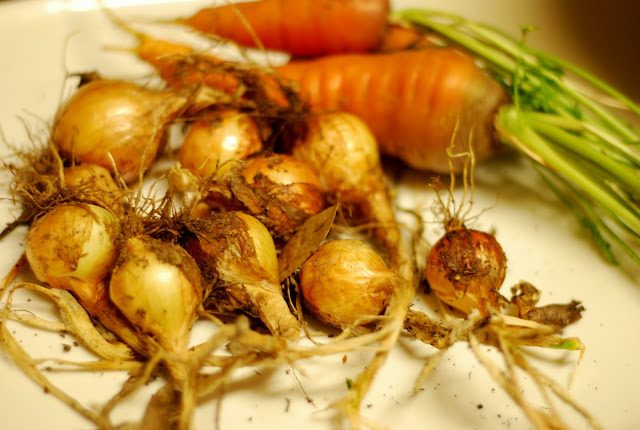
This part of the world, you get your cabin fever in the summer. You get addicted to the AC. You avoid the UV. You make your alphabet soup with different letters, but it’s still alphabet soup. It occurred to me today, that as I finish harvesting the carrots, the beets, the chard, the beans. As I finish harvesting the more sensitive families of food, it’s time to sow the seeds for the fall. Minus the heat-lovers and the cool-friendly, the rotation is about the same – what grows in the spring grows again in the fall, except here the die-out is over the summer.

So the onions, beets, and carrots will begin again in October, even though they’re also ending now.

The peppers and tomatoes are still going strong. They are loving the heat, but will soon lose their taste for it when it averages another 10 degrees higher each day. As they end, their seeds are dried, labeled, and stored for sowing just after Christmas.

It’s an adjustment, to find new-growth withdrawals as summer officially begins with the solstice tomorrow, but I make do.

It’s simply odd. When the winter doldrums are setting in for most gardens I hear about, read about, or dream about, they are ever-surprised at the winter growth going on in my beds. It only makes sense that when other gardens I hear about, read about, and dream about are in full growth swing with their flowers blossoming, their growth beginning in the summer: I have the same surprise, the same envy.

And so, I help new life into the world. I bring the sunshine in. I sow the seeds of the next cooler season and watch hope grow. Hope for evening breezes, for light sunshine kisses, for days so glorious you beg them not to end.

This time, hope takes the form of Lemon Basil, Cumin, Dark curly leaf parsley, and always – always – a volunteer squash.

It’s hot around the yard these days.

I thought I’d picked some sun-loving, drought-tolerant, and generally tough-skinned plants for the new front bed.

They’re looking a little wimpy, but so far only one has died and it was dying before it ever made it in the ground. It is so nice to have this bed done! Even if it will be a battle, that I may only win with agave varieties, it’s nice to have the dead grass and unruly invasive weeds looking a little more friendly.

Things I learned on this project:

  • Sun-loving, drought-tolerant still doesn’t mean put the baby plant in direct sun and water every other day until established. It means see if you can find the plant in October and put it out about Halloween to get established before it needs to be sun-loving and drought tolerant, you’ll have a better shot.
  • When buying rock, don’t shop at the big box stores. We found Whittlesey’s, and there’s likely a similar landscape supply company near you where instead of $4 per rock, the same rocks or nicer are $0.07 per pound.
  • If the rocks are too big, and of the right make-up, leaning them against a stump and tapping with a hammer will break them into smaller lengths (much easier for small circles!)

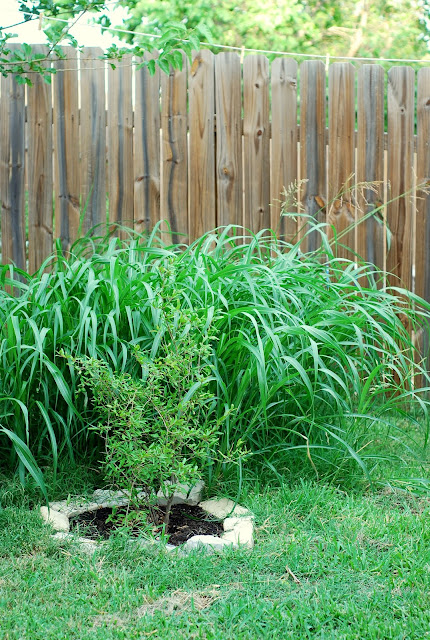
Another rock project? The new pomegranate for DH. Our grass is made of at least three varieties – all of which like to invade any place they aren’t already growing.

That impossible to miss, super tall and lush grass behind it? I have a soft spot for that grass. When DH mows, it gets hacked to the ground. By the time the rest of the lawn is ready for me to mow it, this stuff is back up to Bug Jungle Size. Same amount of light, water, and soil as the other grasses around it and it just throws caution to the wind and shoots for the sky. As much as I can’t bring myself to mow over it, I’m glad DH does so it doesn’t take over the entire yard.

The seeds are just about ready to save, though, and I’ll be stowing some away for a rainy day when we’ve moved someplace without it and I find myself in need of a resilience reminder.


Succession sowing.

There are plenty of things I could stand to do better, the top of that list for what I want to do better is planning my succession sowing. Each year I have the best of intentions, and each year I forget.

I just came across this super-helpful post from A Way To Garden about doing just that!

I’m linking here for reference for myself as much as for helping any of you that may need a little reminder, inspiration, or information on the topic.

If you’re an expert succession sower, how do you remember to do so? Do you add a calendar reminder to your phone? Write it on your kitchen calendar? Just have that impressive of a memory or that much experience that it has merely become habit? Any tips or tricks you have would be greatly appreciated!

For instance this year, I learned that I should have started more melon and squash plants to put in after the beans were done, and more peppers to add after the squash had called it quits.