Growing like a bean!

At least, that’s what I expect the phrase means.

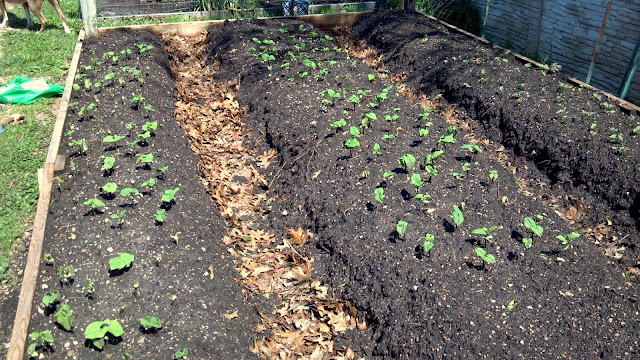
Here’s the Left Bed on March 7th.

A dreary day for us here in Texas. On the left we have Yin Yang beans. In the middle, my trusty Tiger Eye Beans, and in the back (or on the right in the photo) are Soleil green beans.

And here we are again, on the 10th.

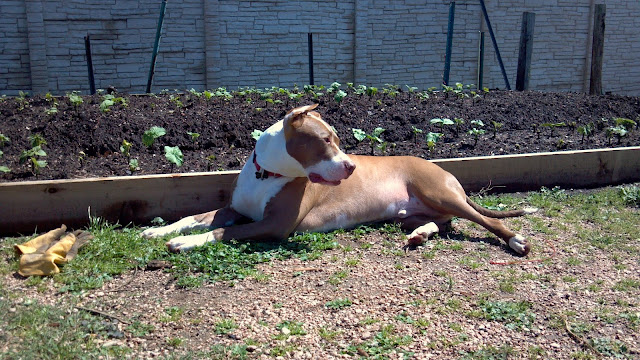
See those four little legs in the top left? They belong to the Bean Guardian.

He’s doing a stand-up job keeping the birds away.

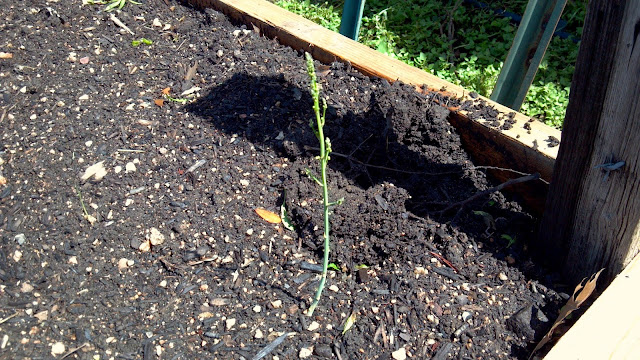
While down there, a new volunteer raised its hand. My best guess is that this tired ol’ bed actually housed an asparagus plant? And that said asparagus plant was the “Hmm, I wonder what this is?” that I saved during the turning under/root-removal process? Any confirmation of asparagus, or ideas of alternatives?

If it is asparagus, it will be my first. I know its a perennial, and that likely its rather upset with me for digging its bed all topsy-turvy. Other than that, I’ll have to read up on asparagus and see how to care for it. Hopefully it doesn’t mind too much the squash I sowed nearby.

Sown on the 11th were my melons and some of my squashes. These varieties are all new to me this year, which is both exciting and leaves me full of trepidation. Will they grow? Will they harvest? Will I like them? We’ll just have to wait and see.

Melons

  • Edisto 47
  • Kansas
  • Tigger
Inter-planted with Sunflowers!
Squash (so far)
  • Early Golden Crookneck
  • Lemon
  • Kamo Kamo

Also, I did a simple soil test kit (I buy the little ones for $4 that do pH, Nitrogen, Potassium, and Potash) on the Right Bed. As expected, the pH is high. So far each soil test I’ve done in a new area has been in the “dark green” or “8+” range. Thankfully, I have some sulfur on hand to mix in. Surprisingly (and thankfully) the Potassium and Potash are both at reasonable levels! This is a first, since usually when I build a garden bed I’m starting with undernourished turf-just-removed soil. The Nitrogen is low, but that’s easily fixed with some Blood Meal.

Planned for the left bed are two more squash varieties, the tomatoes, the peppers, and if they ever arrive in the mail – the sweet potatoes and strawberries.


(Thanks to DH for the pictures! We walked to the gardens this time, and in remembering my Hori Hori, seeds, graph paper plans, and gloves, I forgot a camera. Hooray for phones!)

Lamos (Spanish for Limes) aka Bill

Note: Lamos is not actually Spanish for limes. This is an inside joke. The Spanish word for lime is actually lima.

Christmas of 2009 I got DH a lime tree. Someday, he’d like to have an orchard. He dreams of a place where plums and citrus, apples and almonds, avocados and olives all live in happy harmony with the climate. Until we discover such a place, his orchard (currently of the potted variety) must enjoy our Central Texan Climate.

Enter Bill.

Bill, the lime tree, hails from Lake Jackson, Texas. I found John Panzarella online, gave DH a coupon for Christmas for one trip to Lake Jackson to pick out a tree, and that January we were on our way. If you live anywhere near Lake Jackson, and have any interest in purchasing a citrus tree – you need to visit this man. He makes trees that grow lemons that taste like oranges, oranges that look like limes, limes without acid, pummelos, kumquats, and has an avocado tree larger than I knew they could possibly grow. He had fruit that I hadn’t heard of before, and have since forgotten the names of. All of it growing in his well-tended, greatly-loved, suburban backyard.

The first year with Bill, we got about five limes. He got a little spindly looking, so in an attempt to encourage branch development and leaf production, last January when he started to bud, we knocked off his flowers. He didn’t make a single lime last year. He did, however, grow a few new branches with a lot of leaves.

This year? He seems to be making up for it.
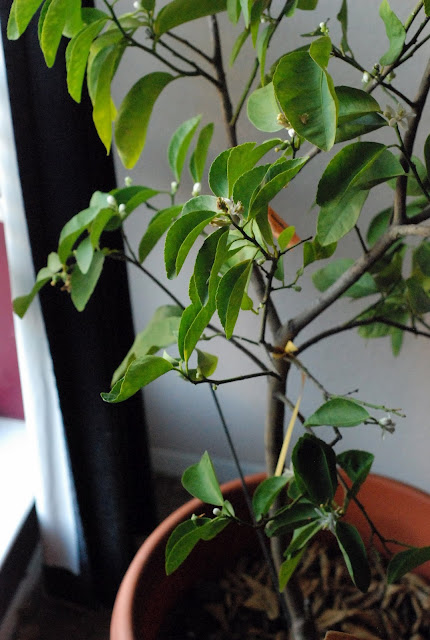
This photo hardly shows all of the blossoms visible from this angle – nevermind that this is only half the tree!

I wish we could put him out side again already. The honeybees adore the sweet blossoms (which smell like limes) and could likely use the nourishment this time of year. Unfortunately for the bees, we’re not yet into our frost-free time and so they must wait a few more weeks.
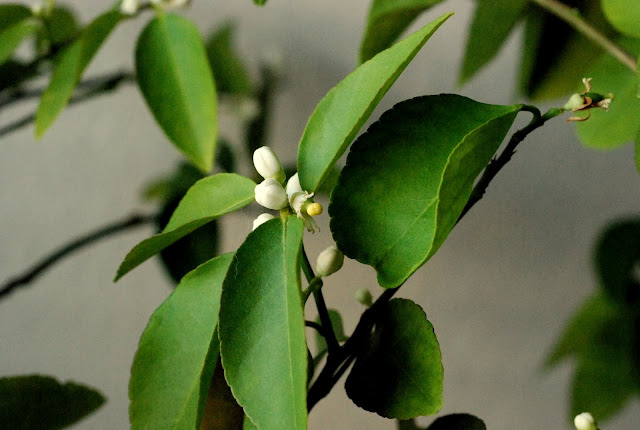
The buds start out small, round, and green. As they grow, they blanch into little popcorn-looking buds. Finally, they open into flowers only to have the petals fall away and a baby lime with a yellow nose appear.
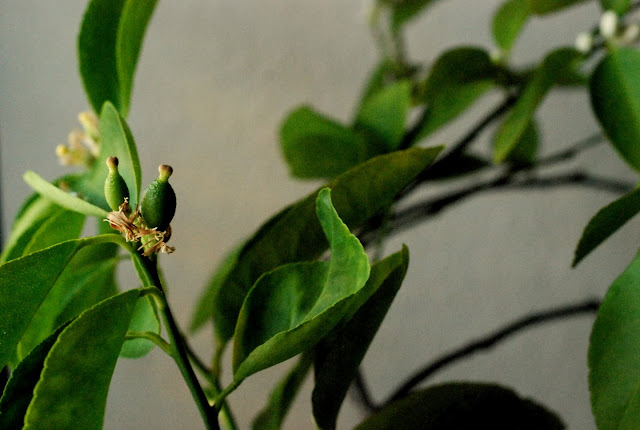
I do think that this year, for the first time, we may end up with more limes than we know what to do with. Lime sorbet, perhaps? Lime juice ice cubes for drinks throughout the summer? I’ll have to look up some more ideas.

Right now, Bill is in a sizable plastic pot. This is his third pot while in our care, and it keeps him at about five feet tall from pot bottom to tree top. While we would love it if we could plant Bill out and let him grow ever larger, there are occasional freezes here that would put an end to Bill all together, so he must stay small enough to be carried indoors for 3-4 months of the year.

DH does want to see if we can prune him short, but allow him to gain some strength and heft, by increasing his pot size once again. To that end, DH put together a quick project.

Step 1: Buy a barrel cut in half.
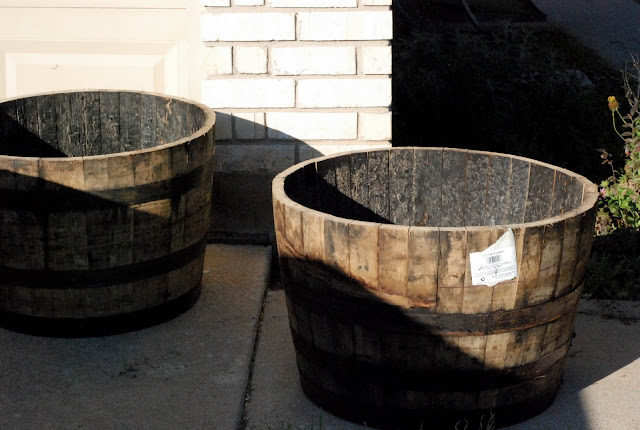
These are from the Jack Daniels distillery in Eugene, Oregon. Having lived in Eugene previously, I wondered upon discovering this fact if they were any cheaper directly from the source. After factoring in travel, I was actually kind of surprised (and glad) they were priced at $30 each and not higher.

Step 2: Drill drainage holes.
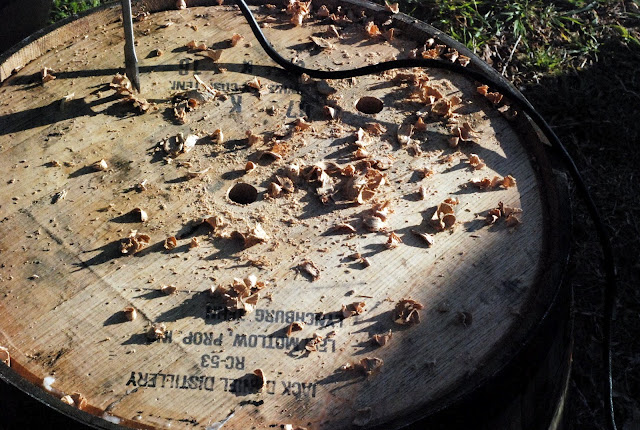
This will prevent root rot for larger plants planted in the planter.

Step 3:

Set the barrel on its side, brace it so it doesn’t roll away, and drill handle holes.
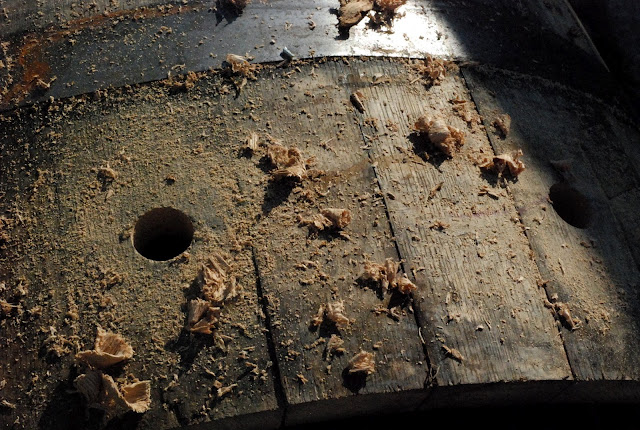
The pot Bill currently lives in has no handles. When full of a tree and the soil necessary for the tree, nevermind if that soil happens to be moist – the pot gets heavy enough to bend the plastic when being carried from spot to spot. Thus the need for handles on an even larger, heavier, pot.

Step 4:

Buy some strong, thick rope. Cut to length. Thread through the handle holes, and knot off.

When cutting the rope to length, remember to add some length for the knots, as well as enough rope that when you lift the handle your knuckles don’t bump against the barrel.
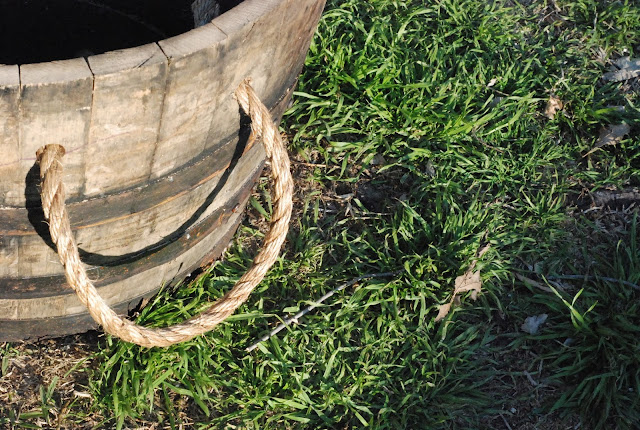
I had originally thought two handles per barrel half would be perfect. Each person has a handle with which to carry the pot. DH had a better idea.
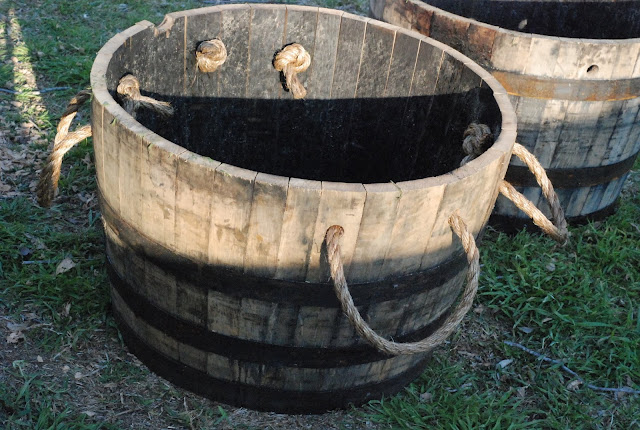
Things I learned that day: Two people, four hands, four handles.

The plan was to move Bill from his current pot into one of these when he made the move back outside. However, with the level of joy Bill is showing off through flower and fruit production in his current pot, we won’t be rocking the boat. So until next fall when we do swap pots, these will likely house some flowers, a few herbs, and hang out by the grill on the patio.
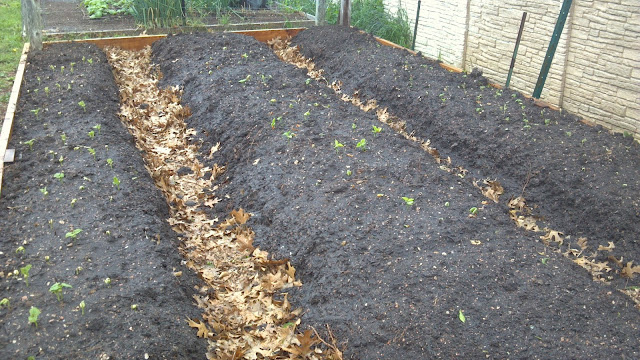
Spacing thoughts.

It’s about three weeks earlier than I normally would put out the beans, but with the weather we’ve been having…I’ll take my chances.

This year, one of my goals is to better manage my space through timing. I spent a fair bit of this past fall and winter with more bare ground than I would have liked. I didn’t plan well enough, but it was my first year-round garden attempt. Learn, adapt, grow.

Early beans will help with this. If I sow them now, they’ll be little plants by the time I pick the greens in their space.

This is my backyard 100. Last year about this time I was busy each evening working foot by foot, inch by inch, to turn the sod installed and left alone since ’85 into a fertile plot of loose, lively, vibrant soil. The soil in these parts is usually one of two types – nutrient-void clay or limestone bedrock. I’ll leave a history of that transformation for another day. Today, it’s beans.

Part of my plan for this bed is to get these beans in, done, and ready to go when my After Frost Round needs the room to stretch out. These three varieties are from Southern Exposure Seed Exchange:

Kebarika is in the foreground. They’ll make their way into soup and such as dried beans.

– In the middle is Selma Zesta. It’s a new attempt at a green bean variety.

– In the back we have Potomac. These beans felt magical when they touched my hands. Like they carried their hundreds of years of ancestry inside each one. I was glad to’ve selected these.

I tend toward a dense-planting style, but not Square Foot Gardening (unless entirely by accident.) I learned a lot on spacing from The Sustainable Vegetable Garden. So far, I’ve had good success with most of their spacing guidelines. I did have a spacing issue with some zucchini on 15″ centers last year (they got about 24″ in diameter) but really like the spacing they recommend for beans – six inch centers.

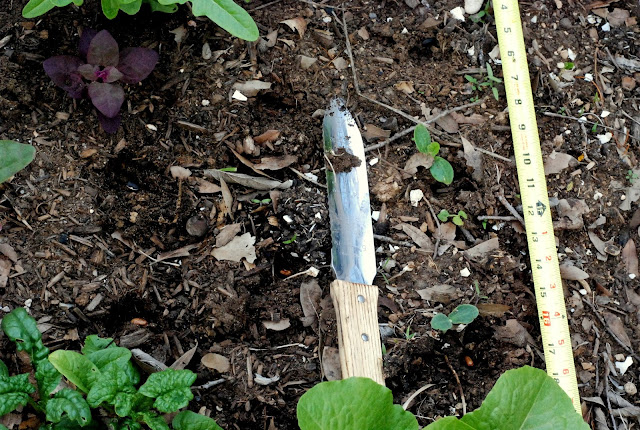
I like using my Hori Hori to sow seeds. It easily measures both planting depth, and spacing, by the marks along the blade.

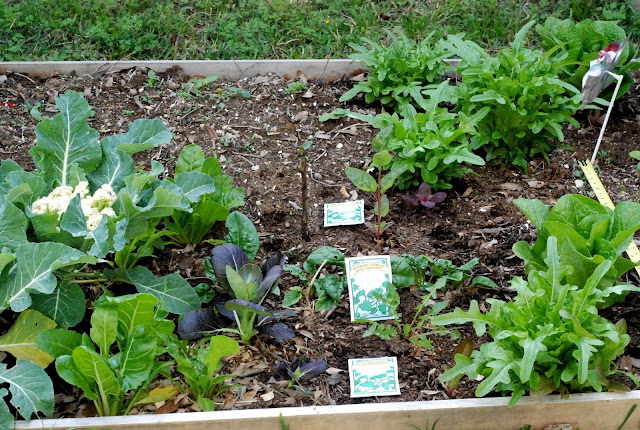
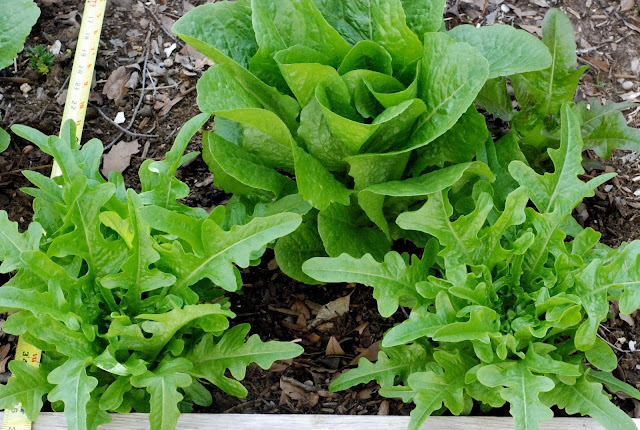
And then sometimes, I just get lucky. These lettuces were some of the ones that volunteered in my lawn after I pulled the bolted plants from the spring beds. I moved them into the bed months ago, and now they’re huge! We had some of the romaine with dinner the other night – delicious!

Brain-free days.

Some days, it would seem that my brain takes the day off. I’m sure most folks have these days. Days where you almost lock your keys in the car after almost forgetting to lock the front door. Days where you walk into a screen door? Days where you just aren’t functioning at your usual level. Maybe you had a sleepless child keep you up the night before. Maybe you have the flu. For whatever reason, on days like these, I do my best to limit my exposure to mistake-making situations.

Today was one of those days for me, so instead of planning how to rearrange my planting plans to accommodate the extra 400 sq ft of garden space I recently acquired (community garden plots are a FANTASTIC use of under-power-line space!) I did simple maintenance tasks outdoors.

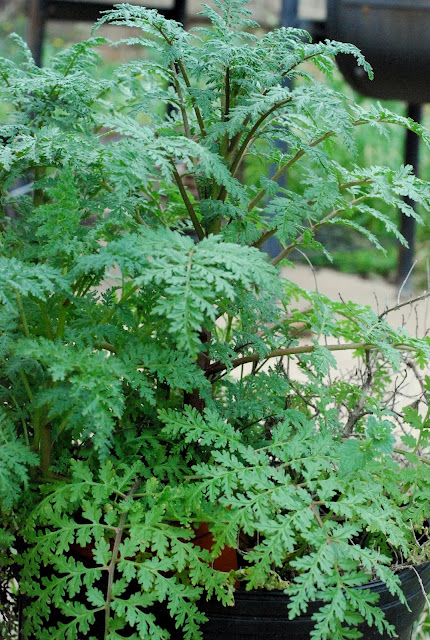
I watered our newly planted Mexican White Oak, and my potted things including this fern that volunteered itself in the pot of a rosemary that didn’t survive the summer.

These have been volunteering for months now along the sidewalk as well. I sowed them late last spring, a few tried their might against the heat, but it came on too soon and too strong and they were no match for the sweltering Texas sun. Apparently the more cautious among them remained dormant through the summer and our unexpected November showers brought them out of hiding.

I hear they’re edible – is that true? If they are from my seeds, they’re Fiddleneck ferns. I only hesitate to say they are, because so far they have not behaved like any Fiddleneck I saw in the forests of my childhood. And if it is true, do you saute them? Steam them? Put them in salads? All of the above?

I gazed about the space to find something simple to do. The dandelions smiled up at me. My eyes moved from the unmade bed where the chainlink had come down, the vines had come out, but the short wall had yet to be built. There was no way I was up for building a wall today. I let my gaze wander to the patio. DH has been wanting to build troughs along the perimeter for more herbs and peppers to have nearby while he grills. I measured the patio edges. That was easy. It was also too quick.

Oh, right! Dandelions!

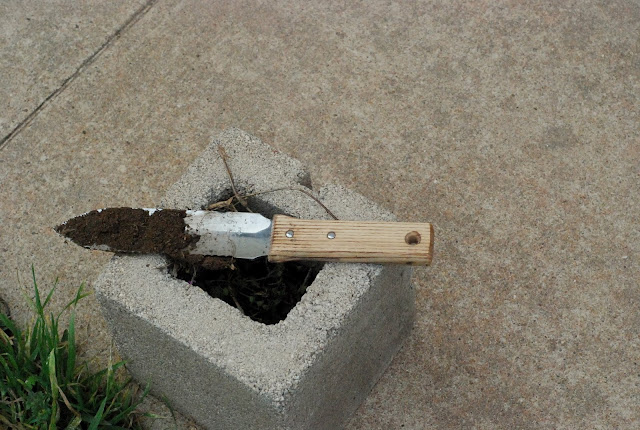
I retrieved my Hori Hori and quickly had it strangled in clay.

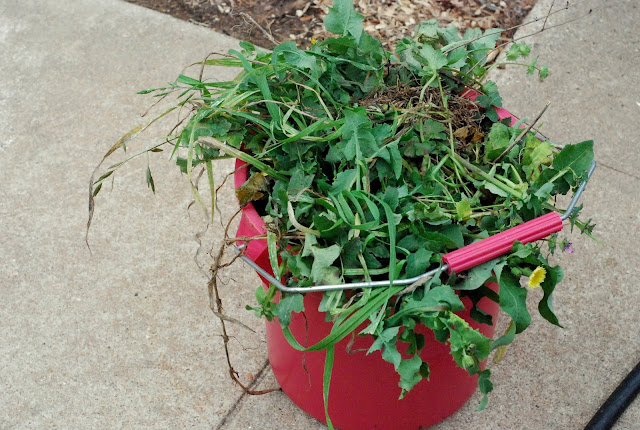
It proved to be the simplest of tools for removing dandelions. Easier than a trowel, spade, or hoe (all previously used dandelion-removal-tools by yours truly.) Simply slide into the earth, tilt, hear the root pop, and lift. Dandelions (and thistles) will let loose at ground level if you try to pull them up by their greens. They send down a deep tap root that, if left untouched, will simply sprout another fan of leaves in a matter of days. It’s messier and takes a bit more effort (and tool clean-up) but in the end is less work to get them from underneath.

After filling the bucket twice and emptying it into the trash bin for the weekly collection, I had made a dent in the dandelion population as well as my outdoor time.

I have never been one to mind not having a perfect lawn. Perfect lawns are how some people find their peace. I find my peace in other gardening endeavors. I do, however, notice the weed population in my lawn, and will diligently remove weeds from my lawn before they go to seed. Keeping the lawn at least tidy helps prevent weed seeds from drifting into my vegetable bed. Anything I can do to keep my weeding time down is something that can bump my other gardening time higher, and that makes more time for peace.

Not by any means out of dandelions (I may very well have four more buckets left to remove), my back was done with that business for the day and I set about for something else to do.

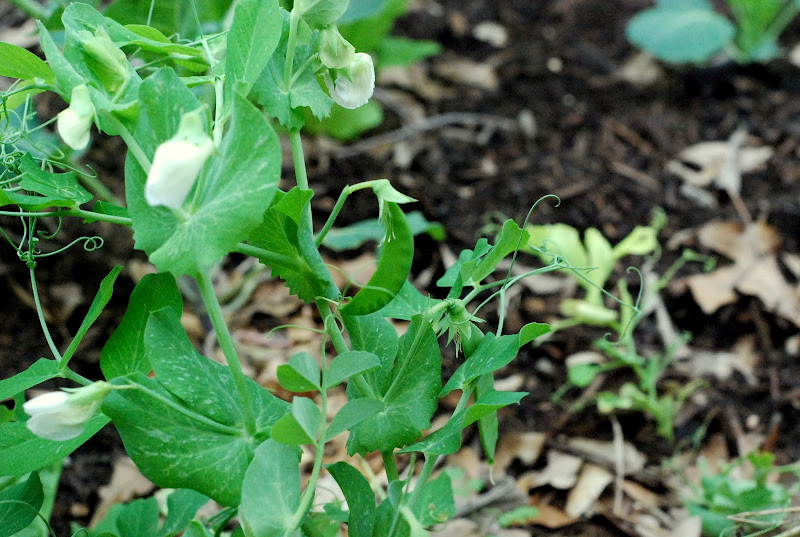
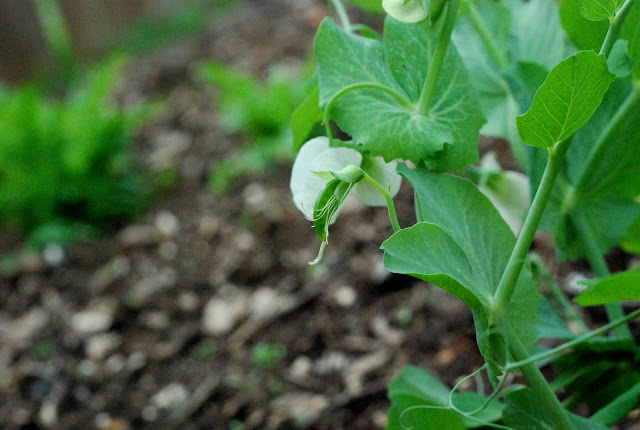
That’s when I saw them. Perfect, cheerful, and for no known reason – seeming childlike – my first peas!

I hadn’t grown peas before this winter, and grew them more for the fact that I had received some seeds as a gift than because I was particularly interested in growing peas. Let’s just say my feelings on the matter have changed.

And of course, some things make perfect sense after you see them, but you never thought about them before that moment. I had wondered if peas grew from inside the flower cap, from behind it (holding the flower on the end of the pea), or some other way. I learned today just exactly how the pod emerges from the blossom.

As you may be able to tell from these last two shots, the light was fading fast. It was time to duck inside for dinner. DH had prepared two of my earlier Farmer’s Market finds for a feast of Wild Hog patties from Countryside Farms‘ ground feral hog and baby Brussels Sprouts from Engel Farms sauteed in butter and sea salt, with a crack of pepper and hint of garlic. (Engel Farms is also where I purchased the “Rainbow” tomato basket that I saved seeds from.)

After speaking with my dad today, I’m tempted to find some of the younger dandelions, wash them off, and saute them in much the same manner. Apparently you can also make thistle tea? I am still searching for a tea I enjoy…

Transplanting

I did some transplanting today!

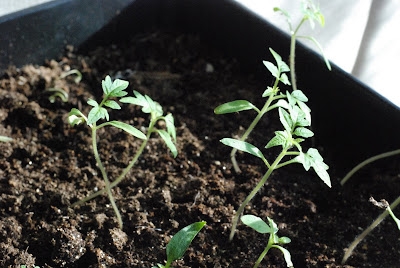
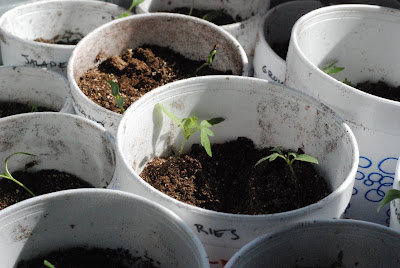
It was time for the tomatoes and peppers to give up their stake in the seed tray for more root room.

Something I’ve forgotten to do before is keep track of varieties after I transplant. I did well enough this year documenting where I planted what in the seed tray. Now to attempt to do well enough tracking the varieties into their new cups.

Things you can use for transplant pots:

  • Cups! I dislike that our recycle service will take #6 plastic, but not #6 styrofoam. This year, I saved up our Sonic cups with the intention of driving them to Ecology Action. Lucky me that I kept forgetting and now had plenty of cups!
  • Bottles. Water bottles, soda bottles, other plastic bottles. Simply cut off the tops, poke holes in the bottom, and voila!
  • Actual pots. I save the little plastic nursery pots that plants come home in sometimes. Occasionally they break, and then they go in the recycle, but otherwise they’re saved and reused.
  • What else do you use for seedlings when you don’t have pots?

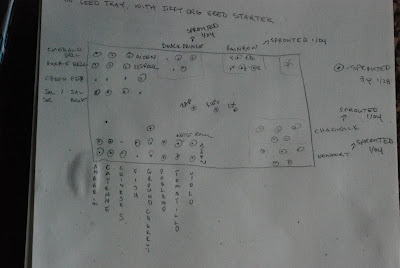
So, how to track the varieties through the move? Well, we need to start with the schematic of the seed tray:

Whatever little shorthand codes you come up with to suit your process is fine. I put a dot for each seed planted, and circle the dot if that seed sprouted. This helps me keep track of which seed varieties have a good germination rate. I use that info to either assess my seed-saving techniques to improve, or take my seed-buying-dollars to the best performing seed-saving companies. Interestingly, my Cherry Chadwick, “Newport” purple heirloom, and “Rainbow” tomatoes all had 100% germination rate from saved seeds. The “Rainbow” seedlings didn’t last. I’m trying them again in a new seed tray, one color per row (purple, red, orange, and yellow.) My saved Czechoslovakian Black Pepper Seeds? 25%. Trying those again as well.

Cherry Chadwick as the main stars, “Newport” in the foreground, pre-transplant.

So I took my Sonic cups, counted up my seedlings, and began labeling each cup. I took over the shoe bucket in our foyer, filled it with the cups, and headed outside. Each cup was filled by thirds. The bottom third of each cup I filled with regular clay soil from the yard, the middle third I filled with manure, and the top third received a fresh topping of seed starter. Then, cup by cup, I looked at what was labeled on the side, and matched the seedling in the tray to the label on the cup.

A serendipitous factor of using Sonic cups? You can write on the side!

But how do you label things that you can’t write on easily?

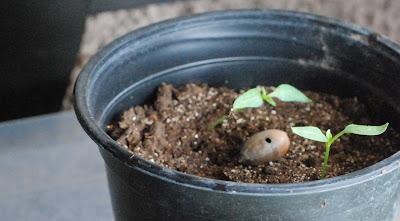
These peppers get an acorn label. I used three other pots just like this with labels of red rock, a white pumice stone, and the cap of this acorn. If you scroll back up, you can see that noted on my schematic. As adorable as I find the row labels, especially the metal ones, I find it a fun (and free!) challenge to find other ways to label pots.

So that’s it? All the seedlings are transplanted?

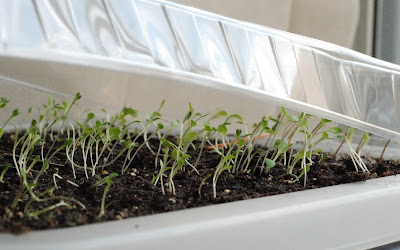
Well, no. I have a bunch of little lettuces, some marigolds, basil, cumin, and lemon balm. They’re hanging out in a too-shallow (Trial & Error will result in errors!) tray awaiting their turn. Now, to decide where to put them before they strangle one another…


Seed Tray Labeling

When I first started gardening, I wanted row labels. I fell in love with the polished brash signs on sticks. They were out of my price range.

Channeling my inner child, I looked into Popsicle sticks. While researching types, sizes, pricing, and local sources, my mind wandered. Did I have some Popsicle sticks in my craft shoebox? I went to look…nope. What did I have that might work?

Colored toothpicks!

Things I (re)learned (that)day:

  1. Things that are on hand are often better than specially made things that cost money and take up extra space. (I like relearning this in new areas of my life.)
  2. Reusable is important. When I’m done with this tray, I’ll simply brush off the toothpicks and put them back in their (designated garden usage only) jar.
  3. Color is fun, but not necessary.
  4. Save the gardening budget for things that actually grow, or directly feed things that grow, when at all possible.

But wait a minute, you say, how do you remember what’s in each row?

The answer is simple: Magic.

Or a camera phone (or other digital camera, or pen and scratch paper)

It’s important, I’ve found, to do nothing else with my brain in between placing the seeds, laying out the packets, and taking the pictures. I can’t move the tray (I might rotate it and if it’s just rows, or quadrants, I may not remember which way is “up.”) That sort of thing.

If you notice, the toothpick layout does not exactly match the seed packets. That is what happens when you want to make sure you take the picture before going for your nightly walk…and forget to lay the last two seed packets down.

So even though I laid out my rough “grid,” laid out my seed packets to “match,” and took my pictures, I could have still had an “oops surprise” later on trying to remember what those last two spots on the right with the orange toothpick were.

Mystery solved!

Now you may be saying, that picture is small, from a cell phone, I can’t read the fine print – what’d you plant?

Pictured above (left to right, top to bottom as you move left to right):

  • Lark’s Tongue Kale
  • Even’ Star Land Race Collards
  • Dark Green Italian Parsley
  • Lemon Basil
  • Cumin
  • Amish Deer Tongue Lettuce
  • Cimmaron Lettuce
  • Gentilina Lettuce
  • Little Gem Lettuce
  • Mignonette Rouge Lettuce
  • Rodan (Chadwick’s) Lettuce
  • Rouge Grenobloise Lettuce
  • Cracker Jack Mix Marigold
  • Red Cherry Marigold

I liked the romaine I grew last year in flavor, but not in production, and the other varieties of lettuce I grew I didn’t want to eat. That makes this season a Try Again one when it comes to greens. From this myriad of choices, I’m hoping a few stand out as delicious, productive, and happy plants. If I luck into a few such species, they’ll be rewarded in my Fall 2012 garden with more space. Whereas some of the underperformers will have joined other packets in my Trade Box.

Seeds ordered!

I ordered seeds last night for my next garden. Among the new varieties include melons, winter squash, and strawberries which are all new to me and my garden.

Today I broke ground on adding another 50 square feet to my 5′ x 20′ bed. It’s wet and muddy work this time of year. The grass and weeds dislodge easily in the damp soil with my spading fork. The heavy clay clings to the prongs. Every few pries requires clearing the tool with the side of the sole of my shoe. After about 10 square feet. I’m ready for a different task.

Digging a new bed is hard labor, and it’s been nearly a year since I last did the work. It will be nice to get back into “gardening shape” but it will take time, so 10 square feet at a time is it for now.

I moved back to the rear fence to continue removing the vines that had taken deep root there. There had been a two foot span of earth, between a chain link fence and a privacy fence. It had come to fill with vines, leaves, and other debris over the last decade, I assume. My lovely other half had removed the chain link two weeks ago and begun removal of the hackberries and more intertwined vines. He was busy wrestling, literally, with a toilet repair project so I thought to lend a hand.

I finished by using my new Hori Hori to uproot a handful of volunteer Red Romaine, Green Oakleaf, and Black Simpson heads to move the out of harm’s way (in the path of the garden plot expansion) and into the garden.

After cleaning my spade, spading fork, and hori hori, it was time to go indoors for a snack of diced strawberries and yogurt.

Things I learned today, thanks to The Heirloom Life Gardener:

  1. Do not compost tomato plants (oops!) Apparently the diseases that afflict tomato plants build up in the garden over time. Best to burn or toss.
  2. Only mist carrot seeds for germination. A full watering will prevent sprouting. (This explains my 2% germination rate across five varieties from three seed companies this fall.)
  3. Squash bugs are as hard to kill organically as I’d come to discover. Well, poo.